Table of Contents
A firsthand look at how shortcuts, pressure, and denial allowed a Ponzi scheme to form inside a fast-growing brokerage business.
Note: The chapter below is reproduced exactly as I wrote it inside Taft Federal Prison Camp in 2008. The summaries, FAQs, and modern context appear after the chapter for clarity.
Table of Contents
- How My Role in the GLT Fund Expanded Over Time
- My Ponzi Scheme at Bear Stearns and UBS
- Top Misconceptions
- If You’re Facing a Federal Investigation or Prison…
Lying to Federal Investigators Was My Biggest Mistake How My Role in the GLT Fund Expanded Over Time I didn’t change overnight. My involvement grew through repeated trades, commissions, and decisions I didn’t question. Nothing happened all at once. Each decision stood on its own and felt routine at the time.
I told myself what I was doing was common in the industry. I placed trades, earned commissions, and didn’t press on things that didn’t line up. I wasn’t running the GLT Ponzi scheme, but I stayed involved by continuing to participate and by not asking questions.
I saw things that didn’t add up and continued anyway. Those choices added up over time and tied me more closely to what was happening.
Register for our Tuesday federal sentencing and prison webinar:Join Webinar
Also, grab a copy of our new book,14 Costly Errors Leading to Longer Sentences.
My Ponzi Scheme at Bear Stearns and UBS
After a year at Bear Stearns, Kyle and I jumped ship. By then, using the prestige of the Bear Stearns name, we were able to build a book of business that specialized in discretionary accounts for professional athletes, and offered trading services to small hedge funds. We had more than $100 million under management. That sum was sufficient to persuade the rival firm of UBS to offer our partnership a seven-figure signing bonus if we would ditch Bear Stearns to bring our clients to UBS.
I followed my partner out of Bear Stearns in pursuit of a signing bonus that would put an immediate six-figure sum in my pocket. Despite my payday, I didn’t feel a sense of pride or honor in my actions. Rather, I felt sleazy inside, as if I were the embodiment of selling out. Had I called my cousin, Todd Goodman at Goodman Investments, he would have been disappointed. A decision to sacrifice a potentially distinguished career for a signing bonus, in his eyes, was along the same lines as my decision to forego graduate school and jump-start my career as a stockbroker.
Knowing that Todd would disapprove of my decision, I did not pay him the courtesy of a phone call. I simply lacked the courage because deep inside I did not feel worthy of the mentoring he had tried to give me. As I rode the elevator down the Century City Towers from Bear Stearns’ trading center on the 30th floor, I hoped that I wouldn’t run into Todd, whose office was in the same building.
At UBS, my career with Kyle followed the same pattern. We pursued short term trading profits through high commission trades. We were more like bookies than professional money managers, more interested with banking profits for UBS and ourselves than for our clients.
At UBS our client list focused primarily on professional athletes and hedge funds. In time, our assets under management grew to exceed $200 million. I had connived my way into earnings of more than $1 million before I reached my 28th birthday.
Rather than take pride in my career, I felt a sense of self-loathing. Within a few months of leaving college, poor eating habits and the lack of exercise transformed my athletic build into a blob of putty. I smoked incessantly. Instead of striving to boost the value of my partnership with Kyle, I stewed with resentment and feelings that our agreed commission split failed to reflect my true worth.
I didn’t give a thought to any allegiance I may have owed to Bear Stearns for the investment the firm made in my career. On the first day as a Bear Stearns account executive, the legendary Ace Greenberg called to welcome and wish me success. With the distinction my distant cousins earned on Wall Street in general, and at Bear Stearns in particular, the firm’s leadership had high hopes for the development of my career.
While in prison, my reflections convinced me that I had let the team of Bear Stearns down in a big way. I was 26-years-old and deeply under the influence of my senior partner, Kyle Smith. He had made some speculative investments that turned out badly. After having lost a significant amount of his capital, Kyle began shopping the street for a better deal. Specifically, he wanted the infusion of capital that came with a signing bonus. Kyle found that deal in an adjacent building, in the office of UBS.
Without a moment’s forewarning, Kyle shocked David Pollock, our branch manager at Bear Stearns. Kyle told David that he was quitting the team for a better offer at UBS. Pollock was livid and felt betrayed. I made matters worse by handing Pollock my resignation as well. He looked at me as if I were a traitor, deserving of every contemptuous and profane word in his outburst.
I walked out of Bear Stearns feeling foolish and embarrassed. At that time I had been a broker for four years. The decisions I had made were inconsistent with the character and discipline I had learned as an athlete. I left Merrill Lynch because of a dispute over commissions. At Crowell, Weedon, Richard Jacobson had been grooming me for leadership. After a year, however, I sneaked away without even having had the courage to confront him face-to-face. Instead, I simply resigned with a note and began my career at Bear Stearns. Even in that pursuit, I traded more on the names of my distinguished cousins than on my own merits.
Two of the most significant casualties in my pursuit of short-term earnings were the cultivation of trust and loyalty. Those virtues represent the core of any winning team. They did not have a place in my partnership with Kyle or in my career. We were not loyal to the firms we represented, to our clients, to each other or to ourselves. The low level of trust between us led to a lack of fulfillment in my career, and to an accelerating downward spiral of my self-perception as an individual.
Keith Gilabert ran the GLT Venture Fund, one of the small hedge funds I had cultivated as a client. I had known Keith before he launched his hedge fund. We had shared space at Crowell, Weedon where he had begun his career as a broker. I had known him to hold a loose code of ethics then, but those perceptions did not dissuade me from accepting the GLT Venture Fund as an account and source of trading commissions.
My eventual criminal conviction may have had its roots in the demise of my values that began after college. It was my relationship with Gilabert that actually pushed me over the line.
The GLT Fund had been a relatively small account with only $5 million under management. Keith was perhaps the worst stock picker in the history of money management. His fund lost value for investors with every undisciplined trade. Through false representations to prospective clients, Keith continued to bring new money into the account. He generated substantial commissions for Kyle and me, sometimes surpassing six figures in a single month.
Keith’s losses with the GLT Fund were so magnificent that they spawned a new trading strategy for my partner, Kyle Smith.
“If Keith goes long a stock,” Kyle suggested, “We’re going to sell it short. If he shorts a stock, let’s take it long immediately.”
We didn’t need to know anything more about an investment other than the position Keith had taken. The irony was that by betting against our client, we profited handsomely.
Our superiors at UBS understood the unsustainability of Gilabert’s GLT Fund. Nevertheless, the global management firm was itself caught up with the pursuit of short-term profits. Rather than protecting the incredible investment of trust and good will in the UBS brand, our superiors at UBS cautioned Kyle and me to protect us from litigation.
We all knew that the individual investors in Gilabert’s hedge fund were losing significant amounts of money. The commissions generated by the fund, however, were too great to ignore. Despite the consistent flow of losses, new investors poured millions into the fund’s account. To protect us and UBS, Kyle and I generated a disclosure letter that notified GLT Fund investors that Keith Gilabert, and not any UBS money managers, was responsible for the fund’s performance.
My experiences as a professional money manager left me with the impression that all relationships were based on deceit, rather than trust. The single exception was my cousin, Todd Goodman.
Rather than striving to hoodwink clients in pursuit of short-term profit, Todd created lifetime partnerships. He cultivated relationships, imbuing a sense of trust with those around him. Todd’s steady hand helped people feel confident that he would protect their assets for future generations. Kyle and I, on the other hand, were making irresponsible decisions that would lead us to higher monthly performance targets.
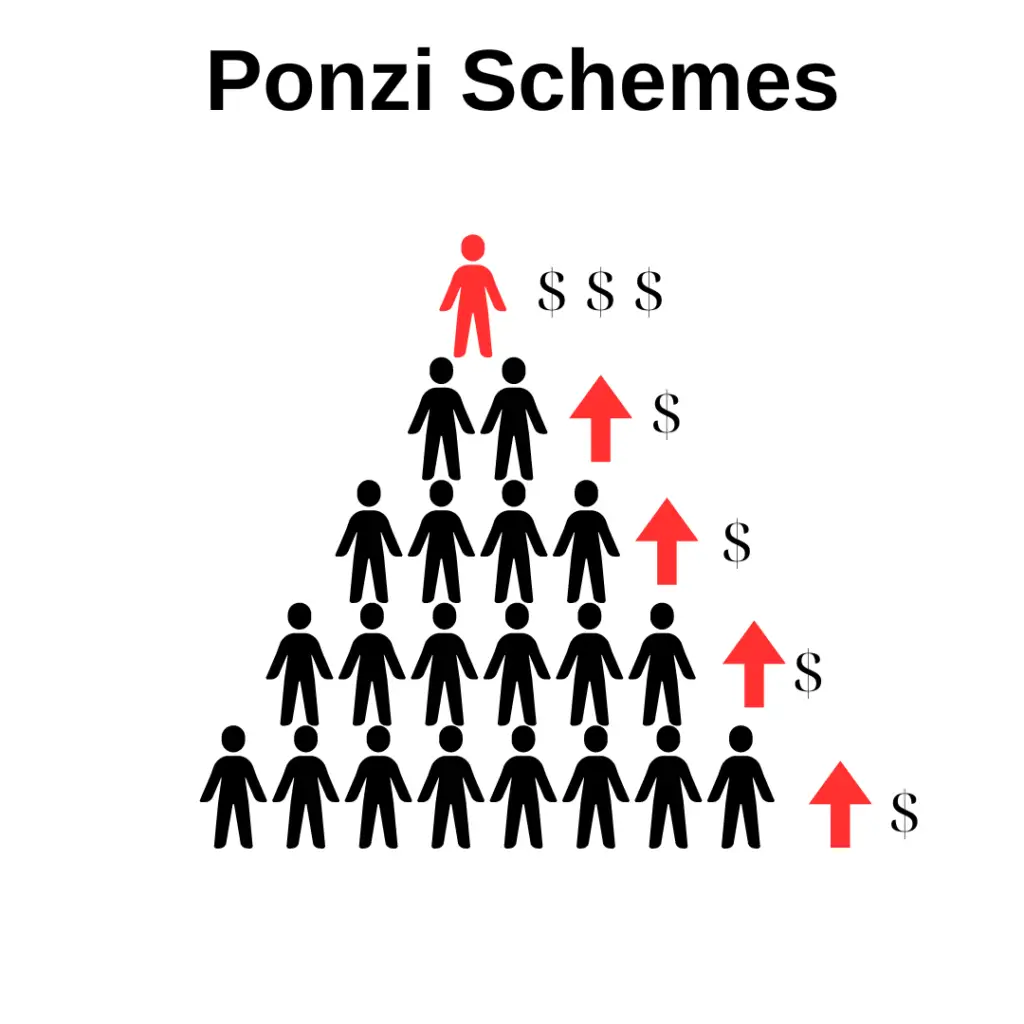
Keith Gilabert’s GLT Fund had reduced itself to a Ponzi scheme. The intention to defraud may not have existed at the outset, as Keith likely set out to achieve high returns for investors in his fund. He speculated, however, combining investor money with borrowed funds using a three-to-one leverage. In other words, margin loans we made available at UBS allowed Keith to take $15 million dollar positions on stocks when he only had $5 million of investor money. With his track record of taking losing positions, investor money evaporated faster than an early-morning mist.
Our experience in the brokerage business gave Kyle and me, as well as our superiors at UBS, sufficient reason to believe that Keith was misrepresenting the dismal performance of his GLT Fund. Despite massive losses, he continued to attract new investor money. At UBS, we neglected our instincts and instead took the position of the figurative monkeys who saw no evil, spoke no evil, and heard no evil.
Kyle once asked one of Gilabert’s investors why the investor was depositing $4 million into the GLT hedge fund. The investor looked Kyle in the eye and said, “You’ve seen the rate of return the fund is delivering. Performance sells itself.” That investor’s rationale should have led to additional inquiries from Kyle and me about what “performance” meant to the investor.
By that time Kyle and I both knew that Gilabert had lost millions. Nevertheless, we accepted the $4 million deposit and agreed between ourselves that we would never ask an investor for his rational again. “That way,” Kyle said, “we will never have to acknowledge that we knew anything.”
Our efforts to maintain plausible deniability, however, crumbled during a meeting I agreed to take with Keith and Abe, one of the major investors of the GLT Fund. Abe was a rabbi who was 90-years-old. A team of Abe’s accountants and financial advisors wanted to meet with the principals behind the GLT Fund. Their efforts at due diligence were to ease their concerns about Abe’s asset allocation. Gilabert asked me to attend the meeting in order to represent the gravitas of UBS. Knowing what I knew then about the fund, I should not have walked into that meeting.
“Does UBS think it wise that a 90-year-old rabbi would invest his life’s savings, $3 million, into a basket of growth stocks?” The accountant directed his question to me.
At that moment, I felt like the proverbial deer that had been unexpectedly caught in the headlights. I scratched my head. I knew that as of the morning of our meeting, the GLT Fund had a total asset balance of less than $1 million. If Abe’s financial advisory team believed that Abe had $3 million invested in the GLT Fund, then clearly, Keith Gilabert had provided them with fraudulent account statements. Rather than expose the troubling discrepancy, I ducked the question.
“No,” I answered. “UBS is the custodian of the GLT account. As our letter of disclosure indicated, Keith Gilabert is solely responsible for allocating client assets.”
“We understand that,” the accountant persisted, “but would UBS recommend that an elderly client invest his life savings in growth stocks?”
“Although we don’t presume to know the investment strategies of those in the GLT Fund, at UBS we typically would recommend a much more conservative allocation for an elderly gentleman. We would include a much higher percentage of government bonds that offered a fixed-income stream.”
In continuously trying to dodge the advisors’ questions, I was lying. Their inquiries gave tangible proof that Gilabert was perpetuating a fraud. I appeased Abe and his investment advisers with assurances that I would assist Gilabert in restructuring the account. Yet when Gilabert and I were finally alone, I realized the magnitude of my deception. I had become complicitous in his scheme.
“What did you do to me?” I was livid with Gilabert.
“Please,” he pleaded. “Just help me get through this. I have some new accounts coming in that will set things right with Abe. I can make it up.”
Gilabert was using new investor money to cover losses. He had built a house of cards, and the scheme was about to come crashing down. I didn’t know how I could escape unscathed.
Over the course of the next several months, Kyle and I allowed Gilabert to deepen the Ponzi scheme. The more investor money he brought in, the more trading commissions we stood to reap. With investor losses continuing to mount, however, it was only a matter of time before someone would expose the financial crimes of which I had become an integral part. Although I rationalized my complicity with excuses that I was only giving Gilabert an opportunity to break even with investors, in reality, I wanted the gravy train of easy and exorbitant commissions to continue.
I had hoped to last through June of 2006, when more than a quarter million dollars worth of bonus incentives UBS allotted to me would have vested. That was my target date. If I could skate through to receive that windfall, I reasoned, I could grab the money and leave the brokerage business.
My good friend, Sam Pompeo, was a successful real estate agent who offered me an opportunity to partner with him. I wanted to make that career switch, to leave the dirt I had created in the brokerage business behind and begin anew.
The break I was looking for, however, did not come so easily. In December of 2004, investors from the GLT Fund called my superiors at UBS to confirm account balances. Those calls led to my termination as a UBS employee. At the time, my biggest regret was that I had not been able to hang on. I didn’t consider the troubling reality that my actions had violated securities laws.
Top Misconceptions
Misconception: A Ponzi scheme always begins with deliberate fraud.Correction: Many start with losses and denial. The misconduct grows when people keep hiding the problem.
Misconception: Only the mastermind is responsible.Correction: Anyone who enables the scheme, even passively, becomes part of it.
Misconception: You know instantly when you’re crossing a criminal line.Correction: Most people drift into it through small compromises.
Misconception: If the firm doesn’t stop you, you must be safe.Correction: Firms often ignore problems when money is flowing. That doesn’t protect you.
If You’re Facing a Federal Investigation or Prison…
- Pay attention to where you might be avoiding uncomfortable truths.
- Look at the small decisions that led to your case—not just the big ones.
- Notice where money, pressure, or loyalty influenced your judgment.
- Be honest about the moments when you stayed silent.
FAQ How does a Ponzi scheme start? In my case, it didn’t look like a scheme at first. Losses piled up, and instead of stopping, new investor money was brought in to cover the gaps.
Did I know I was helping a Ponzi scheme?
I didn’t admit it at the time, but I knew the numbers didn’t make sense. I avoided asking questions because the truth threatened my income.
Why didn’t UBS step in sooner?
Short-term profit blinded everyone. No one wanted to shut down an account generating huge commissions.
What pushed the scheme over the edge?
A meeting with an elderly investor’s advisors. Their questions exposed how far the losses had gone and how misleading the statements were.
Why did I keep participating?
Fear and money. I kept telling myself it would get better, even though I knew it wouldn’t.
What can defendants learn from this?
If you’re avoiding something, confront it now. Silence only increases your problems during sentencing.
Is it common for white-collar defendants to drift into trouble like this?
Yes. Most people aren’t plotting schemes. They’re avoiding reality until it’s too late.
How does this help someone preparing for sentencing?
You need to explain your decisions honestly. Judges can tell when someone is still hiding.
Written by
Justin Paperny
Founder White Collar Advice