In 2008, the world was in crisis. Banks were collapsing, governments were bailing out institutions that had created the problem, and ordinary people were left to suffer the fallout. That was the moment Satoshi Nakamoto, or the person we know as Satoshi, released a nine-page white paper.
The brilliance wasn’t only in the technology — a peer-to-peer currency on a decentralized ledger. It was in the approach. Satoshi didn’t spend years ranting about the unfairness of bailouts, inflation, or the printing press. He didn’t go on television or try to win over Wall Street. Instead, he wrote a document that explained the idea clearly enough for the right audience — cryptographers, mathematicians, engineers — to understand and build upon.
The White Paper was a blueprint.
It gave people a plan they could improve, stress-test, and expand. From that starting point came the Genesis Block, the first transactions, and eventually the global network we see today.
I think about that same period — 2008 — because it was the year I began serving my federal prison sentence. Around the same time, my partner Michael Santos was sitting with me and sketching out his own version of a white paper. He didn’t call it that, but it functioned the same way.
Michael had already been in prison for more than two decades. What he envisioned was simple, but radical: a system of incentives that would allow people in prison to earn freedom through documented work, measurable progress, and personal accountability. At that time, nothing like the First Step Act existed. A person could work, study, and grow — and none of it mattered to the system.
Instead of complaining about how unfair that was, Michael began writing — first with a professor at Stanford, then through law review journals, then by teaching college courses from inside prison walls. Each document, like Satoshi’s white paper, wasn’t designed to win over the masses. It was aimed at the right audience: academics, judges, prison administrators, and policymakers.
The Long Game of Advocacy
When Satoshi released his white paper, Bitcoin had no price. In fact, when the first transactions began, ten bitcoins traded for a penny. In those early years, most people thought the whole idea was a joke. Yet the document kept circulating, the network kept growing, and by 2011 a bitcoin was worth $1. By 2012 it was $10. Today it trades around $100,000.
That long game is exactly how prison reform unfolded. In 2015, Michael published an article in the UC Hastings Law Review titled Incentivizing Excellence. At the time, it sounded like theory. But that piece of writing created a seed. It was cited, discussed, debated, and eventually led to invitations to judicial conferences where Michael stood before federal judges, U.S. attorneys, and prison officials. His message was clear: we need a mechanism for people to earn freedom through hard work and demonstrated growth.
Those conferences didn’t change the law overnight. Just like Bitcoin didn’t suddenly jump from a penny to $100,000. But they built credibility. They gave people in positions of influence a blueprint. And eventually, those efforts contributed to what became the First Step Act.
Why This Matters to the Crypto Community
If you’re in the crypto world, you understand what it means to play the long tail game. You’ve seen projects laughed at before gaining traction. You’ve seen governments dismiss digital assets only to later regulate them and approve ETFs. You’ve seen volatility, hacks, collapses — and you’ve also seen resilience.
Prison reform has been no different. When we started talking about incentives for earning freedom, the doubters said it would never happen. They said the Bureau of Prisons would never change. They said Congress wouldn’t support it. And yet, through years of methodical advocacy — white papers, law reviews, conferences, data collection — it did happen.
That’s why, when I work with people indicted for crypto crimes, like Hugo Mejia or Keonne Rodriquez, I push them to think the same way. Not in terms of a quick defense or a one-time statement, but as a process of engineering an outcome over time. Judges, prosecutors, and probation officers may dismiss your early efforts, just like Wall Street dismissed Bitcoin. That doesn’t mean you stop. It means you keep building the record.
Engineering Outcomes Over Time
The white paper didn’t instantly change the world. It gave people a framework to build upon. That’s the same approach anyone facing prison must take. You can’t change the system overnight. You can’t undo the past. But you can start documenting, writing, publishing, contributing, and proving — piece by piece — that you are working toward change.
When people tell you it won’t matter, remember how many times Bitcoin was declared dead. When critics say judges won’t care, remember how many times policymakers dismissed prison reform before passing the First Step Act.
The truth is, outcomes don’t come from one transaction. They come from blueprints, built over years, refined by effort, and validated by results.
So the real question isn’t whether others believe in your work today. The question is: are you willing to keep building, even when they don’t?
Thank You,
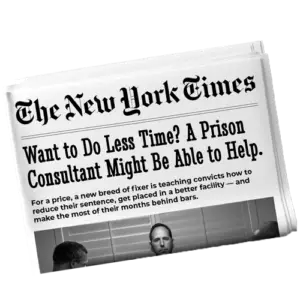
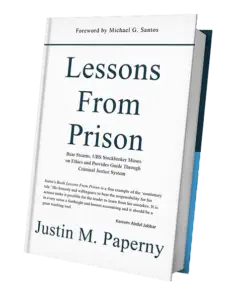
Justin Paperny is an ethics and compliance speaker and founder of White Collar Advice, a national crisis management firm that prepares individuals and companies for government investigations, sentencing, and prison. He is the author of Lessons From Prison, Ethics in Motion, and the upcoming After the Fall. His work has been featured on Dr. Phil, Netflix, CNN, CNBC, Fox News, The Washington Post, and The New York Times.