Table of Contents
After a conviction or guilty plea, the most important document in the entire case is not the indictment, the plea agreement, or the sentencing memorandum. It is the Presentence Investigation Report.
The PSR shapes the sentence the judge imposes, the facility where someone serves that sentence, their security classification, their program eligibility, their medical accommodations, and their conditions of supervised release. It follows a person through every stage of federal custody — and most defendants do not understand what goes into it until it is already written.
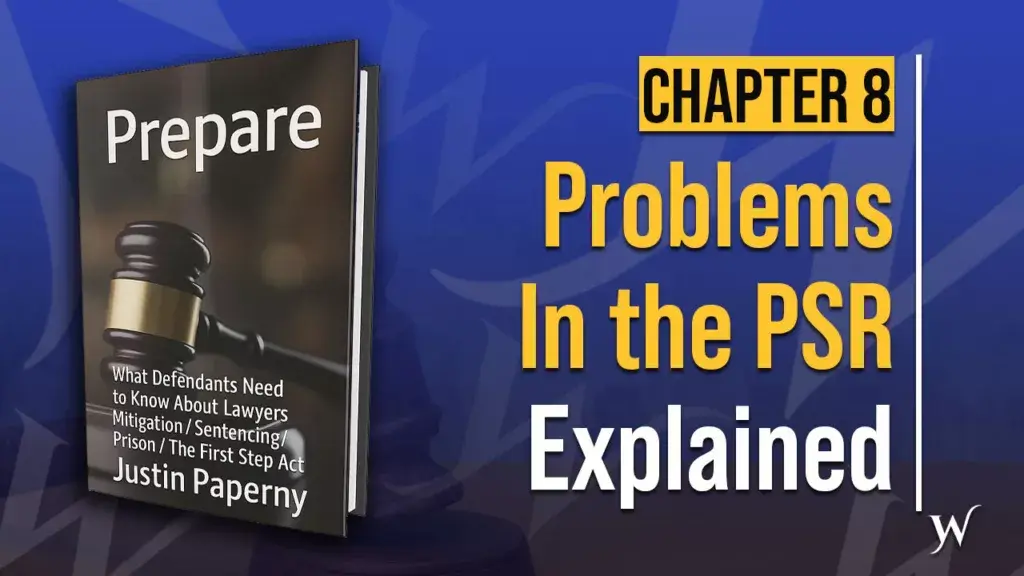
This chapter explains how the PSR is prepared, what it contains, how to approach the interview, and what can be done when the report gets something wrong.
Two Defendants. One Document. Two Very Different Outcomes.
Carol and Marcus were both convicted of federal financial crimes. Both had attorneys. Both were scheduled for PSR interviews with their probation officer within weeks of their plea. The preparation each brought to that interview — and to the weeks before it — determined outcomes that neither expected going in.
Carol treated the PSR interview as a formality. Her attorney had briefed her on the basics, but she had not prepared a written narrative, had not organized documentation of her background, and had not disclosed a period of heavy alcohol use during the years the offense occurred. She answered questions briefly, deflected anything that felt uncomfortable, and left the interview having given the officer very little to work with beyond what prosecutors had already submitted.
The result was a PSR that relied almost entirely on the government’s version of events. Because she had not disclosed the alcohol use, she was not flagged as a potential RDAP candidate — a residential drug treatment program that can reduce a federal sentence by up to twelve months. Her security classification came back higher than her attorney expected. She was designated to a facility four states from her family.
Marcus prepared differently. Three weeks before the interview, he worked with his attorney to draft a written personal narrative — his background, his family, the circumstances of the offense, and a clear account of what he understood about the harm his actions caused. He gathered documentation of his employment history, medical records, and family situation. He disclosed candidly that he had struggled with alcohol during the period in question, on the advice of his attorney, who understood the RDAP implications.
The probation officer incorporated portions of his written narrative directly into the PSR. The report reflected a fuller picture of who Marcus was. He was flagged as an RDAP candidate. His security score came in at the low end. He was designated to a facility near his family. At sentencing, the judge noted that the PSR showed a complete and honest account.
Same type of case. Same plea. The PSR made the difference — and the PSR was shaped by what each defendant brought to the process.
Why the PSR Matters More Than Most People Realize
Rule 32 of the Federal Rules of Criminal Procedure governs the PSR process in federal court, and every state has a parallel rule. What happens at this stage follows a person for the entire period of imprisonment and supervised release.
Judges review the PSR before imposing sentence and many rely heavily on its conclusions. Inside the Bureau of Prisons, the PSR becomes the primary reference document for the entire period of custody — influencing security classification, visiting eligibility, program participation, housing accommodations, job assignments, and eligibility for First Step Act time credits.
Every member of the Unit Team — case managers, counselors, education staff, psychology, and medical personnel — refers back to the PSR when making decisions about a person’s situation. It is not a document that gets reviewed once and filed away. It is the document the system uses to understand who someone is throughout their sentence.

How Probation Officers Conduct the Investigation
The probation officer begins by reviewing the government’s version of the offense. By the time they schedule the interview, they have already reviewed materials provided by prosecutors and investigators. They are not coming to the meeting neutral.
Interviews can take place at home, at the probation office, in custody, or by phone. During the interview, the officer gathers information across a broad range of topics: family background, education, criminal history, employment, substance use, medical history, and finances.
Officers then verify that information independently — contacting family members, employers, creditors, schools, and medical providers. They may also speak with victims and review court records.
One point that many defendants underestimate: probation officers are law enforcement officials. Misleading them — or appearing to do so — can result in an obstruction-of-justice recommendation, which increases the guideline calculation and affects prison classification. Accuracy matters.
Participation in the interview is technically voluntary. Declining to participate means the PSR will rely almost entirely on the government’s account of events. Some defendants decline to discuss the offense for appellate reasons — if so, they should state this clearly and politely while still engaging on the personal history sections.
Our team typically recommends preparing well in advance — organizing documentation and drafting a personal narrative before the interview begins. Probation officers sometimes incorporate a defendant’s written narrative directly into the report, which produces a more complete and balanced document.
What the Completed PSR Contains
Court rules require the PSR to be written in a non-argumentative style. The report is comprehensive. Understanding each section — what it covers and why it matters — allows defendants to prepare more effectively.
Offense Conduct. Summarizes the government’s version of events. The defendant’s objections or clarifications can appear here as well, which is one reason preparation and response matter.
Victim Impact. If there is an identifiable victim, their statement and perspective may be included. This section carries real weight with judges.
Defendant’s Participation. Details the defendant’s specific role, particularly in multi-defendant cases. Prison officials may treat all co-defendants similarly unless distinctions are documented clearly here.
Obstruction of Justice. If the probation officer believes the defendant interfered with the investigation, they may recommend an enhancement. This affects both sentencing and prison classification. Honesty and transparency during the PSR process directly reduce this risk.
Acceptance of Responsibility. When a defendant acknowledges wrongdoing clearly and credibly, the officer may recommend a downward adjustment in the guideline calculation. Timing matters: early acceptance generally results in the largest reduction.
Offense Level Computation. Explains how the guideline offense level was calculated. This section drives the sentencing range the judge works from. Errors here are worth challenging.
Criminal History. Lists and scores prior convictions according to the guidelines. Even old or minor convictions can affect the score.
Offender Characteristics. Describes personal background, family responsibilities, and community ties. This is where the personal narrative and documentation of character matter most.
Substance Abuse History. This section directly affects RDAP eligibility. Documenting a genuine history of drug or alcohol use prior to arrest can make someone eligible for the Residential Drug Abuse Program — which can reduce a federal sentence by up to twelve months. Many defendants fail to disclose this history and lose that eligibility entirely.
Physical Condition. Medical issues should be documented and supported with records. This section influences housing, medical accommodations, and lower-bunk pass eligibility. Undocumented medical needs may not be addressed inside.
Education and Vocational Skills. Covers education, degrees, and training. Incomplete or unverified records can delay programming participation.
Employment History. Probation verifies past employment. A strong work history can influence both the sentencing narrative and future prison job assignments.
Financial Condition. Details assets, liabilities, and ability to pay restitution and fines. The BOP uses this section when administering financial obligations under the Financial Responsibility Program.
Sentencing Options. Outlines what sanctions are legally available — probation, fines, or imprisonment.
Departure Factors. Explains potential reasons for upward or downward departures from the guideline range. Defense counsel should engage with this section carefully.
How the PSR Shapes Life Inside Federal Prison
The influence of the PSR does not end at sentencing. The document follows the person through every stage of federal custody.
It determines the facility where they are designated. It governs visiting eligibility — who is on the approved list and who is not. It affects housing assignments, including lower-bunk passes for documented medical needs. It shapes eligibility for programming, including RDAP, educational programs, and First Step Act time credit calculations.
The Unit Team inside the facility — case managers and counselors — relies on the PSR throughout the sentence to make decisions about programs, work assignments, and release planning. A PSR that is accurate, complete, and reflects a balanced picture of the defendant’s background is not just important at sentencing. It is the document the system uses to understand that person for the entire period of custody.
Reviewing and Challenging the Final PSR
After the PSR is drafted, the probation officer gives copies to the prosecutor and defense counsel. Both have the right to submit objections to inaccuracies. The officer may or may not revise the report based on those objections.
If disagreements remain after the officer’s response, the judge resolves them at sentencing. Even when the judge agrees with the defense on a factual point, the written PSR may remain unchanged unless the judge explicitly orders a revision.
This matters because the BOP relies on the written document — not the sentencing transcript. A factual error that the judge verbally acknowledges may still appear in the PSR used for classification and programming decisions inside prison. Defense counsel should push for corrections to the written report itself, not just a ruling at sentencing.
Any objection that affects the guideline calculation, the offense narrative, or the defendant’s characteristics is worth pursuing carefully and specifically.
Key Takeaways
The Presentence Investigation Report is the most consequential document in a federal case, and preparation for it should begin well before the interview is scheduled. Probation officers are law enforcement officials — honesty and accuracy during the interview protect against an obstruction recommendation. Declining to participate means the government’s version of events dominates the report. Documenting a genuine history of substance use may create RDAP eligibility and reduce the sentence by up to twelve months. Medical conditions, family background, and employment history should all be organized and documented before the interview. Errors in the PSR should be challenged in writing — the BOP uses the written document, not the sentencing transcript. The PSR follows a person through every stage of custody, not just sentencing.
If you are preparing for a PSR interview or want to understand how to document your background effectively, our team can help you get ready. [Book a call]
You can also join the weekly webinar every Tuesday at 11am PT / 2pm ET.
FAQ
What is the purpose of the Presentence Investigation Report?
It gives the judge a complete picture of the person being sentenced and provides the Bureau of Prisons with essential classification information.
Who prepares the PSR?
A federal probation officer conducts the investigation, interviews the defendant, and writes the report.
Can I refuse to participate in the PSR interview?
Yes, but the report will then rely heavily on the government’s version of events, which may lead to negative implications.
Can I challenge errors in the PSR?
Yes. Both sides can submit objections, and the judge determines which objections are valid.
Does the PSR affect prison designation?
Yes. The BOP relies on the PSR to determine security level, medical needs, and programming eligibility.
Should I reveal past drug or alcohol use?
Yes. Documenting substance abuse may make someone eligible for RDAP, which can reduce the sentence by up to 12 months.
Will the PSR determine my ability to get a lower-bunk pass?
Medical issues documented in the PSR influence housing accommodations.
Does the PSR influence restitution or fines?
It includes financial details that judges and the BOP use to assess payment obligations.
How important is acceptance of responsibility?
Very. It can significantly reduce guideline calculations if the defendant accepts responsibility early in the process.
Will the PSR follow me after prison?
Yes. It influences supervised release, halfway house placement, and early-release programming.