When someone types “securities fraud federal prison” into a search bar, they are looking for information, details. How does a broker go from Encino and USC baseball to Merrill Lynch, Bear Stearns, UBS, the FBI, sentencing, and a federal prison camp? What actually happened? Where were the turning points, and what can they do differently while they still have time?
This article comes straight out of my Soft White Underbelly interview. I am going to walk through the parts of my case that will help you if you are under investigation for securities fraud, already indicted, or heading toward federal prison.
Encino, USC Baseball, And Choosing Sales Over Grad School
I grew up in Encino, a Jewish enclave outside Los Angeles. My parents gave me every advantage they could: good schools, structure, and expectations.
Baseball was the center of my life growing up. It taught me what it felt like to fail in public and still show up the next day. I played through youth leagues, the Babe Ruth World Series, and eventually at USC. I still remember going 0-for-5 with three strikeouts against the Japan national team. After the game I braced for my coach to tear into me. Instead, he said he was proud of me because we won. That stuck with me. The standard was not my feelings; it was whether I did my job for the team.
At USC I originally thought I would study psychology. My parents’ divorce and all the turbulence in Los Angeles in the early 90s pushed our family into counseling, and it helped. Grad school in psychology seemed like the plan.
Then my mother called a relative at Goldman Sachs and asked if I could intern for him. I showed up at 4:30 in the morning at 303 South Grand in a suit that did not fit, with a tie I barely knew how to knot. He asked what I wanted to do after graduation. I said I was thinking about psychology. He told me that if I ever wanted to work in the brokerage world without an MBA, I would just be a salesman in a suit.
Then I watched him move 100, 200, 300 million dollar orders before lunch. For a young guy who loved big moments in stadiums, hearing those numbers on a trading desk was intoxicating. I ignored his advice about school. I decided I would go straight into the brokerage business.
In my sophomore year, I started cold calling for brokers at Prudential in Beverly Hills. People hung up on me, told me to get a life, called me useless. Baseball had trained me to live through that kind of abuse and keep going. Later, at Merrill Lynch, I did the same thing: sit at a desk and dial until someone listened. I was not very good at it, and I hated it.
So I switched tactics. I put on a suit, grabbed brochures, and walked into offices on Ventura Boulevard instead of calling. My pitch was simple: I am a USC grad at Merrill Lynch, the market is moving, we have ideas, and if they were open to it, I would leave something behind. People reacted differently in person than on the phone. Some laughed at me. Some told me to leave. Enough people opened accounts. With the NASDAQ roaring, my production took off. I paid off my student loans, bought a house in Studio City, and told myself I was on the right track.
At that point, I was.
The Culture Shift: Senior Brokers, Partnerships, And Bear Stearns
The rot started before any indictment.
At Merrill Lynch, the firm began pushing junior brokers to merge their books with senior brokers. On paper, this looked like mentoring. I watched it play out differently. Junior brokers prospected like crazy. When they did not hit their numbers, they washed out. Senior brokers then took over their accounts and bragged about “raising” 15–20 million in a day. In reality, they just inherited the work of the younger brokers who had been pushed aside.
Seeing that soured me on the traditional “partnership” structure. I left Merrill under that cloud and took my clients to a smaller firm, then later to Crowell Weedon, and eventually into a junior-partner role at Bear Stearns.
At Bear, I joined a senior broker named Kenny. When we merged our books, he had around $100 million under management and I had roughly $35–40 million. We agreed I would receive 25 percent of every commission, and he would receive 75 percent. It was a standard split for a junior–senior partnership.
Then I closed a hedge fund account that generated between $100,000 and $200,000 a month in commissions. I was 26, already earning several hundred thousand a year. My thinking, shaped by sports and my father, was straightforward: if you earn it, you should be paid for it. I printed out the production numbers, dropped them on my partner’s desk, and waited. When he looked at them, I asked for a raise based on results, not need.
His response was that I was in that chair because of him and that a little patience and gratitude would suit me better. No raise. No acknowledgment. I left that office feeling exploited.
Instead of leaving or swallowing it, I decided to “fix” it on my own. I found a glitch in the Bear Stearns accounting system that allowed me to allocate 100 percent of certain commissions to myself instead of the 25 percent I was entitled to. If you called and generated a $5,000 commission, I could take all of it instead of my $1,250 share. I told myself I was only taking what I had “earned” and what my partner should have given me. In reality, I was stealing from my partner and from the firm.
Once you start stealing, you also start waiting. Every time my partner called, every time a manager wanted to see me, a part of me thought: this is it, they found out, I am done. That anxiety leaked into everything: my health, my engagement, my community work. I gained weight, stopped exercising, stopped volunteering with my father’s business, and narrowed my world to work and fear.
That conduct at Bear Stearns did not send me to securities fraud federal prison, but it damaged who I was and made later decisions easier to justify.
UBS, Keith’s Hedge Fund, And Ignoring Obvious Fraud
We later moved our book from Bear Stearns to UBS in Century City. UBS offered a large up-front bonus, structured as an employee forgivable loan. Every year a portion would be forgiven if we stayed and hit our production targets. It looked great when the contract was signed. It felt different when the numbers fell short.
Only about half of our clients followed us to UBS. The firm wanted commissions to match the book of business they thought they had bought. I watched colleagues who had taken similar bonuses get fired when they did not produce. UBS could then claw back the unpaid portion of the bonus. The message was clear: hit the numbers or go.
That is when Keith, a hedge fund manager I had known from Crowell Weedon, came back into my life. At Crowell Weedon I had already heard the way he talked to investors on the phone, exaggerating, hinting at inside information, saying whatever he had to say to close a trade and generate a commission. When he transferred a $6 million hedge fund to us at UBS, I knew who I was dealing with.
He lost that $6 million. Then he raised another $6 million. We knew he could only do that by concealing his actual performance. No rational investor would hand money to a manager who openly admitted he had already lost every dollar he raised.
Instead of cutting him off, we convinced ourselves it was safe to keep the account because he was the one soliciting the money, not us. From UBS’s perspective, the client of record was Keith’s hedge fund. We did not have direct accounts for his underlying investors. Every trade ticket we executed was coded “unsolicited.” That became rationalization number one.
I then went to management and compliance with a “solution” to protect UBS from lawsuits. I drafted a disclosure letter stating that anyone who invested in the hedge fund did so at their own risk and that UBS, my partner, and I did not recommend or endorse the investment. Compliance in Century City and Stamford liked the idea, edited the language, and required that every new investor sign it. On paper it looked like we were managing risk. In reality, it made us feel safe enough to let the commissions keep rolling in.
For a long time, I could execute trades all day without seeing the face of a single investor. Then two meetings changed that.
The first was with an older money manager named John. He had spent a career building a small hedge fund and was thinking about retiring. Keith approached him with an offer to buy his book of business and pay him a percentage. The four of us met over sushi: me, my partner, Keith, and John. At one point John said he had seen the hedge fund’s returns and that “the performance sells itself.” Those words later appeared in my plea agreement.
I knew there was no such performance. Instead of saying, “That return does not exist,” I ended the meeting and looked away.
The second meeting was more direct. An 88-year-old investor showed up in Encino with two advisors. He believed he had $3 million in Keith’s hedge fund. Before the meeting, I checked the UBS system. There was less than $1 million in that account. One of the advisors looked at me and asked, “Do you think an 88-year-old investor should have $3 million in a basket of growth stocks?” I tried to dodge it by saying I did not manage the money. He asked again, more directly.
I said that if it were my money, I would allocate it more conservatively. He agreed and asked if I would help them reallocate the “remaining $3 million” the way I had just described. I got up, walked to a board, and sketched out an allocation for money that did not exist. When the meeting ended, they shook my hand and asked me to implement the allocation. Keith knew the truth. I knew the truth. The investors did not.
Later I learned that when Keith hired me, that investor’s original $3 million had already been lost years earlier at Bear Stearns. For two years he had been receiving false statements and believing his money was still there. By participating in that meeting and pretending otherwise, I crossed a line I could not defend.
By then, I knew this was going to fall apart. I still kept running the trades and cashing the commissions.
The Fax, UBS Corporate Counsel, And The Lie To The FBI
On December 15, 2004, I was having lunch at Houston’s in Century City when my branch manager called and told me to return to the office immediately. His tone said everything. I paid the bill and walked back through the mall knowing something serious was waiting.
In his office were my branch manager, my partner, and compliance staff. They handed me a sheet of paper and asked me to sign my name eight times. Then they showed me a fax that had come in from one of the elderly investor’s advisors. The cover sheet had one question: “Is this true?”
The second page was on UBS letterhead. It said that if the GLT Venture Fund failed, UBS would guarantee the investor’s account for its full market value. It had my name forged at the bottom. I learned that Keith had been taking blank UBS letterhead from the office, typing fraudulent guarantees on it, forging my signature, and sending these letters to worried investors.
At that moment, everyone in that room went into self-preservation mode. My partner emphasized that I was more involved in the daily trading. Managers and compliance acted like they barely knew the account, despite having approved the disclosure letter and watched the commissions. I did what they asked and spent eight hours the next day with UBS corporate counsel, explaining the account in detail. I did it without my own counsel in the room. Afterward, they told me not to return to the office until further notice. Later, they fired me for “inconsistent answers.”
I went home, got a real estate license, and convinced myself that losing my job and having UBS demand repayment of my bonus was the end of it.
Then the FBI came to my house with binders full of emails and documents.
Eventually, with a lawyer at my side, I sat down with federal agents. Early in the meeting, one of them asked if I remembered a press release stating that Keith’s hedge fund had averaged a 27 percent annual return. I had read that press release when his assistant sent it to me at UBS. I had replied to it. I also wanted to distance myself from it.
Rather than answer honestly, I told the agent I did not recall the press release. He reached into one of the binders, pulled out a printed email chain, and asked me to read my own email out loud. In that message, I had told my client that I had “enjoyed” his press release about the “27 percent guaranteed return fund.”
The agent had given me a chance to tell the truth. I chose to lie. My lawyer ended the meeting. Outside, he told me I had just lied to federal agents and obstructed their investigation. That one lie is the reason I ended up in securities fraud federal prison. Had I answered honestly, my outcome likely would have been very different.
The Indictment Call, Plea, And Why I Got 18 Months In Federal Prison
For almost a year after that meeting, I heard nothing from law enforcement. I moved on with real estate in Calabasas. I convinced myself that because I had already been fired, lost my licenses, and been sued civilly, the criminal side might be over.
I was wrong.
One afternoon I was showing a small condo in Woodland Hills to Kourtney Kardashian, before anyone knew her name. My lawyer called and told me that the government was going to indict me. While I had been selling homes and trying to rebuild, Keith had been cooperating with the United States. He had signed a plea agreement to one count of conspiracy to commit fraud. There would soon be a Department of Justice press release describing him as working with an unnamed co-conspirator at a major brokerage firm. That unnamed person was me.
My lawyer told me that if I went to trial, I would lose, and that we were looking at roughly five years in prison. Because Keith had been cooperating, he was due to receive substantially less time than I was, even though he had raised and blown through millions. That is how federal cases work. People who cooperate early usually get more favorable outcomes than people who lie and resist.
I eventually pled guilty in front of Judge Stephen Wilson. At that time I had not done any work to show why I was worthy of leniency. I hired lawyers, collected character letters, and planned to make a sincere statement at sentencing. That is about as far as most defendants go.
One thing broke in my favor. After my plea, Keith was indicted again for hiding money from the government. The SEC then wanted to understand how someone like him could operate inside UBS for so long. Over the next year, I spent about 100 hours with SEC lawyers and investigators, walking them through accounts, trades, internal procedures, and decisions. It was expensive and uncomfortable, but important.
In the end, the SEC wrote that UBS was not a victim in my case. They viewed UBS as culpable. The Department of Justice agreed and referenced that position in their own filings. UBS had already paid roughly $8.5 million to investors. Had the government treated UBS as a victim, I could have been on the hook to repay that for the rest of my life. Instead, the court treated UBS differently, which changed the restitution figures at sentencing. It did not erase my conduct, but it reduced the size of the financial obligation and altered the way the judge evaluated the loss.
Sentencing day was ugly. I wore a suit I had bought months earlier. It was now too tight from bad habits and late-night eating. A button popped while I stood at the podium. Victims sat in the front row and asked for prison time. My co-defendant was sentenced first and received five years. Judge Wilson looked at me and said he was tired of salesmen turning away for money and that most never get caught. He said he was going to send me to prison as an example.
My lawyer asked for Taft Federal Prison Camp. Judge Wilson recommended it. I received 18 months.
What Securities Fraud Federal Prison Looked Like For Me
Three years to the day after the FBI first knocked on my door, my mother and brother drove me to Taft, California. On the way, I stopped at a Carl’s Jr. by a gas station and ordered a Western Bacon Cheeseburger, fries, onion rings, and cookies. I ate as if I were never going to see fast food again. By the time we reached the facility, I felt sick.
At the entrance, I introduced myself to a guard, stuck out my hand, and said I was there to self-surrender. He stared at me and told me they did not shake hands with inmates. He told my family it was time to leave. That was the moment my old identity ended and the new one began.
First, they processed me at the low-security side: questions about mental health, medications, prior attempts at self-harm, and whether I had anything to declare. After a few hours, officers drove me up the hill to the minimum-security camp.
When I walked into the dorm, the first thing that hit me was the smell: more than a hundred men cooking in microwaves, living in cubicles, and sharing open bathrooms. The second thing I did was check the showers and toilets, because like most people heading to prison for the first time, I had images from television in my head. There were no bars, no cells, no scenes from movies. Just worn-out tile, open shower stalls, and rows of steel bunks.
Within days, a prisoner named David approached me and offered to get me a thicker mattress. The standard mattress was barely an inch thick. His offer sounded appealing. I said yes. Several nights later, at midnight, he woke me up, told me to move quickly, and swapped in a thicker mattress. A few days after that, he handed me a commissary list with items I was expected to buy him as payment. I had been hustled. It was a small lesson, but a necessary one: learn how the place works and who you are dealing with before you start saying yes.
The first day went by fast. The harder part came a few weeks in. One morning I realized it was 11 a.m. on a Tuesday and I was doing an abs class after running seven miles. I had victims on the outside trying to put their lives back together. I had a name that would be searchable on Google forever. And I was living in a world where the biggest decision some people made each day was which television show to watch.
In that camp, I met men who refused halfway house placements because they felt safer inside. They were terrified of how they would earn a living, explain their past, or meet basic obligations once they left. Some had short sentences for tax crimes or other financial offenses, but they were more afraid of release than they were of another year in a camp. That was eye-opening. Securities fraud federal prison could easily become a life sentence in someone’s mind if they never changed anything about how they thought or acted.
Meeting Michael Santos And Using Time Differently
The person who challenged me most inside Taft was Michael Santos. When I met him, he had been in federal prison for 22 years of a 45-year sentence. He had started at a high-security penitentiary, worked his way down through different security levels, and now lived in the camp.
His daily routine did not look like the routine of most prisoners. He woke early, exercised, studied, wrote, and built relationships with professors, writers, and people in corrections. He did not sit around complaining about the sentence. He used the time to build a record that showed how he was living differently.
He pointed out that I was still living like a victim, complaining about UBS and my partner, exercising all day, and talking about what I planned to do instead of actually doing it. He asked whether my story was any different from that of the other white-collar guys around me: people who never thought they would be in prison, did not know how to hire a lawyer, resisted for too long, and now wanted a second chance.
With his help, on October 12, 2008, I handwrote my first blog post from Taft. There was no email at the camp. I mailed it to my mother and asked her to put it online. In that piece, I described the camp, the adjustment, the sentencing process, the presentence investigation, and what people should be doing while under indictment. At the end, I committed to writing daily.
Not everyone inside liked that I was writing. One man told me I was a tourist and did not have the right to talk about prison with one camp and an 18-month sentence. I did not argue with him. I knew he had more time and more institutions in his past than I did. I also knew I was not writing for him. I was writing for the accountant, surgeon, small business owner, or executive who was out on bond right then, typing “securities fraud federal prison” into Google, trying to understand what was coming.
Those handwritten posts became the start of the work I still do.
Coming Home, Cold Walking Again, And Building White Collar Advice
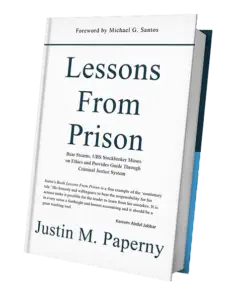
When I left Taft in 2009 for the Vinewood halfway house in Hollywood, I had a manuscript that became my first book, Lessons From Prison, and a decision to keep talking openly about my case and my time in a minimum-security camp.
On one of my four-hour passes, my mother picked me up, and we drove back to downtown Los Angeles. I wore the same suit I had been sentenced in. It was now far too big after thousands of laps around the dusty track in Taft. A cleaner had told me to throw it away. I wore it on purpose. I wanted to walk back into the same type of buildings where I had once pitched investments and now talk about prison.
I went into ten law offices that day. My pitch was:
“My name is Justin Paperny. I was recently released from federal prison after a securities fraud case. I wrote a book I believe can help your clients who are under investigation or facing sentencing. I do not want to sell you anything. The book is free. Can I leave some copies here?”
Most offices told me to leave. One receptionist said she would call my probation officer. Only one lawyer, Mark Werksman, shook my hand, took the book, read most of it that night, and called the next morning to ask for ten more copies.
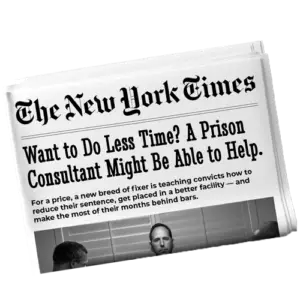
That one call was enough to show me there was a need for honest, specific guidance for people heading into this system. Over time, that cold-walking, writing, and speaking turned into White Collar Advice. We create books, articles, YouTube content, webinars, and other resources for people dealing with securities fraud, wire fraud, tax cases, healthcare cases, and related federal charges. We also run weekly free webinars for families and defendants.
What I Tell Anyone Facing Securities Fraud Federal Prison
If your life now includes phrases like “securities fraud federal prison,” here is what I would urge you to do while there is still time to influence the outcome:
- Write out exactly what you did.
Not what “went wrong” in the market. Not what your firm did. Not what your client did. What you did. Put it on paper in plain language. If you cannot do that yet, you are not ready for a productive conversation with a judge, probation officer, or agent. - Treat the presentence investigation and sentencing as serious work, not a formality.
Show up with a written life history, a clear explanation of the offense conduct, and concrete examples of what you are doing now: work, restitution, counseling, service, writing, education. If you walk into the PSR interview empty-handed, someone else will define you in that report. - Stop assuming your lawyer can do everything.
You need good counsel. But no lawyer can live your days for you. Judges and probation officers will study how you have spent your time since indictment: what you have done, not just what you have said. Build a calendar that reflects what you claim you value. - Plan how you will use time if you do go to a camp.
Securities fraud federal prison can be 18 months of television, gossip, and exercise, or it can be 18 months of reading, writing, documenting growth, and building a record you can hand to a case manager, probation officer, or future employer. That does not happen by accident. Decide in advance what a good day in prison looks like and hold yourself to it. - Accept that people in authority are skeptical and earn their respect anyway.
Prosecutors, agents, judges, and case managers see a steady stream of defendants promising change. Talk is cheap. The only way to influence them is through sustained, documented behavior over time. That is as true in securities fraud cases as it is in any other federal case.
I cannot undo what I did. I cannot erase the fear and loss I caused. I can describe, in detail, how I ended up in federal prison and what I would do differently if I were standing where you are now.
Thank you,
Justin Paperny, Author of Lessons From Prison and Ethics in Motion
FAQs: Securities Fraud Federal Prison, Sentencing, And Preparation
How do securities fraud cases usually start before they become federal?
They often start with losses and complaints. Investors contact the firm. Compliance reviews trades, emails, and notes. If the conduct looks like more than bad judgment or market risk, regulators get involved. If they see potential fraud, they may involve the FBI and the U.S. Attorney’s Office. By the time you hear “federal investigation,” people have already spent months building a file on you.
Does everyone convicted of securities fraud go to federal prison?
No, but many do. For first-time, non-violent securities fraud offenders, the most common federal placement is a minimum-security prison camp. Whether someone goes to prison at all, and for how long, depends on the loss amount, guideline calculations, criminal history, cooperation, and what they do between indictment and sentencing. A guilty plea and apology alone do not usually keep someone out of prison.
What is a federal prison camp like for a securities fraud case?
In my experience at Taft Federal Prison Camp, there were no cells, no gun towers, and no bars. It was still prison: open dorms, counts, a prison job, and constant noise. Many people watched television most of the day, walked the track, played sports, and waited for time to pass. Staff did not control how you used your hours, as long as you followed rules. The real danger was wasting the time and returning home with no plan and nothing documented.
What should I do as soon as I learn I am under federal investigation for securities fraud?
Do not panic and do not ignore it. Hire competent counsel. At the same time, start working on your own story: write a timeline, document your work history, and begin addressing the conduct honestly in writing. Learn how the PSR works. Start adjusting your life now: finances, lifestyle, alcohol or gambling issues, anything that played a role. Waiting rarely helps. You cannot talk your way out of an email trail.
How can I reduce a potential federal prison sentence in a securities fraud case?
No one can promise a specific sentence. What you can do is improve your position. That means accepting responsibility as early as possible, assisting your lawyer by understanding and owning your conduct, documenting restitution efforts, doing legitimate work (even work below your old status), volunteering, getting counseling if needed, and building a written record over months that shows you are not the same person who committed the offense. Judges and probation officers notice defendants who start that work early and stick with it.
Is it better to keep quiet and let my lawyer “handle everything”?
In my case, staying quiet and hoping others would fix it for me was a disaster. Lawyers handle legal strategy. Only you can change how you live, how you think, and what you put in writing each day. If you treat this as a passive experience and rely only on a plea and a speech at sentencing, you are likely to get a harsher outcome than someone who has been building a record of change for a year.