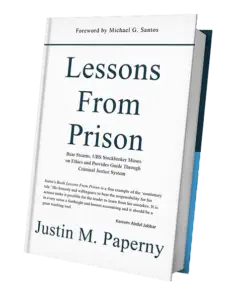
Note: The chapter below is reproduced exactly as I wrote it in 2019. The summaries, FAQs, and modern context appear after the chapter for clarity.
Table of Contents
What I Built to Generate Daily Inbound Demand
I receive an average of 10 prospective customer contacts per day. That volume was planned. I built a consulting business by developing digital marketing skills over time and applying them as the digital landscape changed. I relied on digital marketing strategies to support client outreach and revenue generation.
Sandra and I expanded the consulting business by offering marketing strategies and services to businesses in different industries, including physicians, accountants, contractors, landscapers, retailers, manufacturers, auto sales, and other small businesses. These businesses relied on processes and systems designed to attract prospective customers. The marketing tools we used included e-books, digital brochures, video channels, animated and whiteboard videos, podcasts, email campaigns, voice-activated apps, and automated bots.
Sandra learned copy editing, cold outreach to small businesses, interviewing business owners, overseeing explainer video production, and managing social media agency work. Together, we worked on developing storytelling processes and marketing campaigns for clients.
I describe working with Tom, who operated Tom’s Backyard Services. After purchasing a $1,000 jungle gym and later spending more than $4,000, we discussed using digital marketing to share his business story. A coordinated marketing campaign increased the volume of his business.
I also describe working with Adam, whose family business, Liberty Printing, lost market share as desktop publishing replaced offset printing. We created a new marketing plan that included storytelling, integrated web design, video and audio production, email campaigns, online ordering, and customer acquisition strategies. That plan resulted in a reinvention of the business as Liberty Marketing.
Register for our Tuesday federal sentencing and prison webinar: Join Webinar
Also, grab a copy of our new book, 14 Costly Errors Leading to Longer Sentences.
Living Deliberately
On any given day, an average of 10 prospective customers contact me.
I didn’t say 100, or 500 prospective customers contact me. I said 10 prospective customers contact me.
That was the plan. It was a plan that evolved over time, requiring that I learn new skills along the way as the digital-marketing landscape changed. By learning new skills, I built a consulting business in a niche industry that I’ll describe in more detail below. To build my consulting practice, I relied heavily on digital marketing skills that I developed over time.
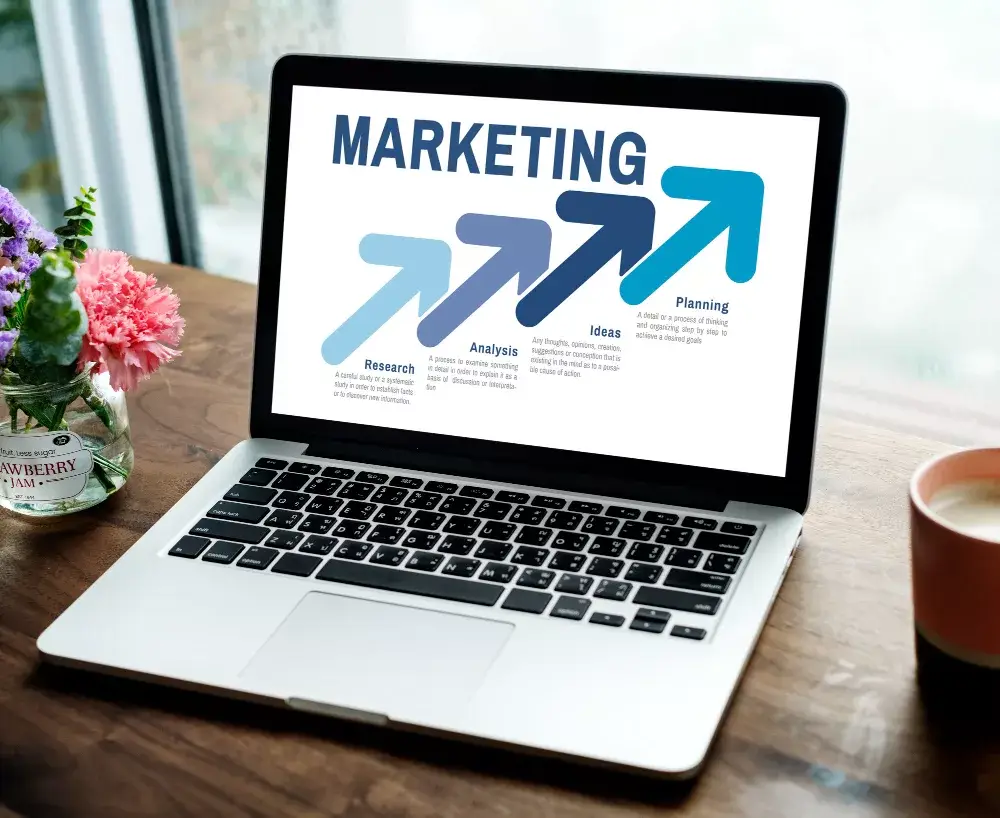
Digital marketing skills are now in high demand—applicable in any business—because they work. Digital marketing strategies and campaigns help companies nurture relationships with more prospective customers. Those relationships convert into more revenues.
For that reason, I’m writing this book.
Referrals from business owners that my wife (Sandra) and I know has led to new opportunities. We’ve been supplementing our family income from my consulting business by creating marketing strategies and offering services for other businesses that are in completely different sectors than ours. We now work with:
- Physicians,
- Accountants,
- Contractors,
- Landscapers,
- Retailers,
- Manufacturers,
- Auto sales, and
- Small businesses of every type.
What do all of those businesses have in common? They all thrive when they find more prospective customers. Businesses build value when they create processes and systems to grow their customer base.
Digital marketing helps the clients we serve, just as it helped Sandra and me build our businesses.
Power of the Story:
With a steady commitment to digital marketing, business owners can tell their story. The stories they tell should communicate their culture to prospective customers. When businesses invest heavily in telling their stories, they build good will and trust with prospective customers. The stories familiarize prospective customers with what they can expect if they choose to do business. Closing deals with new customers is much easier when prospects have that trust before they make the first call.
We help business owners develop processes and systems to build more trust!
Sandra and I work together to show leaders all the ways that they can engineer a story-telling process that leads to more customers. Innovators can use technology—in all formats—to convey who they are to their prospective customers. Technology makes it easy to tell stories with:
- E-books
- Digital brochures
- Video channels
- Whiteboard or animated marketing videos
- Podcast channels
- Email campaigns
- Voice-activated apps
- Auto-responding bots
Effective digital-marketing strategies help business owners tell stories, leading prospective customers along the customer-acquisition journey. Prospects advance through the “sales funnel” in a non-salesy, non-gimmicky way. As leaders build trust and authenticity along the pathway to customer solutions, they generate more sales and brand loyalty for business owners.
By using values-based, goal-oriented strategies, business owners get the results they want. Prospective customers make buying decision when they have confidence in the people on the other side of the transaction. Sandra and I have found this truism through our business. By working with businesses on client-services projects, we’ve found that every owner can work systematically to build better relationships with their customers. While building a consistent flow of prospective customers, without the headaches of debt, corporate boards, or high overhead, we build a higher quality of life.
Although I’ll share our story, this book isn’t about Sandra and me. Rather, I’m offering insight that other entrepreneurs and career-focused individuals may consider. By sharing how I went from:
- Setback and financial reversal to
- Struggle to
- Planning a comeback
- Sowing the seeds
- Nurturing the seeds
- Learning along the way
- Consulting to help others
I found that I could create additional value for other small business owners. In turn, we create collaborative relationships. Those relationships lead to mutually beneficial gains.
Family Business:
Although our clients operated in different sectors, we all shared something in common: We all wanted to lead happier, more fulfilling lives. And happiness, we understood, wasn’t always measured by money.
During my personal journey of transformation—from stockbroker to struggle to consultant—I learned a lesson attributed to Gandhi:
- We derive happiness when we keep in harmony
- Everything we think,
- Everything we say, and
- Everything we do.
Consider this book a case study. I’ll reveal lessons that my wife Sandra and I learned as we made the decision to work together. Sandra abandoned security that comes from an Ivy League education and employment in corporate America. Rather than relying upon the status quo—and being miserable working for a Fortune 100 company—she impressed me with her courage and incredible work ethic.
- Sandra invested the time to read books on copy editing.
- She learned how to “cold walk” into small businesses and sell the vision of how we could help them acquire new customers.
- She learned how to interview business owners to help them tell their stories more effectively.
- She learned how to oversee the process of creating explainer videos.
- She learned the magic of social media, and began doing agency work to help our clients connect with more prospective customers with images, articles, videos, and audio files.
By working together, Sandra and I have found a work-life balance that allows us to live the life that harmonizes with all that is important to us.
Living in accordance with our values is what delivers Sandra and me the most happiness. We’re convinced that a values-based, goal-oriented approach to life can work wonders for other business owners, too. We enjoy owning a business that allows us to spend time with each other and with our two children, Alyssa and Jason.
Through our consulting business, we’ve learned that many small business owners would like to have our quality of life. But when they’re working on supplying goods and services alone, however, they’re always worried about where they’re going to find the next customer. I had this experience with Tom.
My wife and I live in the west end of the San Fernando Valley in Los Angeles County. Each morning when I drove my daughter to school, I passed the parking lot of a restaurant. And each day I’d see a small red pickup with a sign on the door: “Tom’s Backyard Services—for kids and adults.”
I used to admire the clear messaging. From his sign, I could tell precisely what value Tom wanted to provide for his customers. I wondered how many people called Tom, and how frequently he was able to ply his trade.
Then I had my opportunity. Sandra and I were expecting our second child, Jason. In anticipation of Jason’s birth, we decided to treat Alyssa to a jungle gym. We wanted her to have something to play on in the safety of our backyard.
I knew precisely who to call. I called Tom to inquire about his backyard services. He agreed to visit our house.
When his little red truck pulled into our driveway and stepped, Tom looked exactly like I imagined. He wore Bermuda shorts and flip-flops. He carried a clipboard and a tape measure. When he walked into the backyard, he asked several pertinent questions, demonstrating his knowledge of the jungle gym market. He wanted us to have a set that would work well for Alyssa, and also work well as our new baby joined our family.
“How much is that going to cost us?” I asked.
Tom said it all depended.
I asked him what he meant.
“If you want a jungle gym that will last a few months and then start falling apart,” he said, “I can recommend someone that can build it for about $200. But if you want the benefit of my 20 years’ experience, I’ll build you something that will last. The gym I’ll build will grow with your family and keep your kids safe. That will cost you $1,000.”
Tom was a pro. From our conversation, he could tell that family safety was of the highest concern for Sandra and me. I admired his salesmanship.
“Well, I guess it’s going to be a $1,000,” I told him.
“Ok then,” he said as he started writing up the order. “What kind of golf clubs were those that I saw in your home office,” he asked.
“Ping” I responded, not knowing that he noticed my clubs.
“How often are you able to get out to practice your putting?”
“Not as much as I’d like,” I said. “Responsibilities with business and the kids limits my time.”
“I noticed that you have another slice of lawn beside where I’ll build the gym. If it makes sense, I could install a little putting green for you at the same time.”
Tom was a consummate sales professional, and I complimented him on the upsell. He was sincere when he told me that he wasn’t trying to sell me anything. He just wanted to make sure that I knew my options. That conversation led to my spending more than $4,000 with Tom. We followed up with a conversation on how digital marketing could help him share the story about Tom’s Backyard Services—for kids and adults with prospective customers.
Tom got a bigger order from me, but he also got the benefit of a digital marketing campaign. By sharing his story, we were able to increase the volume of his business relatively quickly. Marketing helps us show prospective customers our solutions to solve their problems.
Sandra and I were happy to share all that we’ve learned about digital marketing with Tom. Creating processes and systems could help Tom escape the hamster wheel of chasing down new prospective customers. By reaching out to prospective customers with coordinated campaigns, he was able to build a more fulfilling life and a more profitable business.
Again, building effective processes and systems doesn’t happen overnight. There’s an old saying that an overnight success is 20 years in the making. I’m hoping that by sharing lessons we learned along the way, our readers (and clients) will accelerate their path to more fulfilling lives.
Building processes and systems begins with a plan.
What’s your plan?
Our plan may not be right for everyone. But it still works for us. We tweak it from time to time, investing more to create new products or services that we can add. In general, we always move in the same direction.
Through this book, I’m hoping you’ll get ideas to create a plan that will work for you.
Not for Everyone:
But let’s be honest. This book (and my work) is not for everyone. I’m reminded of a story I read about James Patterson. You may know Mr. Patterson. According to a Google search, James Patterson has sold more books than any other author. An interviewer asked Patterson how he would respond to critics, like Stephen King, who alleged that James Patterson was not a good stylist.
Patterson didn’t skip a beat. He told the interviewer, “I’m not a great stylist.” He elaborated by saying, “Look, there are millions of people that don’t like the stories I write. Fortunately, there are a few million people that do like what I write.”
That is the same way I feel about many prospects that reach out to me. Some of those people get the message. The people that want to work with me understand that the greatest enemy is the status quo. They understand that if they keep doing what they’re doing, they’re going to get the same results.
I trust that you’ve read the philosopher who wrote that the definition of insanity is doing the same thing over and over again—but expecting a different result.
If you’re running a business, and you’re disappointed because you don’t know where your next customer is going to come from—but you’re not willing to try something different—then where does that leave you? It would sound to me that you’re a victim of the status quo. You don’t want to accept that if you want change, you’ve got to make some changes.
Neither this book, nor the services I offer, will work for people who aren’t receptive to making changes. To get better results, we’ve got to be willing to listen, learn, consider changes in the marketplace, plan to adapt, and implement the plan. We understand that the plan will require us to do things differently. Those changes we make should deliver the results we want. We should always be open to dealing with the world as it exists, rather than as we would like it to be.
In my case, I was forced to make such a decision. An abrupt change in my life—which I’ve described in my previous books and which I’ll reveal in the pages to follow—forced me to make a change. It was change or die. Yet in my consulting practice, I work with many small businesses like Tom’s. Those businesses must exist and grow in a changing marketplace. A business owner like Tom may not have the same level of abrupt change in his life. But the market place is changing. People that rely on magnetic door signs on the side of their pickup trucks to get new business are losing market share. More innovative competitors are adapting. They’re running Facebook campaigns, Linked In campaigns and Google ads to get new business. By adapting to the changed marketplace that relies upon digital campaigns, they’re winning. In order to grow, all business owners must learn to do something different.
Or they must find someone to help them.
Let me offer Adam’s story as an example. Adam’s father immigrated to America. Over time, he followed the immigrant’s path that we’ve heard so many times in the past. He worked seven days a week, saving as much money as he possibly could. In time, he accumulated enough savings to purchase Liberty Printing, a small company that offered printing services to local businesses. That printing company grew over time.
Adam worked at Liberty Printing through his school years. He watched the company grow, with new customers that brought more purchase orders. Liberty Printing invested in offset printing machines and built its staff. Then, over time, desktop publishing and other software made their small printing business obsolete. Why would someone hire an offset printer when they could create letterhead, business cards, brochures, and other simple printing jobs with a desktop printer?
Adam told me that his small family business had failed to adapt to the changing marketplace. Sales stagnated. Liberty Printing lost market share.
By working together, Adam and I had built a new model for his business: we found a niche. We created a new marketing plan that included a combination of:
- Story telling
- Integrated web design
- Video production
- Audio production
- Email campaigns
- Online ordering
- Customer acquisition strategies
All of those changes led to a reinvention for Liberty Marketing. If Adam had not been willing to recognize that he had to change with the changing marketplace of a digital economy, he acknowledges that his business would have failed. There wasn’t an abrupt change in his personal life, as was the case with my career. In his case, there was a change in the market. A slow, creeping change. To Adam’s credit, he was willing to do the work.
Top Misconceptions
- Digital marketing applies only to online businesses → The chapter lists multiple offline service industries using digital marketing.
- Business growth requires hundreds of daily leads → The chapter states a target of 10 daily contacts.
- Printing businesses could not adapt to digital changes → Liberty Printing was rebuilt with new marketing strategies.
FAQ
How many prospective customers contacted the author each day?
An average of 10 prospective customers contacted him daily.
What types of businesses did the consulting practice serve?
The practice worked with physicians, accountants, contractors, landscapers, retailers, manufacturers, auto sales, and other small businesses.
What marketing tools were used in client campaigns?
Tools included e-books, digital brochures, videos, podcasts, email campaigns, voice-activated apps, and automated bots.
What happened after implementing digital marketing for Tom’s business?
The volume of Tom’s business increased following a digital marketing campaign.
What changes were made to Liberty Printing’s business model?
The business adopted storytelling, web design, video, audio, email campaigns, online ordering, and customer acquisition strategies.