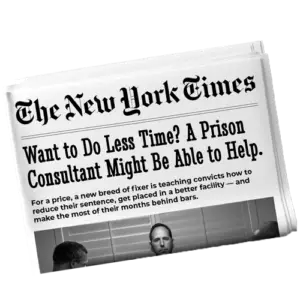
A journalist called me recently. He is writing a piece about sentencing mitigation and wanted to understand what I do. He found me because a few years ago Jack Hitt at the New York Times wrote a lengthy article about White Collar Advice. Jack followed us for nearly two years: clients through their probation interviews, sentencing, and into prison. The headline was something close to “Want a Shorter Sentence? A Prison Consultant Can Help.”
So this new journalist asked me directly: what exactly do you do?
The media calls me a prison consultant. I view my role differently. But I did not dodge the question.
How a Journalist’s Question Led to Full Transparency
A prison consultant is someone who charges money to help defendants and their families prepare for prison. What to bring. What to expect. How to behave. How to navigate the Bureau of Prisons. Fees range from a little to a lot, like any business in America.
What surprised the journalist was what I said next.
Everything a prison consultant sells, you can get for free. Everything. The blogs, the videos, the podcasts, the books, the weekly webinar I lead every Tuesday. All of it is on this site at no cost.
He pushed back. “Don’t you have an interest in selling things?”
Yes. But what I believe people should invest in is not a prison consultant. It is the engineering of a documented outcome through the creation of real assets. That is what we bill for. The education, the preparation framework, the tools: those are free.
What a Prison Consultant Actually Does
To be fair about it: there is some value in what legitimate prison consultants offer.
They can tell you what a specific facility is like. The culture, the layout, the programs, the staff reputation. If you have never been inside and you are trying to understand what you are walking into, that information has some value.
They walk you through self-surrender. What to wear, what to bring, what to say when you arrive, what intake looks like. Useful. Also available in a free checklist on this site.
They explain programming. RDAP, educational courses, First Step Act credits, UNICOR jobs. The right programming can take real time off a sentence.
They help families understand the phone system, email, visiting, commissary.
Some people find it therapeutic. Talking to someone who has been inside, processing the fear, asking questions they are embarrassed to ask their attorney. I understand that. I felt that fear in 2008 when I reported to Taft Federal Prison Camp.
The problem is not that the service exists. The problem is that in my experience it is rarely rooted in reality, and there is rarely the depth and breadth of knowledge behind the advice that the price tag implies. If you are going through the system for the first time, you have nothing to compare it to. You cannot vet what you are hearing. You think the advice is fantastic because you have no basis for comparison.
In the land of the blind, the one-eyed man is king.
Michael Santos and I wrote that line together at the end of my first prison blog, October 12th, 2008. I think about it every time I hear a story like the one I am about to tell you.
The Mother Who Called Me Crying
I was driving home when my phone rang. A mother, crying hysterically. She had been stolen from.
Her husband had just gone to prison for seven years. She was scared, she wanted him home, and she had spoken with a so-called consultant in Florida. The guy had gone to prison, come home, broken the law again, gone back to prison, and was now charging vulnerable families tens of thousands of dollars for compassionate release petitions.
Her husband had just arrived at his facility. He had been there about seventeen seconds.
She wired the money. Not a credit card, a wire transfer, because if you pay by credit card you can file a chargeback. The consultant knew that. The money was gone.
I want you to think about what was being sold here. A man gets a seven-year sentence from a federal judge. Victims have been harmed. The sentence reflects that. And a consultant is going to file a compassionate release petition and expect a case manager to say: yes, I don’t care about the victims or the judge’s sentence, send him home, he just got here.
That is not how compassionate release works. That is not how any of this works. And a consultant who has actually served time and understands the system knows that. Which means he knew he was selling something he could not deliver to a family desperate enough to wire money to a stranger.
I do not fault that family. They were vulnerable. They wanted him home. That is human. But defendants, and their families, you cannot afford to skip the due diligence. Ask where they served. Ask for how long. Ask for names of people who can verify their work. Ask for clients you can call. Inconsistencies in those answers are your answer.
What Prison Consultants Cannot Do
A prison consultant cannot get you into RDAP. Eligibility is determined by BOP staff based on documented substance abuse history. Anyone implying they can make that happen regardless of your history is lying to you.
A prison consultant cannot guarantee your halfway house placement. Case managers make those recommendations based on your record inside: your programming, your disciplinary history, your release plan. A phone call from a consultant does not factor into that decision.
Years ago a Washington Post article went viral about White Collar Advice. I asked the journalist Peter Holley not to use the headline. He said he was using it. The print headline was “The Fixer and Felon Who Prepares the Rich for Prison.”
I told him: I am a felon. I am not a fixer.
We advise. We guide. We teach. We help people create assets that influence how probation officers, judges, and case managers see them. That is very different from fixing. And the idea that a prison consultant is going to fix your situation without you doing the work, that is the myth the industry survives on.
Someone called me recently who had spoken with a consultant. The consultant told them their release plan was too long. The case manager would not read it.
I have been home from prison for 17 years. My release plan is about 7,000 pages. Michael Santos, who served 26 consecutive years and whose framework is the foundation of everything we teach at White Collar Advice, his release plan is probably closer to 7 million. Every day I write a blog, film a video, document my work: I am adding to my release plan. A release plan does not end. It is a living record of who you are and what you are doing with your life.
A consultant telling someone their release plan is too long does not understand what a release plan is.
The Call That Said Everything About This Industry
Someone attended our free weekly webinar and called me afterward. He was home from prison. He had a suggestion.
“Stop making it seem like so much work,” he said.
I asked him what he meant.
“You talk too much about how hard it is going to be. Just tell people what they are going to get. More halfway house time. A shorter sentence. And tell them you are going to do all of it for them. Isn’t that kind of why you charge the big bucks?”
He was describing exactly what a prison consultant does. Give me your money. I will fix it. You will not have to do the hard work.
The message is seductive, especially when you are scared and new to a system you do not understand. But here is what does not change regardless of who you hire or how much you pay: the case manager who determines your halfway house placement hears every day that someone misses their family, did not mean for it to go this far, has good intentions going forward. She knows what she is going to say. Should have thought about that before you broke the law.
To overcome that cynicism you need a record. A documented, timestamped, verifiable record of who you are, what you learned, where you are going, and how you are part of the solution. You cannot produce that record in seven seconds with ChatGPT and send it to a case manager and expect a different outcome. You cannot outsource it to a consultant. You cannot fake it. It has to be built over time, every day, in a way that is real and touchable and shareable.
That is the only way.
I told the webinar caller I appreciated the call. And then I told him I was not going to change the message. If telling people the truth about how much work it takes costs me clients who want to be told someone else will handle it, that is fine. Those clients are not well served by hiring us anyway.
What We Give Away Free
I want to be specific because vague claims mean nothing.
The probation interview course is on this site. I used to sell it. I am giving it away. If you want to understand what the probation interview is, how to prepare for it, and how it influences your designation and programming, complete the course. It takes hours. That is the point.
The RDAP course is also here. The Residential Drug Abuse Program can take up to 12 months off a federal sentence. Prison consultants charge tens of thousands of dollars to explain it and walk someone through each phase. I lead the course and give it away.
The self-surrender checklist: what to bring, what to leave behind, what to say, what intake looks like.
Calculators and tools for estimated sentence length, RDAP credit, First Step Act credits, good conduct time.
The weekly webinar every Tuesday at 11am Pacific. Real questions, real answers, no script.
If a consultant is charging you for what is available here at no cost, you deserve to know that before you wire anyone any money.
What We Actually Charge For
Some of our clients pay significant fees. We bill for the engineering of documented assets: sentencing narratives, release plans, biographies, reputation management, business management during incarceration.
We do not charge for the education. We charge for the hands-on work of building the record alongside a client over a sustained period of time.
And I will say again what I told that webinar caller. I am not going to pretend the work is easy to make the sale easier. The clients who get the most out of working with us understand from the first conversation that the record they build is the only thing that follows them out. We engineer the framework. They do the work.
The Only Thing That Follows You Out
I served 18 months at Taft Federal Prison Camp beginning April 2008. I do not profess to know what I have not experienced. A short sentence at a minimum security camp does not give someone the depth and breadth of knowledge to advise on every federal prison situation. I know what I know and I am honest about what I do not.
What I know with certainty: I met Michael Santos at Taft. He became my mentor. The lessons we teach at White Collar Advice come from the 26 years he served, documented day by day from inside federal prison. If you can find someone with more documented experience than Michael Santos, hire them. But understand what you are comparing.
When I came home, my probation officer approved me to work with felons and travel the country speaking on ethics. Not because a consultant vouched for me. Because the record was timestamped.
I have been home 17 years. My release plan is still growing. Every blog I write, every video I film, every webinar I lead: that is my release plan. That is what I want for you. Not a consultant who tells you what you want to hear. A framework that actually works, given to you free, requiring only your time and your commitment to do the work.
Do your due diligence. Ask questions. Vet and confirm. Then build. Create. Document. Influence your outcome through a timestamped record that is real, that you can touch, that you can share.
Seventeen years after your release from prison, I hope that record is thousands of pages. If it is, you are engineering your desired outcome: a happier life, business, resources, reputation, dignity. What Michael Santos calls being the CEO of your own life.
You do not need a prison consultant. You need to start creating assets for the rest of your life.
Start today.
Justin Paperny
Frequently Asked Questions About Prison Consultants
Do I need a prison consultant for federal prison?
Most people do not. The majority of what prison consultants offer is available free through White Collar Advice, Prison Professors, and BOP.gov. If you want support from someone who has been inside, verify they have actually served federal time and ask for references you can contact before paying anything.
How much do prison consultants charge?
Fees vary widely. Some charge a few thousand dollars. Others charge $10,000 to $25,000 or more. There is no licensing body, no standardized pricing, and no credential that distinguishes a qualified consultant from someone with a website and a story. Always pay by credit card so you can file a chargeback if the service is not delivered. If someone asks for a wire transfer, that is your answer.
Are prison consultants legitimate?
Some are. Some are not. The field has no licensing requirement and no oversight body. Ask specifically: have you served federal time, for how long, and at what security level? Ask for names of case managers or probation officers who can verify their work. Ask for former clients you can call. Inconsistencies in any of those answers tell you everything you need to know.
Can a prison consultant get me into RDAP or a better prison?
No. Prison designation is controlled by the Bureau of Prisons using a security point calculation. RDAP eligibility is determined by BOP staff based on documented substance abuse history. No consultant can influence either decision directly. Anyone implying otherwise is not being honest with you.
What does White Collar Advice charge for?
We charge for the hands-on engineering of documented assets: sentencing narratives, release plans, biographies, reputation management, business management during incarceration. The education, the courses, the tools, and the weekly webinar are free. We do not charge for information. We charge for the sustained work of building the record.
What is the Straight-A Guide?
The framework Michael Santos developed over 26 consecutive years in federal prison, refined through his work at Prison Professors, and endorsed by and implemented inside every federal Bureau of Prisons facility. It is the foundation of everything taught at White Collar Advice. It is available free at prisonprofessors.org.
What should I do instead of hiring a prison consultant?
Start building your record today. Complete the free probation interview course on this site. Complete the free RDAP course. Download the self-surrender checklist. Attend the free weekly webinar. Create a Prison Professors profile. Have your attorney request your preferred facility before sentencing. Enroll in every qualifying program on day one. None of that requires a consultant. It requires your time and your commitment to do the work every day.