Table of Contents
How Meals, Schedules, and Commissary Access Actually Work
If you are preparing for federal prison, you will hear people talk about food more than almost anything else. Food Services and Prison Commissary determine when you eat, how much you eat, and what options exist beyond the main serving line. This chapter lays out how meals are served, how schedules work, what the commissary provides, and what rules control access.
Daily Meals and Food Budgets
Policy requires the Food Services Department to provide three meals each day. When the institution is not on lockdown, at least two meals are served hot. Schedules remain fixed unless there is a disturbance.
Food quality varies from one prison to another. Changes in wardens or administrators can alter menus and portion sizes. Regardless of location, the meals follow institutional standards.
Administrators set a daily food budget per prisoner. On the low end, budgets may fall below $3.00 per day. On the high end, some institutions exceed $4.00 per day to cover all three meals.
Higher security prisons sometimes allocate more funds to food. Administrators manage more volatile populations and may approve larger portions. In some facilities, people can receive seconds or heavier servings.
Food Services and Prison Commissary Atmosphere
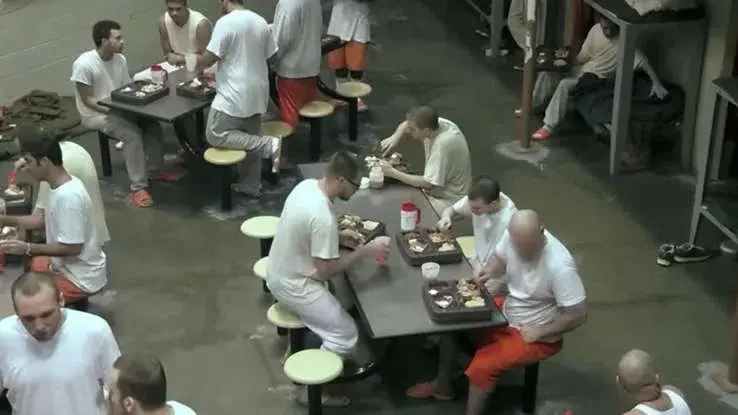
More than 80 percent of federal prisons serve meals in a large cafeteria called the chow hall. Lines can last up to 30 minutes, limiting time to eat. Seating is typically at two or four person tables.
In higher security facilities, people often separate by race, region, or affiliation. In low and minimum security prisons, that separation is less visible. Staff presence remains constant during meals.
Department heads and senior staff stand mainline during chow. Their role includes answering questions and watching for unauthorized food movement. Taking food without permission can result in a 200 series disciplinary infraction and loss of good time credits, consistent with Bureau of Prisons discipline rules outlined by the U.S. Courts and internal BOP policy.
People housed in SHU or on lockdown receive meals through door slots. Food arrives at room temperature. Orderlies handle delivery.
Mainline Interaction Example
Alan described standing in line at the Atlanta chow hall. The warden was present, along with several staff members. Alan overheard another prisoner raise a law library complaint.
The warden paused and called over a lieutenant. He ordered the prisoner transferred to Lompoc while referencing the missing book. Alan stepped out of line after witnessing the exchange.
Meal Schedules
Prisons operate on strict daily schedules. Breakfast typically begins around 6:00 a.m. A last call announcement gives roughly ten minutes to arrive.
Lunch usually begins around 11:00 a.m. and ends by 1:00 p.m. Because of crowd size, units are released in waves.
UNICOR workers eat first. Other work details follow. Housing units are released based on sanitation scores.
Dinner follows the 4:00 p.m. count and mail distribution. The chow hall remains open for about one hour.
Meals are served on plastic trays with plastic utensils. Metal and glass items are not used. Disposable utensils appear in some facilities.
Weekend schedules differ. Breakfast starts later and brunch replaces lunch. Holidays sometimes involve bagged meals.
Food Types and Menu Rotation
The Food Service Administrator sets the menu. Menus run on a five week cycle with rotating days. Meat substitutes such as soy or cheese are available.
Some prisons provide salad bars and hot bars. Beans and rice appear regularly. Salad options often include lettuce, carrots, cucumbers, cabbage, and spinach.
These options allow people to assemble meals beyond the mainline. Portions on the hot and salad bars are not always limited. Availability varies by institution.
Gerard’s Food Routine
Gerard avoided the mainline entirely. He relied on rice, beans, vegetables, and canned fish from commissary purchases. Family support funded his commissary use.
He drank only water and avoided sugary drinks. He paid attention to dental care due to limited access to dental appointments. His routine remained consistent over time.
Kitchen Operations
Kitchen workers bring food from the warehouse before each meal. Prison labor prepares and serves all meals. Staff supervise portions and inventory.
Servers are monitored closely at the mainline. In higher security prisons, scrutiny over portion size may be lighter. Staff attention shifts based on institutional conditions.I described kitchen work in Lessons from Prison. Early in my sentence, I spent one to two hours each day cleaning pots and pans.
Special Meals and Religious Diets
The Bureau of Prisons offers common fare meals for religious diets. These meals meet kosher and other requirements and come from outside vendors. Once enrolled, participants may not eat from the mainline or hot bar.
Chaplains enroll people in common fare programs. Kitchen staff monitor compliance. Violations can lead to discipline.
During Ramadan, Muslim prisoners receive meals outside normal serving times. Institutions also offer annual ceremonial meals for various religious groups.
Holiday meals differ from standard menus. Thanksgiving includes turkey with sides. Summer holidays may involve approved cookouts with hamburgers and hot dogs.
Prison Commissary Access
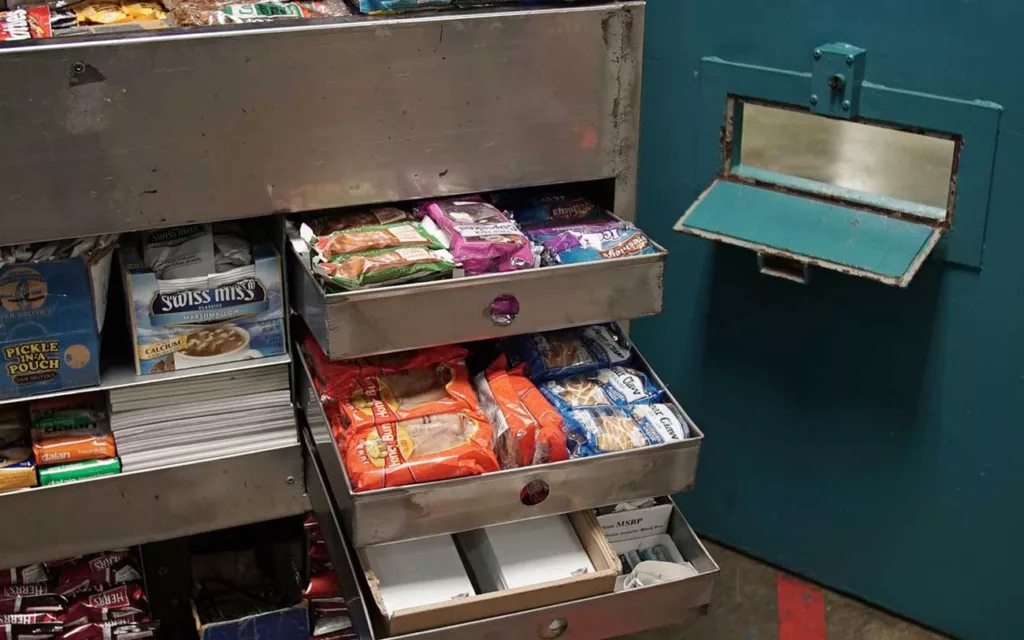
Every prison operates a commissary. People can purchase food, toiletries, sneakers, and limited clothing. Commissary lists vary by location.
Special purchase orders allow access to hobby and craft supplies. Some institutions permit athletic apparel purchases. Availability depends on local policy.
Monthly spending limits apply under national policy. Stamps, phone credits, and email credits usually fall outside those limits. Inflation adjustments occur periodically.
People can survive without commissary funds. Basic expenses often run around $100 per month. Access to $600 per month allows more food options.
Shopping occurs on assigned days based on registration numbers. Workers gather items and staff deduct funds from accounts. Funds come from prison wages or outside deposits.
People in SHU face commissary restrictions. Access is limited by housing status.
Some prisons provide vending machines. Items include sodas, snacks, sandwiches, and microwavable food. Some people rely entirely on commissary and vending items.
Jake’s Choice
Jake avoided the chow hall. He preferred reducing exposure to large crowds and searches. He arranged vegetables through kitchen workers and supplemented with commissary food.
He also used vending machines. His routine stayed consistent. He avoided the chow hall altogether.
Food availability varies by institution. Administrators control menus, budgets, and access. Complaints are common but change nothing.
Thank You,
Justin Paperny is an ethics and compliance speaker and founder of White Collar Advice, a national crisis management firm that prepares individuals and companies for government investigations, sentencing, and prison. He is the author of Lessons From Prison, Ethics in Motion, and the upcoming After the Fall. His work has been featured on Dr. Phil, Netflix, CNN, CNBC, Fox News, The Washington Post, and The New York Times.
FAQ
Can commissary access be suspended for discipline reasons?
Yes. Disciplinary sanctions can restrict commissary access. Housing status such as SHU placement also limits eligibility.
Are food portions the same at every federal prison?
No. Portions depend on institutional budgets, security level, and administrative priorities. Menus follow national standards but vary locally.
Can someone change from common fare back to mainline meals?
Changes require staff approval. Switching back and forth is not allowed without formal reassignment through the chaplain.