Table of Contents
Table of Contents
Commissary Prison JobsPrison Jobs in Food ServiceCentral Maintenance Services JobsEducation Department Prison Jobs
Do Nothing Prison JobsWorking Into the Right Job in Federal Prison
Job Details in Federal Prison Explained Job Details in Federal Prison determine daily routines, income, access, and structure. Assignments vary widely in pay, workload, and autonomy. Understanding how jobs are assigned, which roles offer leverage (more free time), and how waiting lists operate helps people make better decisions.
How Job Details in Federal Prison Are Assigned
Administrators assign people in federal prison to specific bunks and to specific jobs. With limited exceptions such as being in transit, placed in segregation, enrolled in A&O, or medically unassigned, nearly everyone receives a work assignment. These assignments are commonly called work details. In practice, Job Details in Federal Prison exist because administrators believe idle time leads to disruption inside the institution. It is also essential to keep the prison running.
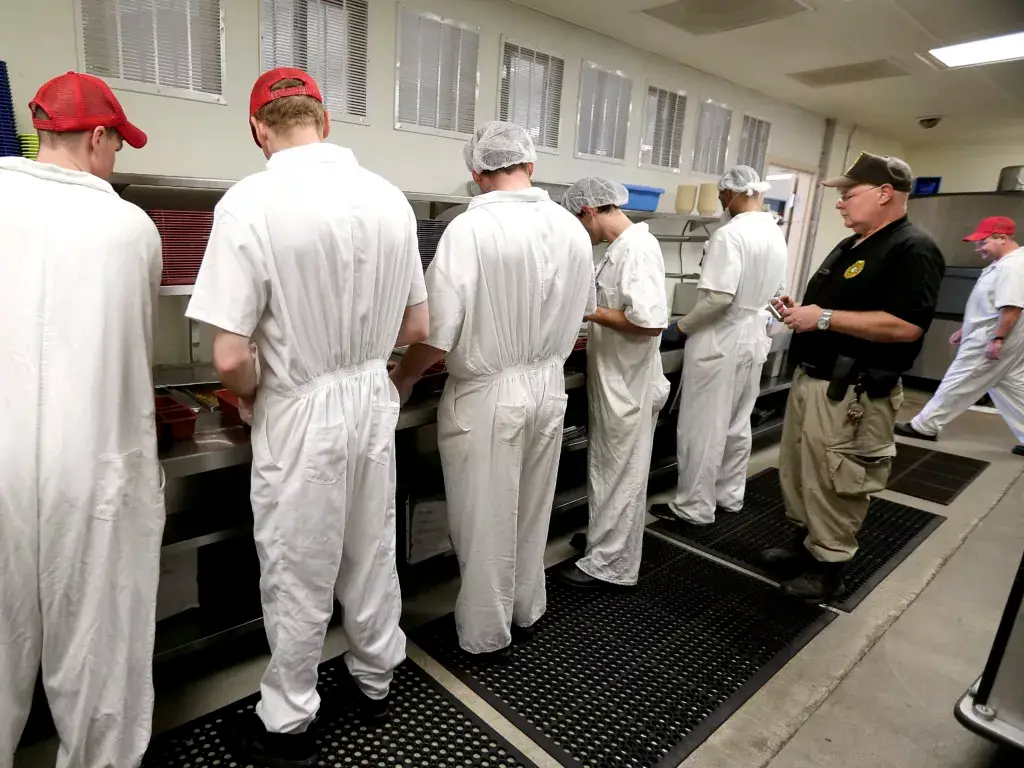
Not all prison jobs are equal. Some positions pay more than others, sometimes approaching $200 per month, but those jobs often involve structure, supervision, and responsibility. Other jobs pay what amounts to a prison minimum wage, often less than $10 per month, and may offer more flexibility. Prison wages are extremely low. As in any closed labor system with an oversupply of workers, compensation remains minimal.
Although staff members supervise every area of prison life, the system depends on inmate labor. Prisoners unload food shipments, work in warehouses, prepare meals, clean kitchens and dining areas, maintain facilities, and keep housing units functioning. Without this labor, daily operations would stop.
People also work as electricians, plumbers, carpenters, factory workers, tutors, clerks, landscapers, and sanitation workers. Some jobs require skill and consistency. Others exist primarily to keep people occupied. Despite the abundance of available labor, there is a shortage of desirable positions.
Prison Jobs and UNICOR Factory Work
Many federal prisons operate factories through UNICOR, a wholly owned government corporation with annual sales exceeding $500 million. UNICOR uses prison labor to manufacture goods for government use, including mattresses, cables, military uniforms, mailbags, linens, and towels. Roughly 25 percent of the inmate workforce is employed in UNICOR factories.
People often pursue UNICOR jobs because of higher pay. While most prison jobs pay less than 25 cents per hour, experienced UNICOR workers who log overtime may earn more than $200 per month. A required condition is that UNICOR workers must apply 50 percent of their earnings toward court ordered financial obligations.
Some people value the work itself. Craig explained why he chose to stay in UNICOR.
Craig’s Story
“Even if they took away the pay, I would still work in the UNICOR factory,” Craig told us. “I handle shipping paperwork and manage inventory tracking. I have my own assigned computer and learned multiple software systems. After ten years inside, I have skills that most people here do not. I type over 100 words per minute. When I am working, I do not feel like I am in prison. I also earn about $200 per month.”
Others leave UNICOR dissatisfied.
James’ Story
“Forget UNICOR,” James said. “I waited four months just to get hired, even with a fine that put me on the fast track. I had to agree to give up half my pay. The job itself was automated, and I carried most of the workload for supervisors who barely understood the system. If a gate delayed me or I wanted to attend a class, they treated it like a problem. Half my pay was gone anyway, so I quit.”
UNICOR profits are reinvested into prison operations, including education and recreation. Monthly payroll at some institutions exceeds $50,000, all credited to inmate accounts. That money goes toward fines, commissary purchases, family support, underground economies, and savings for release.
Commissary Prison Jobs
Commissary jobs are among the highest paid positions. Workers unload shipments, organize inventory, and fill individual orders submitted by prisoners. Shopping does not involve browsing. Prisoners submit written order forms, which commissary workers assemble under staff supervision.
Despite higher pay, commissary work is demanding. Unlike other departments that may be overstaffed, commissary operations require sustained labor throughout each shift.
“I like the commissary because it pays well and keeps me busy,” Bob said. “I can also shop whenever I am working.” Bob earned close to $200 per month and valued the routine.
Prison Jobs in Food Service
Food Service employs roughly 15 percent of the prison population. Higher paid positions include warehouse workers and clerks who earn around $100 per month. Cooks earn slightly less. Dishwashers and cleaners typically earn between $20 and $70 per month.
Some people prefer Food Service because they eat well. Others supplement income by stealing food, a practice that carries a high risk of serious disciplinary charges. Those caught stealing face severe consequences.
Many consider Food Service undesirable due to constant pressure, noise, and fast paced meal schedules. Nearly the entire prison population passes through the chow hall daily.
Central Maintenance Services Jobs
Central Maintenance Services includes electrical, plumbing, carpentry, painting, and mechanical work. Apprenticeships exist at some institutions. Pay ranges from $20 to $80 per month based on seniority rather than performance or skill level.
Education Department Prison Jobs
Education jobs include library clerks, tutors, and administrative support roles. These positions are quieter and appeal to those who prefer structured environments. Pay is low, usually under $20 per month.
Shon Hopwood used his law library job to teach himself legal research and writing. His work helped others secure relief, influenced legal outcomes, and led to law school, judicial clerkships, and a faculty position at Georgetown Law.
Andrew’s Story
Andrew began as a tutor, teaching English and Spanish GED classes for seven hours a day. He earned $14 per month. When he learned a bathroom cleaner earned more with fewer hours, he switched to a unit orderly job. The new role took less than an hour per day and paid more. Andrew continued helping others on his own time.
Do Nothing Prison Jobs
Crowding creates long waiting lists for preferred positions. Many long term prisoners keep desirable jobs. What qualifies as a good job varies. Some value free time. Others prefer structure or pay.
People may need to wait until another worker leaves before moving into a better assignment.
Working Into the Right Job in Federal Prison
After clearing A&O, counselors assign jobs quickly. Those who want specific roles should begin asking questions early.
UNICOR jobs involve waiting lists:
- UNICOR prior list for people who previously worked in UNICOR
- FRP wait list for individuals owing $1,000 or more in fines
- General UNICOR list where waits can exceed three years
Other job rosters may be influenced by senior prisoners or staff supervisors. Learning who controls assignments matters.
Gordon’s Story
Gordon wanted a library job but was assigned to Food Service. After connecting with someone who had influence, he secured the position he wanted by trading commissary items.
Camp Driver Prison Jobs
In minimum security camps, a few people serve as drivers, leaving the facility daily to run errands. At Lompoc Federal Prison Camp, one driver transported dairy products across state lines, staying in motels and eating at restaurants. These positions were rare and closely controlled.
Thank You,
Justin Paperny is an ethics and compliance speaker and founder of White Collar Advice, a national crisis management firm that prepares individuals and companies for government investigations, sentencing, and prison. He is the author ofLessons From Prison,Ethics in Motion, and the upcomingAfter the Fall. His work has been featured onDr. Phil, Netflix, CNN, CNBC, Fox News,The Washington Post, andThe New York Times.
FAQ
Do all prisoners have jobs in federal prison?
Most do, except during transit, medical unassignment, segregation, or A&O processing.
Which prison jobs pay the most?
UNICOR and commissary jobs typically pay the highest.
Is UNICOR mandatory?
No, but it has long waiting lists and financial deductions.
Can prison jobs reduce a sentence?
Jobs alone do not reduce sentences but affect daily structure and discipline records.
How soon are jobs assigned?
Usually within days after clearing A&O.
Are education jobs competitive?
They are quieter but lower paying and limited in number.
Can prisoners change jobs?
Yes, but changes often require waiting for openings.

Written by
Justin Paperny
Founder White Collar Advice