
Table of Contents
Life inside a federal prison camp shown through intake, housing setup, daily counts, commissary rules, and first-day routines.
Note: The chapter below is reproduced exactly as I wrote it inside Taft Federal Prison Camp in 2008. The summaries, FAQs, and modern context appear after the chapter for clarity.
Table of Contents
Learning the Ropes: First Days and Daily Structure in Federal PrisonLife Inside a Federal Prison Camp on Day One Arrival at Taft Camp comes after self-surrender, a short drive from the main institution, and entry into housing unit A4D. The physical setup is spelled out right away: four housing units built for about 150 men each, my unit running near 80 percent capacity with roughly 120 men, and cubicles made of concrete with steel bunks, lockers, and a small wall-mounted writing surface.
The daily structure shows itself within hours. A standing count happens at 4:00 p.m., another at 10:30 a.m., with several more counts layered through the day, while movement opens immediately afterward toward television rooms, microwaves, laundry, chow hall, and recreation. The track, courts, and indoor equipment are visible on the first walk around.
Money and commissary surface fast. I arrive with $343 on my books, hear about the $320 monthly spending limit excluding phone calls and postage, and learn that shopping at Taft can happen twice a week. Informal services appear the same day—offers for a mattress, cooking, cleaning, and laundry—along with a regular food rotation of beans, rice, and tuna during the week, nachos on Fridays, and pasta on Sundays.
Register for our Tuesday federal sentencing and prison webinar:Join Webinar
Also, grab a copy of our new book,14 Costly Errors Leading to Longer Sentences.
I Can’t Believe I’m in Prison
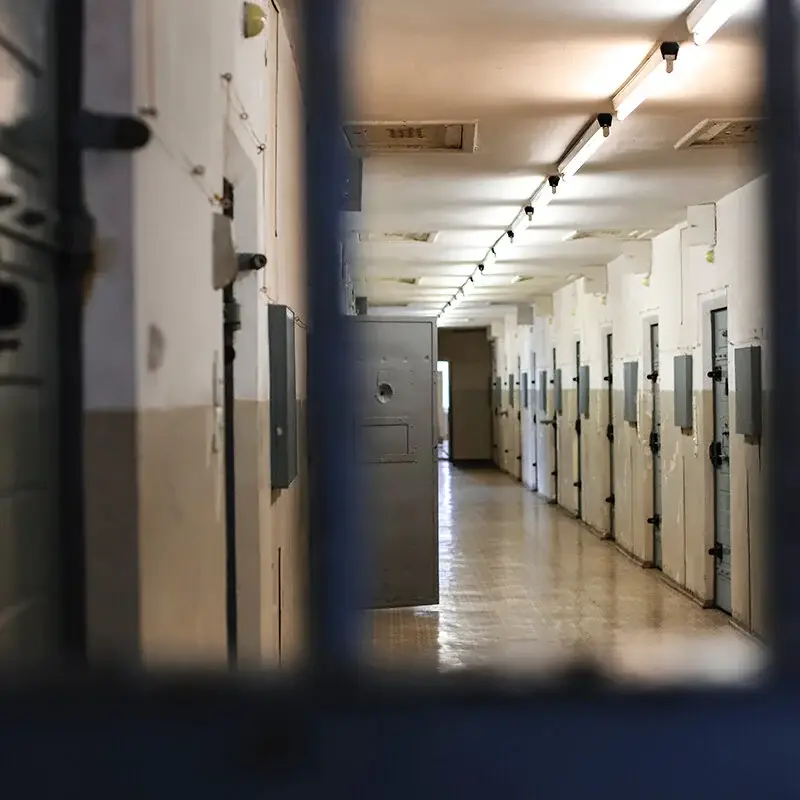
The Federal Prison Camp at Taft was tucked away behind the fenced-in, low-security prison that served as the main institution. Whereas double fences that were wrapped and separated with coils of glistening razor wire surrounded the perimeter of the main institution, the minimum-security camp stood out in the open, unsecured by any physical boundaries.
I wasn’t locked in any restraints as the officer drove me from the main institution to the camp. When he parked, I stepped out of the car and felt some relief with the first glimpse of my surroundings.
The prison camp did not bear any resemblance to the monolithic institution that had been clouding my imagination. Walt had told me that prison camps were pretty laid back, yet I had seen a lot of prisons depicted through films and television. I couldn’t shake the images of an impenetrable fortress that would separate prisoners from society. The Taft Prison Camp, however, looked no more imposing than a corporate office park.
A carpet of lush green lawn, blooming flowers, and sprawling palm trees welcomed me as I walked into the camp’s administration building. A friendly officer guided me toward the housing unit to which I was assigned, and I made my way to the unit designated with the address A4D.
The single building that housed the inmates was made of concrete, tilt-up construction. With long rows of mirrored, horizontal windows, the building resembled a headquarters for an upscale engineering firm. I arrived at the camp mid-afternoon, and I saw scores of other clean-cut men in khaki trousers and T-shirts socializing as if they were at a country club luncheon.
I noticed a running track off to the side of the building, and I felt enthusiastic about beginning my exercise program. In my mind, I walked around with the intention of not talking to any other prisoners. Yet all around me, I found friendly people greeting me and trying to ease my lingering anxieties.
The long, two-story building contained four separate housing units, each with a capacity to hold approximately 150 men.
Taft Camp is unique within the Federal Bureau of Prisons, as a private company with a management contract presides over the facility. As such, it does not suffer the type of overcrowding that complicates life in other federal prisons. When I arrived at Taft Camp, the population in my housing unit was listed at only about 80 percent capacity, with 120 men.
I found the building quite spacious. As a youngster, when I traveled across the United States playing baseball, I frequently stayed in college dormitories. The housing unit at Taft reminded me somewhat of those college dorm rooms.
Inside, they were built for efficiency and yet I was surprised by how much open space was available. I saw four rows of cubicles that were rather sterile, each constructed of a cinder-block concrete. The floor was an unfinished concrete surface. The cubicles at the front of the dorm had one set of steel bunk beds and another steel rack for a third person. Two lockers were available for the prisoners assigned to the bunk beds, and the person on the third bed used a drawer and storage box for his belongings. A tiny writing surface with a swivel, backless stool was attached to the wall as well. I sucked it up and realized that I could get used to the living conditions. I expected worse.
The first place I wanted to check out inside the dorms was the bathroom facilities. As I expected, they were of the locker-room variety. Inmates in the dorm would have access to sufficient quantities of sinks, toilets, urinals and showers. The bathrooms were finished in tile and, considering how many people used them, they were remarkably clean.
As I took my introductory walk around the unit, I saw one large recreational room with three televisions mounted on the wall. The inmates listened to audio broadcasts through headphones. Tables were available for games, and other inmates were battling it out with a vigorous match of ping pong.
The unit had three additional television rooms, a room with four microwaves, an ice machine for inmate use, and a quiet room that some inmates were using to study.
As I was walking around, with a curious and disoriented look on my face, another inmate approached.
“You new?”
“Yes. I just self-surrendered.”
“I’m Drew.” He offered his hand in greeting.
I told him my name, and we engaged in some small talk. He asked where I was from, how much time I was serving, and whether I had ever been confined before. I found Drew friendly, and appreciated him taking the time to show me around. Then a question came that caught me a little off guard.
“Did you surrender with any money on your books?”
I didn’t want to seem unappreciative, although I thought Drew was a little forward with his question. In my hesitation, he offered an explanation.
“I’m not trying to get all up in your business, but this is what I do. I’ve been in prison for a while and I’ve kind of got a little hustle going where I help the new guys settle in. If you want my help, I can get you some things to make your time a little easier here.”
That was my first exposure to the prison hustle, the underground economy. It turns out that it thrives in prison, and just as it does anywhere else in America, money helps. I brought $343 with me upon self-surrendering, and I quickly learned that I would need more. I felt as if I were conversing with the character Red from The Shawshank Redemption; perhaps the greatest prison movie ever, but it was not an accurate portrayal of a minimum-security camp.
“What kind of things can you get?” I didn’t know that I needed anything, but I was curious as to where Drew was going.
“I can hustle you a better mattress if you want,” he began. “I also perform a lot of services. I cook. I clean cubicles. I wash clothes. I even iron and polish shoes. Whatever you need, I can help you with.”
Drew, it turned out, was quite a hustler. He was serving time for a drug offense, but was supporting himself completely through work he performed for other prisoners. I took him up on his offer. Since I didn’t know anything about prison, I probably should have exercised a bit more discretion and observed more operations at the camp before engaging in transactions with others.
Just before four in the afternoon, each of the inmates in the unit retreated to their cubicles. Administrators throughout the prison system scheduled a census count at that time. As I walked to my assigned cubicle, I had my first opportunity to meet the others with whom I would be sharing space.
Walking into my cubicle on that first day felt awkward. When I processed into the camp, the officer told me that I was assigned to the top bunk in cubicle 39. I hadn’t seen another officer since. The camp felt as if it were a self-service prison. The other inmates lived on autopilot, knowing exactly where they were supposed to be and what they were supposed to be doing. When I walked into my cubicle, I saw a middle-aged man sitting cross-legged on his bunk as he read a paperback book by Stuart Woods. He looked up at me as I stood at the open entrance to the cubicle.
“Can I help you?” He seemed polite, a man of Asian extraction.
“I’m supposed to report to cubicle 39,” I stammered, as I spoke, a little unsure of myself.
“Come in,” the man stood to welcome me. “I’m Ted. Where are you from?” Ted was the second person to ask where I resided. People in the camp, I learned, were mostly from California, from both the northern and southern sections of the state. Ted was an engineer from Orange County, and within ten minutes I knew he was serving an 18-month sentence for tax evasion. He was cordial and helpful to me in understanding our responsibilities as inmates. As we were conversing, another man walked into the cubicle.
“Are you new?” The corpulent man in his fifties extended his hand in greeting.
“Yes,” I responded in shaking his hand. “My name is Justin.”
“Vladimir,” he introduced himself and I detected a strong foreign accent.
“Where are you from?” I learned quickly that such a question must be acceptable in this new world of mine.
“Russia,” Vladimir told me. I learned that he had been a professor of physics. As I was, Vladimir was serving time for fraud, though his sentence was 60 months. To me, that sounded like a lifetime, yet Vladimir was taking it in stride. It turned out that both his wife and son were serving time in separate prisons as they were convicted of participating in Vladimir’s crime.
The housing unit became silent as an officer yelled that he was about to begin the count, a ritual that was scheduled several times each day. Ted and Vladimir explained that we were supposed to stand silently during the daily counts that took place each day at four in the afternoon and at half past ten each morning. The officers counted us at least four other times each day, yet during those counts we usually could remain seated or lying on our racks.
Following my first count, I noticed many of the other inmates in the unit swarmed into the corridor from their cubicles. It was like an immediate traffic jam, with men of all ages rushing to the television rooms, the microwave room, the laundry room, or toward the six televisions mounted against the wall. The movement brought an electrifying cacophony with hundreds of screaming conversations.
As Vladimir and Ted left the cubicle, I slumped in a chair, crestfallen and holding my head. The first hour was a bit dizzying and overwhelming.
Walt told me that I would get used to the prison as I adjusted, and that I shouldn’t worry much in the beginning. Though I couldn’t help myself, I uttered a mantra in my head that I was strong enough to make it through. Still, I couldn’t stop thinking about 18 months. At that moment, a year and a half seemed like an eternity.
After an hour or so, I noticed that a quiet calmness had displaced the seeming storm of confusion in the housing unit. The change was rather abrupt. I emerged from my cubicle to see what had changed, and I found myself alone in the cavernous unit. The other prisoners had left the building and were walking toward the dining room, or chow hall as it was called.
I didn’t have much of an appetite, so I walked outside toward the recreation area. I found the outside facilities reminiscent of high school. An oval track enclosed a softball field, a soccer field, and tennis and basketball courts. There were horseshoe pits, bocce ball courts, and bars for both dips and pull-ups.
A recreation building included several stepping machines, a treadmill, stationary bicycles and medicine balls for strength training. There were no weights available at Taft Camp, but clearly, those who wanted to focus their adjustment on physical fitness would have every opportunity. As I walked around the track alone, I renewed my commitment to work myself back into great physical shape during the time I would serve in prison.
After a few laps, I took a seat on one of the benches to observe. I watched men playing handball, tennis, basketball, and running. Others were engrossed in workouts on the bars. It felt as if I were in a public park, yet one with the noticeable absence of women, children, and pets. Again, I missed my dog, Honey.
Many were running laps, oblivious to their imprisonment. I wondered what the men had done to warrant a prison term, and I admired their sangfroid. Would I ever become so at ease? I still didn’t know how I was going to make it through.
I thought about my mom, my dad, my brother and my sister-in-law. What were they doing? It was nearly six o’clock and I had been incarcerated for less than eight hours, yet at that moment, I felt totally alone. Never mind that I was in the midst of hundreds of strangers; I missed my family. To take my mind off the self-pity, I stood and walked over to the library.
Bookshelves held thousands of books. I certainly had a selection that could bring me up to date on westerns, romance, mystery, thrillers, adventure, and science fiction novels. I didn’t see as many nonfiction titles. Six typewriters were also available in an adjacent room with law books. I wondered how many people with law degrees were confined with me at Taft Camp.
Walking around and familiarizing myself with the new community settled my nerves. After more than one hour alone, I had had enough. I returned to my housing unit, feeling alienated, broken, crumbling from the weight of my imprisonment. Drew approached me again.
“You hungry?” he asked.
“Starving,” I said, surprised and grateful that at least one person seemed to remember me.
“I thought you might be. I nuked some grub, saved you a batch.”
“What?” I didn’t understand the vernacular.
“I made you some food dude. Want it?”
“Sure, yeah, thanks a lot.”
Drew brought me a plastic bowl filled with rice, beans, tuna, sliced tomatoes and onions. The food tasted delicious. As events would play out, that dish became a staple that would carry me through my entire prison journey.
“First one’s on the house,” Drew said. “If you want to ride in my car on the regular, you’re gonna have to kick some in.”
“What do you mean?”
“We need beans, rice, tuna,” he explained. “I cook for a few guys. Everyone throws in some food and I do the cooking. Clean your own bowls. Want in?”
“Sure. How do I get you the food?”
“You’re a real fish! If you’ve got money on your books, you can shop in the commissary. You can buy everything you need. Give me what I need on food nights, and I’ll whip it up. I kind of have a menu. We do nachos on Fridays, pasta on Sundays, beans, rice and tuna all week.”
I didn’t know anything. Drew brought me a list of items that I could purchase from the store, known as the commissary. At Taft Camp we were allowed to shop twice each week, with shopping days assigned in accordance with the score our unit ranked during a weekly cleanliness competition between the housing units. In other prison camps, I heard that prisoners could only shop once each week.
Drew explained that as federal prisoners, we had to abide by a spending limit that would not allow us to spend more than $320 each month, exclusive of prepaid phone calls and postage. That limit sounded sufficient to me.
“Believe me dude, most guys burn through their limits quickly. If you have trouble keeping it legal, let me know. I can handle things for you.”
“No, no.” I said. “I don’t want any problems. Had enough of those. I’m not interested in breaking the rules.”
“Suit yourself. But if you need anything, and you will, remember that I’m the guy who can make things happen. I’ll be by later tonight with your mattress.”
I’d forgotten what Drew said earlier about the mattress. I felt too tired to inquire further, so I thanked him again for the meal and lay atop my rack to rest. I had had enough for one day.
The clock had not yet passed eight, and fluorescent lights were burning directly above my head. The unit was alive with prisoners relieving their stress with card games and seemingly tall tales from home. Amidst the chaos, I drifted into sleep.
That first night, I recall many dreams tormenting me. All I could think about was prison, apparently. One succubus after another, each a Venus with a head of flames, laughing and ridiculing me for the abstinence ahead. The cruel and unusual portion of my punishment had begun; denial of the flesh had become my reality.
Top Misconceptions
- Federal prison camps are surrounded by fences and razor wire
- Housing units are overcrowded at all times
- New arrivals are closely escorted throughout the day
- Commissary spending is unlimited
- Prison food preparation only comes from official kitchens
FAQ How many people typically live in a housing unit at a federal prison camp? Housing units are designed for about 150 men, though population levels may run lower. In this chapter, one unit operated at roughly 80 percent capacity, with about 120 men assigned.
How often do counts occur in a federal prison camp?
Counts occur multiple times per day. The chapter specifies a formal standing count at 4:00 p.m. and 10:30 a.m., along with several additional counts where prisoners remain seated or lying down.
Are prisoners escorted throughout the camp after arrival?
After initial processing, movement inside the camp is largely self-directed. Prisoners move to counts, meals, recreation, and housing without constant supervision.
How does commissary access work in a prison camp?
Prisoners may shop once or twice per week depending on housing unit performance. Monthly spending is capped at $320, excluding phone calls and postage.
Can prisoners exchange services or food informally?
The chapter describes informal arrangements where prisoners cook, clean, or provide items in exchange for commissary food contributions, operating alongside official systems.

Learning the Ropes: First Days and Daily Structure in Federal Prison
Written by
Justin Paperny
Founder White Collar Advice