Article 2 of 31 | Series: Federal Sentencing & the Sentence Calculator
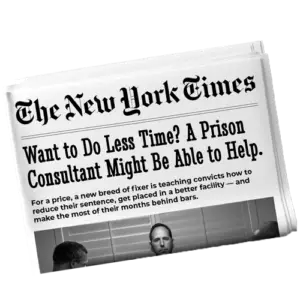
Next week I am flying to New York. Meetings with lawyers and clients, and I am sitting for an interview with The New York Times. That would have seemed impossible to me years ago — before my own federal case, before prison, before I had to rebuild from zero. I share it because when I sit across from someone who is facing a federal investigation or heading toward a sentencing hearing, I know what that moment feels like from the inside. I have been there.
One of the first things I tell people, after we get through the weight of where they are emotionally, is that we need to understand the framework. The federal sentencing guidelines are the foundation of everything that comes next. And almost nobody I meet understands them when we first talk.
You are sitting in your attorney’s office. They say: Your offense level is 22, your criminal history category is I, so your guideline range is 41 to 51 months. You nod. You say okay. You have no idea what any of that means.
I have had that conversation hundreds of times. Smart people, successful people, people who have run companies and raised families — sitting in that chair trying to absorb a number that does not feel real yet. But it is real, this is happening. And the sooner you understand how it was produced, the sooner you can start doing something about it.
More importantly — and this is what I want you to take from this entire guide — the guidelines are just a grid. They know nothing about you as a human being. Your job is to change that.
What Are the Federal Sentencing Guidelines?
The federal sentencing guidelines were created by the United States Sentencing Commission to bring consistency to federal sentencing. Before they existed, two people convicted of identical crimes could receive wildly different sentences depending on the judge they drew. Congress decided that was not acceptable. The Sentencing Reform Act of 1984 created the Commission. The guidelines took effect in 1987.
Here is what a lot of people do not know: the guidelines are advisory. The Supreme Court made that clear in United States v. Booker in 2005. Judges must calculate them correctly. They do not have to sentence within the range.
But here is the more important point, and it came from a conversation my colleague Michael Santos had with Judge Stephen Bough — a sitting federal judge. Michael asked him about the 3553(a) factors, the sentencing statute that governs what judges actually weigh. Judge Bough said it plainly:
The sentencing guidelines are generic. They have nothing to do with the human that is in front of you. The 3553 factors say now look at this person like a human, not like a grid on the back page of the sentencing guidelines. It is the antithesis — the opposite of the sentencing guidelines. Now I have got to look at you and your crime and your background. And what do you need to end up being a successful citizen of our country.
Read that again. The guidelines are a grid. The 3553 factors are where the judge finally looks at you. That is your opening. That is where preparation, documentation, and the record you build between now and sentencing actually matter. The defendant who shows up with nothing beyond the grid gets sentenced by the grid. The defendant who shows up with a real human story, backed by evidence, gives the judge something to work with.
United States Sentencing Commission
The Two Variables That Determine Your Guideline Range
Every guideline range comes from two numbers intersecting on a table. Your total offense level on one axis. Your criminal history category on the other. Where they cross is your range in months. That is the whole system. Now let us make sure you understand what goes into each one.
Variable One: Your Total Offense Level
Your offense level is a number, usually between 1 and 43, that represents how serious your offense is after all adjustments. It is built in three stages.
First is your base offense level. Every federal crime maps to a specific guideline section. Drug offenses fall under 2D1.1. Fraud falls under 2B1.1. Firearms under 2K2.1. Each section gives you a starting number based on the core facts of the crime. For drugs it is quantity and type. For fraud it is the financial loss.
Second are specific offense characteristics — adjustments based on how the crime was actually committed. Weapon involved? Points go up. Vulnerable victim? Points go up. You were a minimal participant with no real authority? Points can come down. These move the level significantly in either direction.
Third are general adjustments that apply across offense types. The most important one for most people is acceptance of responsibility. Plead guilty sincerely and the guidelines reduce your offense level by two levels. Do it early enough to let the government avoid preparing for trial and your attorney can request a third level. Three levels sounds like a technical term. In real time it is often a year or more off your range.
Variable Two: Your Criminal History Category
There are six categories, I through VI. Category I is for defendants with little or no prior record. Category VI is the most extensive. The category is calculated by assigning points to prior convictions based on how recent they were and how long those sentences ran.
Three points for a prior sentence over 13 months. Two points for 60 days to 13 months. One point for under 60 days. Additional points if you committed the current offense while on probation or supervised release.
Most people in our community land in Category I or II. But moving from one category to the next changes your range meaningfully, even when the offense level stays the same. It matters.
Reading the Sentencing Table
The sentencing table is a grid. 43 rows for offense levels. 6 columns for criminal history categories. Find where they intersect and you have your guideline range in months.
Let me make this concrete. Offense level 22, criminal history Category I: 41 to 51 months. Now watch what one change does.
Offense level 22, Category I: 41 to 51 months
Offense level 22, Category III: 51 to 63 months
Offense level 25, Category I: 57 to 71 months
Offense level 19, Category I (after 3-level acceptance of responsibility reduction): 30 to 37 months
That last row. A three-level reduction for a genuine guilty plea drops the range from 41 to 51 months down to 30 to 37. That is more than a year off the bottom of the range. Same crime. Same person. Available to virtually every defendant who pleads guilty and means it.
This is why understanding the guidelines is not passive knowledge. It feeds directly into your strategy.
When Mandatory Minimums Override the Guidelines
The guidelines produce a recommended range. But federal statutes can impose mandatory minimum sentences that override it from below. If your guideline range is lower than the mandatory minimum, the mandatory minimum is your floor. The judge cannot go below it regardless of what the guidelines say or what mitigation you present.
Drug trafficking is the most common context. Depending on drug type and quantity, federal law under 21 U.S.C. 841 can mandate five years, ten years, or more. Firearms charges under 18 U.S.C. 924(c) stack mandatory consecutive time on top of any underlying sentence — meaning it runs after your other sentence, not at the same time.
Know whether a mandatory minimum applies before you rely on the guideline range as your starting point. If it does, that is where the conversation actually begins.
The Adjustments That Move the Range the Most
This is where real decisions get made. The adjustments below are not just legal technicalities. They are levers. Some are available to almost everyone. Some require a strategic conversation early in the case.
Acceptance of Responsibility
Two or three levels off for a genuine guilty plea. Available to virtually every defendant who pleads. I want to be direct about something here: judges know the difference between a defendant who performs remorse and one who actually owns what they did. The former might still get the reduction. The latter earns it and often benefits beyond the reduction itself — in how the judge sees them during sentencing.
Role in the Offense
If you organized or led criminal activity involving five or more people, four levels get added. If you were genuinely a minimal participant — limited knowledge, no real authority, limited culpability — the guidelines can take off two to four levels. Role adjustments get disputed frequently. They are worth fighting over because the impact is real.
Cooperation with the Government
Providing substantial assistance to the government can result in a 5K1.1 motion — a request from prosecutors asking the judge to sentence below the guideline range, or even below a mandatory minimum. It is one of the most powerful tools available. It is also one of the most consequential decisions a defendant makes. Never pursue it without a full strategic conversation about what it actually involves and what you are realistically likely to receive in return.
Offense-Specific Adjustments
Drug cases: quantity is the primary driver but enhancements for weapons, prior convictions, and maintaining a premises stack on top. Fraud cases: the loss table under 2B1.1 drives the offense level up in steep increments, and enhancements for number of victims and sophisticated means can add significantly more. Firearms cases: type of weapon and connection to other felonies drive major variations before any mandatory minimums apply.
The Guidelines Are a Grid. You Are a Human Being.
I want to come back to what Judge Bough said, because it is the heart of this.
The guidelines do not know you. They know your drug quantity, your loss amount, your criminal history points. They produce a number. But federal judges are required to then step outside that grid and look at you as a person — your history, your background, your circumstances, what you need to become a contributing member of society.
That is where your work comes in. Not at sentencing — before sentencing. The defendants who walk in with nothing but a lawyer asking for leniency get what the grid says. The defendants who walk in with a documented story, evidence of who they are, and a real plan for what comes next — those defendants give the judge something to actually work with.
Judge Bough said it directly: there is something in those 3553 factors for everybody. If a judge wants to sentence someone leniently, there is a factor for that. Your job is to build the record that makes leniency the obvious choice.
Start working with our team now. We help you understand your guideline range, identify every adjustment that applies, prepare for your probation interview, and build the assets — the documentation, the narrative, the evidence — that give a federal judge a reason to see you as more than a number on a grid.
Ready to Turn Your Guideline Range Into a Strategy?
Ready to become more than a number on the guidelines grid?
Schedule a complimentary consultation with our White Collar Advice team. We help defendants understand their guideline range, prepare for the probation interview, and build the record that gives a federal judge a reason to see them as a human being worthy of leniency.
About the Author
About the author! Justin Paperny (hey, I’m writing about myself in the third person!) is an ethics and compliance speaker and founder of White Collar Advice, a national crisis management firm that prepares individuals and companies for government investigations, sentencing, and prison. He is the author of Lessons From Prison, Ethics in Motion, and the upcoming After the Fall. His work has been featured on Dr. Phil, Netflix, CNN, CNBC, Fox News, The Washington Post, and The New York Times.
FAQs
What are the federal sentencing guidelines and who created them?
The federal sentencing guidelines are a framework developed by the United States Sentencing Commission — an independent judicial branch agency — to bring consistency to federal sentencing. Created under the Sentencing Reform Act of 1984 and effective since 1987, the guidelines use a two-variable grid (offense level and criminal history category) to produce a recommended sentencing range. Since United States v. Booker in 2005, the guidelines are advisory — judges must consider them but are not required to sentence within the range.
How do I find out my federal sentencing guidelines range?
Your guideline range is calculated using two variables: your total adjusted offense level and your criminal history category. Your attorney should calculate this during case preparation and it will also appear in your pre-sentence report (PSR), prepared by a U.S. Probation Officer before sentencing.
You can verify the calculation by reviewing the offense guideline section that applies to your crime, tallying your criminal history points, and cross-referencing both on the USSG sentencing table available at ussc.gov.
What is an offense level in federal sentencing?
Your offense level is a number from 1 to 43 representing the severity of your crime after all applicable adjustments. It starts with a base offense level assigned by the specific guideline for your crime type, then increases or decreases based on specific offense characteristics (like drug quantity or fraud loss amount), and is further adjusted by general factors like your role in the offense and whether you accepted responsibility.
The final adjusted offense level is one axis of the sentencing table.
How does criminal history affect my federal sentence?
Your criminal history category — I through VI — is determined by assigning points to prior convictions based on their recency and the length of the sentences they carried. More points mean a higher category, which corresponds to a longer guideline range for the same offense level.
Even one or two additional criminal history points can push a defendant from Category I to Category II, potentially adding months to the recommended range.
Can a judge sentence below the federal sentencing guidelines?
Yes. Since Booker, the guidelines are advisory, and federal judges have discretion to impose a sentence below the guideline range if they find sufficient justification under the 18 U.S.C. § 3553(a) factors. Common grounds for downward variances include extraordinary family circumstances, significant medical conditions, the defendant’s history and characteristics, and substantial assistance to the government.
Building a strong sentencing mitigation package is one of the most important steps a defendant can take before their hearing.
What is acceptance of responsibility and how much does it reduce my sentence?
Acceptance of responsibility is a guideline adjustment under U.S.S.G. § 3E1.1 that reduces your offense level by two levels when you clearly demonstrate recognition of and remorse for your offense conduct. A third level is available if you provide timely notification of your intent to plead guilty, allowing the government to avoid preparing for trial.
This three-level adjustment can translate into months or years off your guideline range and is available to virtually any defendant who pleads guilty genuinely.
What is the difference between a guideline departure and a variance?
A departure is a movement from the guideline range based on specific grounds authorized within the guidelines themselves — such as a 5K1.1 substantial assistance motion or an upward departure for criminal history underrepresentation.
A variance is a movement based on the judge’s broader consideration of the 18 U.S.C. § 3553(a) factors, independent of the guidelines. Both can result in a sentence above or below the guideline range, but they arise from different legal authority and require different arguments.
How does the federal sentencing guidelines range connect to how long I actually serve?
The guideline range is the sentence the judge imposes — but the time you actually spend in federal custody is typically shorter, because federal law provides several credit programs that reduce your time served. Good Conduct Time, First Step Act earned credits, RDAP, and community placement time all reduce the gap between your imposed sentence and your actual release.
Our federal sentencing calculator starts with your imposed sentence and applies all of these credits so you can see your realistic release timeline.
KEY TAKEAWAYS
- The federal sentencing guidelines produce a recommended range — not a fixed sentence — based on two variables: your total adjusted offense level and your criminal history category, which intersect on the USSG sentencing table.
- Acceptance of responsibility is the most universally available adjustment, reducing your offense level by two to three levels for a genuine guilty plea — a difference that can translate into months or years of real time.
- Mandatory minimums can override the guidelines from below; always identify whether a mandatory minimum applies before relying on the guideline range as your floor.
- Errors and disputes in guideline calculations are common — drug quantities, loss amounts, and role adjustments are frequently contested — and verifying your pre-sentence report carefully with your attorney is one of the highest-value activities before sentencing.
- The federal sentencing guidelines tell you where you stand; your mitigation, your record, and your preparation determine where you actually finish — and our federal sentencing calculator shows you what that gap can look like with every available credit applied.