
Several years ago, Michael Santos called me after a presentation at a federal prison. Michael had begun implementing Prison Professors' Preparing for Success After Prison course throughout the Federal Bureau of Prisons. The program is now an approved First Step Act course.
After the presentation, a man who had hired White Collar Advice approached Michael. He thanked him for the talk. Then he complained about the release plan my team had helped him write.
When Michael called to tell me, I got defensive. Our team had completed the work. The client had reviewed it. Everything in the scope had been delivered. What exactly had we done wrong?
Michael wasn't interested in my defense of the document.
"Your client's always right," he told me.
On a Google Meet the next day, Michael helped me see the problem. It wasn't what my team had written. The man was serving four years, and we hadn't taught him how to use the plan. He needed help building a realistic daily routine, knowing what to write in his journal, and turning the books he read into the reports he'd promised. He looked at every assignment in the plan and felt buried.
When something wasn't working, he quit. He didn't know how to keep going through the hard weeks. We had delivered the release plan; he needed help putting it to work. That conversation is why every release plan we write now includes continuing work with you throughout your sentence.
What Is a Federal Prison Release Plan?
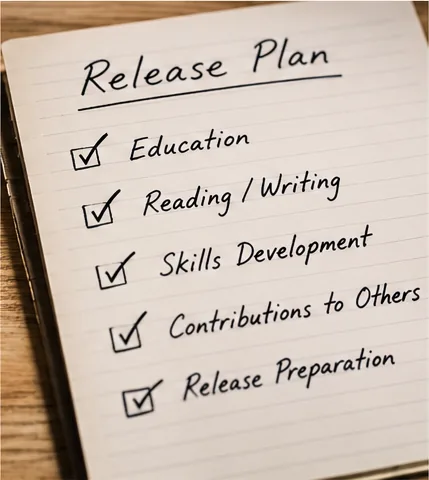
A release plan is a written document explaining how you intend to live, work, support your family, meet financial obligations, and comply with supervision after leaving federal prison. The question I want you answering is simple: What specifically will I do with my freedom, and what have I already done to prepare for it?
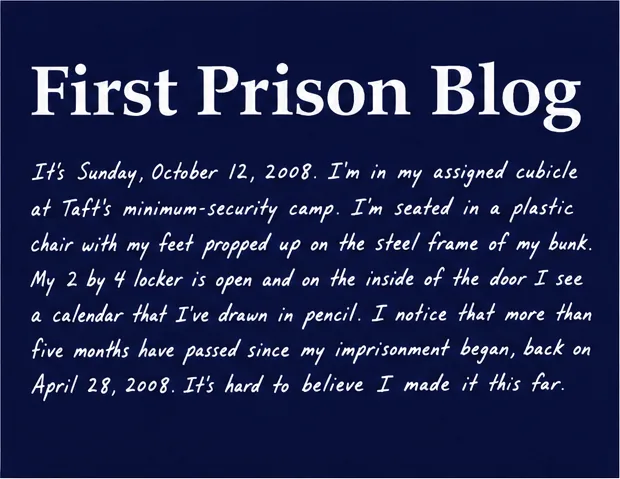
When I surrendered to Taft Federal Prison Camp in April 2008, I didn't think this way. I just wanted out. I gave little thought to the problems waiting for me at home. Michael changed that. On October 12, 2008, I wrote the first draft of my release plan and started documenting how I spent my time. I've written every day since.
Most people I speak with focus on getting out. They want First Step Act credits, good conduct time, halfway house placement, or admission to the Residential Drug Abuse Program. You can pursue many of those through qualifying programming without a comprehensive release plan.
Our team works with people who want more. Someone who looks at a four-year sentence and asks what he can accomplish in those four years. Someone who wants to study subjects he never had time for, help the people around him, and come home with more than certificates documenting attendance at required classes.
A written plan should answer those questions, but our team also wants to know what you'll do with an ordinary Tuesday afternoon in prison. What will you read or write about? What happens when a class isn't offered or a phone call with your family goes badly?
Who Reads Your Release Plan, and When
Before sentencing. Your attorney may include the release plan with your sentencing submission so the judge can see what you've done since the case began and how you intend to use your time. The probation officer preparing your presentence investigation report will interview you about your background, employment, family, and finances. A documented plan lets you answer with records instead of memory. We coordinate with your attorney on what is submitted and when.
During your sentence. Your case manager and unit team track your programming and conduct. Time stamped book reports, journals, and completed coursework give them a record to work from.
At the halfway house and on supervision. Staff and your supervising probation officer will ask where you'll live, where you'll work, and what you intend to do. When I came home, my probation officer had questions about my plan to work with people who had felony convictions. I had written about that work for months from Taft. Those records helped me explain my plans and get the approvals I needed to work with felons and travel the country speaking on ethics.
For years afterward. Employers, landlords, lenders, and anyone else who searches your name may encounter the work you've published.
"Who's Your Favorite Baseball Player?"
A doctor considering White Collar Advice told me another consultant had called release plans a waste of money. Nobody was going to read it.
I asked who his favorite baseball player was.
"Aaron Judge."
We talked about the Yankees. In December 2022, they signed Judge to a nine-year, $360 million contract. That's $40 million a year.
Judge had just hit 62 home runs, breaking Roger Maris's American League record. He batted .311, drove in 131 runs, and won the American League MVP. The Yankees weren't paying $360 million for a promise that he'd become a great player someday. They had watched him produce for several seasons.
Suppose your probation officer asks what you've done since your guilty plea. You've applied for 40 jobs, volunteered 150 hours, and completed 12 book reports. You don't have to remember it all during the interview. You bring the records, with dates.
"Aaron Judge had his statistics," I told the doctor. "What will you have?"
A Journalist Asked How I Met My Wife
A journalist once asked me how I met my wife, Sandra. I told him she had read my release plan on my website. I wasn't joking.
My writing from Taft didn't move my release date by a single day. It did build a record that people could read to learn who I was becoming, instead of judging me only by what I'd done. Sandra was one of those people. So was my probation officer.
I wanted out early, and I wanted more freedom at the halfway house. Everyone does. But I was also thinking about the decades after release. How would I earn a living? How would I earn the confidence of people who knew about my conviction? I wanted a plan I could defend with work I had already completed.
There's work involved. You have to stay engaged, try things that fail, and put your ideas on paper. Some of what you write today will make you cringe in five years. I know the feeling.
What Goes Into a Federal Prison Release Plan?
Here are eight questions every release plan should address. The answers should become more specific as you complete programs, develop employment opportunities, and approach release.
- Housing: Where will you live, who will live with you, and is the residence appropriate for supervision?
- Employment and income: How will you earn a living? Have you contacted employers, developed skills, or arranged work?
- Family responsibilities: How will you support your spouse or children and address relationships affected by your conviction?
- Financial obligations: How will you pay restitution, fines, and living expenses? What does your actual budget look like?
- Community contributions: Where will you volunteer, mentor, teach, or otherwise help others?
- Education: What have you learned in prison, and how will you put those skills to work after release?
- Supervision: How will you meet probation requirements, communicate with your officer, and comply with restrictions?
- Health and treatment: What arrangements have you made for medical care, counseling, or substance use treatment where needed?
A weak release plan says, "I intend to find a job, spend time with family, pay restitution, and become a productive member of society." A stronger one identifies the employer and job opportunity, expected income, proposed restitution payment, residence, and people who have agreed to help. If you say you'll volunteer with Prison Professors, show what you've already written, what projects you'll continue, and how often you intend to contribute. Those details give someone evaluating your plan something specific to examine.
How White Collar Advice Develops Your Individual Release Plan
1. Your Personal History
I spent years in the securities industry before my conviction. I couldn't go back to being a stockbroker. I had to look at what I knew, what I enjoyed, and how I might earn a living with a felony. A physician with 30 years in practice faces different questions than someone who ran restaurants or sold real estate.
We'll discuss your career, education, family, interests, and what has changed since the investigation began. Maybe you've gone to work in a different industry, started volunteering, or enrolled in a course. Maybe you've found an interest you never considered before the case.
2. Your Case and the Obligations That Continue
Your case may affect your income, professional licenses, family support, and financial obligations. If you owe restitution, we discuss how you'll address it and how you might earn money after release.
If you have children, how will you stay involved? Weekly letters, help with homework, a set phone schedule. If your spouse has been managing the family's finances alone, how will you take part in those decisions now and take on responsibility when you're home?
Someone contesting the allegations has different considerations than someone who has pleaded guilty. We work within the facts of your case and coordinate with your attorney.
3. What You've Already Done
Some people call a year before sentencing. Others call three weeks before surrender. One person has finished an alcohol treatment program. Another volunteers five hours a week. Someone else has applied to 50 employers and received 50 rejections.
Bring the records. Where do you volunteer, doing what, how often? Which courses have you finished? Which books have you read, what did you learn, and what have you applied? The person with 50 rejections should document every application, interview, and response, and what he's doing differently.
4. Your Work in Federal Prison
Say you want to come home and start a small service business. We'd identify the books worth studying, the financial knowledge you need, and the restrictions a felony may create. You might spend your time studying pricing, customer service, basic accounting, and how to operate on limited startup capital.
Someone else wants to earn a degree, learn a language, write a book, or help other people prepare for release. If the education department offers a related course, we build around it. If it doesn't, we identify books, writing exercises, and independent work.
5. The Halfway House, Home Confinement, and Supervised Release
Where will you live? If you're returning to the same home, what will your financial responsibilities be? If you need housing, how will a conviction affect your application? How will you earn a living? Do you need professional approvals? Who has agreed to help you find work?
6. Reviewing Your Progress
After 90 days, you planned to read six books. You've finished four and written reports on each. The course you wanted isn't offered at your institution, so you've picked books that cover the subject. You committed to writing your children every week, and you haven't missed one.
Those updates become new profile entries and tell us what to work on next. Over a long sentence your goals will change. We update the plan and build new assignments around them.
What Happens After We Write Your Release Plan
Continuing content development for your Prison Professors profile now runs through your entire sentence.
Before you surrender, our team interviews you, writes your biography and release plan, and identifies assignments that will become journal entries, book reports, and updates on what you're studying. We draft from those interviews. You review, correct anything inaccurate, and add details as your circumstances change.
Some weeks you'll have plenty to write about. Other weeks you won't want to open a book. During those stretches, we work from interviews and assignments we've already discussed, so there's always a draft to review or a question to answer when you're ready.
After 90 days, your profile may hold book reports, journal entries, and updates on what worked and what didn't. After a year, you can compare what you planned on your first day with what you actually completed. After three or four years, you may have built a course, written dozens of book reports, helped others start profiles, and logged hundreds of hours of service, every entry dated.
Your conviction won't disappear. The government's press release and the news articles will still come up when someone searches your name. Next to them will be years of dated work.

Earn an A Through Merit
I want people in our community aiming higher than the minimum. Take someone who wants to help people leaving prison understand money. He finishes a financial education class and gets a certificate. Then he keeps going. He reads books on personal finance, builds a budget worksheet, and writes lessons showing how someone earning $18 an hour can account for rent, transportation, groceries, and restitution.
He asks the education department if he can teach a financial literacy class. If they approve, he prepares the lessons, runs the sessions, and writes about the questions participants asked. His Prison Professors profile holds the curriculum, his journal on building the course, and reports on the books behind it.
Prison Professors keeps a leaderboard of people who contribute writing at each institution. I want you near the top of yours. If you've published 25 entries, let's talk about 50. If you've finished 10 book reports, what would 10 more take? Could you get five people in your housing unit to start profiles?
Compete for the top spot.
Why I Fund Prison Professors
At Taft I met men who never had the opportunities I wasted. Most will never afford a firm like ours. That shouldn't keep them from books, courses, and people who have been through the system.
When I first began writing my release plan in October 2008, I was trying to get home, find work, and figure out how to support myself with a felony conviction. I had wasted opportunities as a stockbroker that some of the men around me had never been given. I wanted my prison experience to become an asset, even though I had no idea what that might look like. Over time, I saw how my writing could help someone else. The older I get, and the more I see people in prison develop skills and help each other, the more committed I become to making that opportunity available for free.
Michael Santos founded Prison Professors Charitable Corporation, and White Collar Advice helps fund it so people in prisons and jails use its resources at no cost.
As of early November 2026, Prison Professors had about 10,000 profiles containing more than 20 million words of original writing. The next goal is 50,000 profiles and 50 million words. Your profile becomes part of that record. Read more about why I support Prison Professors.

How the Engagement Works
Before you hire us, you receive a written scope of work.
- Recorded interview. A member of our mitigation team interviews you on Google Meet, sometimes for several hours. We cover your career, family, finances, education, case, what you've done since the investigation began, and what you want to study. We will push back on vague answers.
- Your release plan. We write the first draft from the interview and your records. You review and correct it, and we refine the assignments, schedule, and goals together.
- Your Prison Professors profile. It may include your biography, release plan, book reports, and journals. You decide whether it's public or private, and whether it carries your legal name or a pseudonym. Samuel Clemens wrote as Mark Twain; you may have reasons to do the same during a federal case. We may also ask you to name 10 people who know your work and can give truthful testimonials.
- Continuing content. We use your interviews and updates to write new entries throughout your sentence, on a publishing schedule we agree on in advance.
The scope spells out the frequency, duration, and assignments of the continuing work. People in our community are also invited to our private call every Tuesday at 9:30 a.m. Pacific. Family members can join. On those calls, we discuss how to develop your release plan and Prison Professors profile into assets you can use, including how to share your work with a federal judge, prison case manager, probation officer, or halfway house staff member. We help you create the material, then teach you how to implement the plan and discuss what you've accomplished.
Can a Release Plan Help Me Get Out of Federal Prison Earlier?
That's one of the outcomes I want you working toward.
Suppose you've served two years and you're meeting with your case manager about spending more time in the community through a halfway house or home confinement. During those two years, you've completed educational courses, written 40 book reports, published 100 journal entries, and helped other people at your institution. You have a release plan with housing arrangements, employment prospects, and people willing to support you when you come home.
I want the case manager to see that work. Maybe it influences a recommendation for more time in the community. Maybe it gives someone a reason to consider you differently from the person who arrives at the meeting with nothing but promises. I can't predict what that individual will decide, but I'd rather help you spend two years preparing for the conversation than two weeks scrambling to make a case.
I receive calls from people with 48-month sentences who want to know exactly how many days they'll serve. I understand why. I wanted out of prison, too.
What do you want a case manager, probation officer, or halfway house staff member to know about you? What could you begin doing now that would matter to that person later? That's why I want us working backward from the outcome you're hoping for, developing the plan, and putting in the work while you have time.
Could a record of exceptional work influence decisions about your liberty? I believe it could. That's an outcome worth working for.
What If I'm Already in Federal Prison?
Start now. You may be six months in, or six years. You may already have finished courses, read dozens of books, held an institutional job, or written about your experience.
We interview you about the work you've completed, your current plans, and what you want to do when you come home. Then we build your release plan and Prison Professors profile from there. On a long sentence, you have years to study subjects in depth, develop educational material, and get others at your institution writing.
What Does It Cost?
Start with a complimentary call. We'll discuss your circumstances, what you've already done, and what you're hoping to accomplish. If our team can help, you'll receive a written scope with the work and fee.
Let's Build Your Federal Prison Release Plan
You may be facing 18 months, four years, or much longer. Whatever the number, I want you thinking about what you'll have finished when you come home.
We'll set up your Prison Professors profile and keep building it with you throughout your sentence.
When someone searches your name and finds the government's press release, I want them to find the work you've done since. A conviction may follow you for the rest of your life. So can the record you build in response.
We will never ask you to do what we have not done and documented.