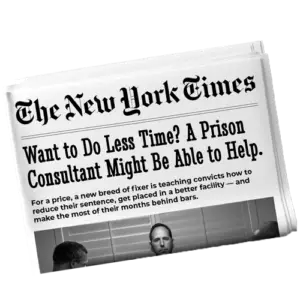
The most effective thing a federal defendant can do before a sentencing hearing is build a documented, time-stamped record. Not a last-minute letter. Not a character witness. A sustained record that gives a federal judge a reason to sentence the person, not just the crime.
Two clients showed what that looks like on our April 8th webinar. One avoided 7 years under the federal sentencing guidelines. The other walked out of sentencing with probation. Both had been building their record for years before they sat in front of a judge.
What happened on this call
Nevin Shetty joined us first. Former CFO of a large Seattle technology company. He went to trial in October 2025 on federal wire fraud charges and lost. The government pointed to a $35 million loss figure and federal sentencing guidelines calling for 9 to 11 years. The probation officer’s first draft of the pre-sentence report read, in Nevin’s words, like the prosecutor wrote it. The judge sentenced him to 24 months. He is self-surrendering to a minimum security federal prison camp in Duluth, Minnesota in July.
Then Richard Sherman called in live. He was two hours off the courtroom floor, still at his hotel. The government had been pushing for prison time on a 0-to-13-month plea deal. He got two years probation and time served. He said this:
“The judge spent over 20 minutes talking about the different things that we had worked on, referenced the letter from Michael Santos, Prison Professors, and specifically said, ‘you have been doing these things for over three and a half years since you started.’ I don’t think there was any chance I would have gotten that outcome… It was all of the work that you helped me do. I’m absolutely convinced of it, because the judge talked about it. That led to that outcome.”
And then he said something I want every person reading this to sit with:
“Your attorneys tell you all the things that you have, and you think of all these things that matter, and none of it matters at the end. The judge is going to sentence the crime unless you give them a reason to sentence the person.”
How Nevin influenced his pre-sentence investigation
Most people in federal cases treat the pre-sentence investigation as something that just happens to them. Nevin treated it as the first real opportunity.
When his pre-sentence interview was scheduled, he called his lawyers and told them to contact the probation officer before the interview. Flag the case as unusual. Ask for a closer look. His lawyers said they had never done that. He made them do it anyway. The probation officer was open to the conversation.
From there, his team submitted a written memo explaining the facts of the case. He also had a non-profit organization focused on alternative sentencing submit a letter to the probation officer at the PSR stage, not just later to the judge. Something they had never done at that point in a case. The letter went in.
The 90-minute interview itself was something Nevin had prepared for. He walked in with organized education records, medical history, course certificates from online programs completed during his case, and two years of documented AA participation.
When the draft pre-sentence report came back, it was full of inaccuracies. His lawyers wanted to address only the major issues. Nevin objected to every single line item that was wrong. The probation officer changed nothing in his narrative. But he recommended 24 months on a $35 million loss with guidelines of 9 to 11 years.
The probation officer is your first audience in this process. If your lawyer cannot explain your story, the probation officer cannot either. You have to give them assets they can work with before, during, and after that interview.
The two pitfalls I keep seeing
I opened the call with a story about a client who reached out 16 months after his federal indictment, close to sentencing, scared that nothing was landing the way he expected. He had paid back millions. He had cooperated. He had stayed out of trouble. He thought that was the job.
He had no record. Nothing time-stamped. Nothing that put a human being in front of the judge instead of a case file built by the government.
If you do nothing to build your own narrative, the government’s version of you hardens. That is what was happening to him. He was getting closer to the sentencing hearing and realizing the story in the room was not his story.
Pitfall one is waiting. A few weeks of activity before sentencing registers as performance. Three and a half years of consistent writing, volunteering, and documented work — what Richard built — registers differently. Federal judges sentence people every week. They know what last-minute looks like.
Pitfall two is assuming that paying restitution, cooperating, or staying out of trouble is enough on its own. Those things matter. They are not a record. A record is what shows a judge who the person is. Without it, you leave that question entirely to the government.
What happened when the government tried to use a client’s record against him
Matthew Boyer, Shohei Ohtani’s former bookmaker, called me the day after the FBI raided his home. He started writing immediately, worked with our team on a manuscript about his experience called Recalibrate, and began taking calls from people struggling with gambling addiction. He never charged any of them.
At sentencing, the government argued he was building a brand. That he was monetizing his story. That his 100,000 Instagram followers were proof of self-interest rather than remorse.
We came back with 15 letters from people Boyer had personally helped. People who were in therapy because he took their call. People who had stopped gambling because of a conversation he had with them, for free, on his own time.
Judge Holcomb weighed both sides. Boyer did not receive what the government was asking for.
What you create will be scrutinized. The answer is not to create less. Fifteen letters from people whose lives changed because of you will do more than anything your lawyer files.
What to do if your family member is already inside
A mother on the call told us her son was serving 90 months, his appeal had been denied, and her compassionate release letters were going nowhere. She had spent money on people to help. She did not know what else to do.
The letters she writes as his mother only go so far. Courts know what a grieving parent is going to say. What moves a judge toward compassionate release, early termination of supervised release, or any other relief, is a record the person inside has built themselves.
I showed the group a petition for executive clemency one of our community members put together while serving a 9-year sentence. It starts with his photo from the pre-sentence report and documents three years of weekly journaling. Weeks and months of work, in his own words, building toward a formal ask. When that moment comes, years of documented work will be behind it.
Someone else in our community, at Otisville, had been writing consistently since he arrived. His case manager moved up his team meeting and approved a better job assignment. That happened because of what he had built, not because anyone asked for it on his behalf.
The first move toward an earlier release from federal prison is not asking for one. It is building the case for why you deserve one. The Prison Professors profile is free. That is where I would start.
The same decision, at different stages
Nevin faced 9 to 11 years under the federal sentencing guidelines and received 24 months. Richard faced potential prison time and received probation. Both started building a record early. Both did the work on days they did not feel like it. Neither left the outcome entirely to their attorney.
If you are in a federal case — at the indictment stage, approaching a sentencing hearing, inside a federal prison camp, or on supervised release — the question is not what your legal team is filing. It is what record you are building right now.
FAQs
How can a federal defendant reduce their sentence?
The most direct path to a lower federal sentence is a documented, time-stamped record built before the sentencing hearing. Federal judges have discretion to sentence below the guidelines when a defendant shows sustained work over time. That requires verifiable evidence, not last-minute letters.
What is a pre-sentence report and how does it affect sentencing?
A pre-sentence report (PSR) is prepared by a federal probation officer after conviction and submitted to the judge before the sentencing hearing. It includes the defendant’s background, the offense conduct, and a sentencing recommendation. The judge is not required to follow it, but it carries weight. Defendants can contest inaccuracies in writing, objecting to every line item that is wrong.
What should I do at the pre-sentence investigation stage?
Contact your lawyer the moment the pre-sentence interview is scheduled. Ask them to reach out to the probation officer in advance to provide context on your case. Bring organized documentation to the interview: education records, certificates, medical history, volunteer work, and any programs you have completed. Submit a written narrative explaining your case where possible.
Does paying restitution reduce a federal sentence?
Paying restitution is required and matters. It does not replace a documented record. Judges expect defendants with the means to pay restitution to do so. What separates outcomes is what a defendant builds and documents over time.
What is compassionate release from federal prison?
Compassionate release allows a federal judge to reduce a sentence already being served based on extraordinary and compelling circumstances. A person needs more than a qualifying reason. They need a documented record that shows the court why they are a candidate. Journals, book reports, volunteer work, and a Prison Professors profile are the foundation of that case.
How does the probation officer’s recommendation affect the judge?
The probation officer’s sentencing recommendation is one of four inputs a federal judge weighs: the guidelines range, the probation report, the defense submission, and the prosecution’s position. A below-guidelines recommendation from the probation officer signals to the judge that an independent officer found the case warranted different treatment. It does not guarantee a lower sentence, but it creates room for one.
What is White Collar Advice?
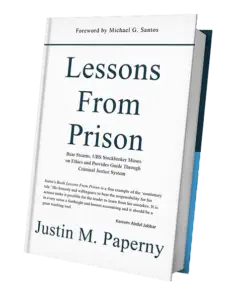
White Collar Advice was founded by Justin Paperny, who served time in federal prison and began documenting his experience from day one. The organization works with federal defendants and their families to build records through writing, volunteering, and structured programs, in partnership with Prison Professors and Michael Santos. Outcomes improve when defendants take ownership of their narrative early and build a body of work that decision-makers can weigh.
If you want to talk through where you are in your federal case and what a record could look like for you, schedule a complimentary call with our team: whitecollaradvice.com/complimentary-consultation-call