If you need a healthcare fraud defense attorney, the clock is not paused while you decide. The government just charged 455 people in two weeks. $6.5 billion in false claims. Cases in 45 states.
They seized a $135,000 Maserati, an $865,000 Bulgari necklace, and $182 million in cash. They arrested someone in Turkey. They extradited an American from the Philippines on $1.2 billion in Medicaid fraud.
Acting Attorney General Todd Blanche stood at a podium Tuesday with RFK Jr., Dr. Oz, FBI Director Kash Patel, and DEA head Terrance Cole and said: “This is just the beginning.”
That sentence is not spin or too sound good on TV. It describes a machine that is running.
Tomorrow, Thursday June 26, at 1 PM Eastern / 10 AM Pacific, I am going live on YouTube with Ronald Chapman II, a healthcare fraud defense attorney who has secured acquittals in federal cases. Free.
What the DOJ Just Did
This was the second largest amount ever charged in a single healthcare fraud operation. The largest Medicaid fraud enforcement action in HHS history.
Kennedy named the conduct from the podium: unnecessary tests ordered for billing. Products prescribed that patients did not need. Opioids written to inflate revenue. Cases where patients died thinking they were receiving real care.
He named one case from Los Angeles. A hospice owner purchased names of deceased Medicare patients from coroners and billed Medicare for their care. Kennedy said: “This particular owner was actually going out and purchasing names from coroners of dead patients and then billing us for those.”
That case got named at the press conference because it is egregious. The other 454 defendants did not get named. They are just cases. The government does not need to make an example of you to prosecute you. You need to be in the room. That is enough.
CMS reported 1,000 Medicare payment suspensions in the first half of 2026. A 500% increase over last year. The DOJ estimates its healthcare fraud task force returns $106 for every dollar it spends. At that return, they will not stop.
Why the Government Is Pushing This Hard Right Now
Trump signed an executive order in March: “Establishing the Task Force to Eliminate Fraud.” It directed federal agencies to stop improper payments, share data, and disrupt fraud networks. HHS has since signed agreements with the FTC and Customs and Border Protection to combine datasets and sharpen detection.
Dr. Oz claims $100 billion is stolen from Medicare and Medicaid each year. The Medicare Trust Fund hits insolvency in 2033. 70 million Americans rely on it. The political math is not complicated. Show results or lose the argument.
Kash Patel said the FBI will pursue healthcare fraudsters the same way it pursues terrorists and narco traffickers. Same tools. Same financial intelligence units. Same asset seizure authority. All of it now pointed here.
This is not a one-cycle enforcement push. It is infrastructure.
Who They Are Building Cases Against
Telemedicine is the sharpest target. The Philippines case: $1.2 billion in Medicaid fraud through telemedicine. An American citizen. The government has spent three years on cases in that space.
If your practice grew during the COVID telehealth expansion and your billing does not match your clinical documentation, that is the profile they are building against.
Kennedy named four conduct categories Tuesday: unnecessary tests billed for profit, unnecessary products prescribed for reimbursement, opioids written to generate revenue, and cases where patients died. The DOJ’s Health Care Fraud Unit prosecutes under 18 U.S.C. § 1347. Sentences run through the federal loss table. These are not fringe cases. These are the categories the government built the operation around.
What the Investigation Looks Like Before You Hire a Healthcare Fraud Defense Attorney
I am not a lawyer. Ron Chapman is. We go deep into the lawyer specifics tomorrow.
What I can tell you is what I have watched happen.
The first contact is a subpoena. Not an arrest. A request for billing records, patient files, and communications. Most people wait to see what comes next.
Something always comes next.
The second contact is often a civil investigation demand or a CMS exclusion letter. The government cuts off your revenue while it builds the criminal case.
The third may be a target letter from the U.S. Attorney’s office. At that point you are no longer a witness. You are the subject.
By the time most people call me, they have been through two or three of those stages. The record they could have built, the cooperation credit they could have earned, some of that is gone. Not all. But some.
What to Do Right Now
Hire a healthcare fraud defense attorney. Not a billing attorney. Not your regular outside counsel. A federal criminal defense attorney with healthcare fraud experience.
If you received a subpoena this month, you are inside an investigation. The question is what record you build from this point forward.
Stop talking to business partners and in group chats. The government builds obstruction cases from conversations people have once they know they are under investigation.
Preserve every document. Do not delete emails. Do not destroy records. Do not clean up billing files. Obstruction is a separate charge, and it is easier to prove than the underlying fraud.
Build a record of who you are. Document legitimate work, compliance history, community contributions. Judges sentence people, not just offenses. The record you build now is the record that exists at sentencing.
If cooperation is on the table, understand what you are trading and what you are getting. Early cooperation with real information earns credit. Late cooperation, after the government has built its case, earns far less.
Watch Ron Chapman and Me Tomorrow
Ronald Chapman II is a healthcare fraud defense attorney who has secured acquittals in federal cases and negotiated cooperation agreements. He knows the government’s playbook from the other side of the courtroom.
Thursday June 26, 1 PM Eastern / 10 AM Pacific. White Collar Advice YouTube channel.
If you are a physician, practice owner, billing company operator, or someone who has received a subpoena or target letter, this is for you.
Blanche said this is just the beginning. He meant it.
Frequently Asked Questions
What does a healthcare fraud defense attorney do?
A healthcare fraud defense attorney represents physicians, practice owners, billing companies, and other healthcare professionals facing federal investigation or charges. They review billing records, respond to subpoenas, negotiate with prosecutors, and build the defense strategy before charges are filed. Hiring one before an indictment, not after, is the single most important timing decision in these cases.
What triggers a federal healthcare fraud investigation?
Billing patterns that deviate from peers in the same specialty, high claim volumes for high-reimbursement codes, patient complaints, whistleblower tips, and data flagged by CMS fraud detection. The government cross-references billing against clinical documentation. Gaps between what was billed and what was documented are the most common trigger.
What is the difference between a billing error and healthcare fraud?
A billing error is a mistake. Healthcare fraud requires intent. The government must prove you submitted false claims on purpose. Prosecutors draw that line from patterns, volume, and communications, not from your explanation of what you meant.
What happens when I receive a federal subpoena for medical records?
You must comply. Before you produce a single page, have an attorney review the subpoena, object to scope if warranted, and confirm what the government is after. Do not assume a subpoena means you are the target. Do not assume it means you are not. Retain a healthcare fraud defense attorney before you respond.
What is a target letter in a healthcare fraud case?
A target letter from a U.S. Attorney’s office tells you the grand jury has substantial evidence connecting you to a crime. It is not an indictment, but it is a serious escalation. You have a right to counsel. Use it.
How does the False Claims Act affect my case?
The False Claims Act lets the government and private whistleblowers sue anyone who submits false claims to federal programs. Many healthcare fraud investigations begin as civil False Claims Act suits before becoming criminal referrals. A whistleblower lawsuit filed under seal may exist before you know it.
Should I talk to federal agents without a lawyer?
No. You have no obligation to speak with agents investigating you. Any statement can be used against you, including statements that seem harmless. False statements to federal investigators are a separate federal crime. Do not speak without a healthcare fraud defense attorney present.
What sentences do people face in federal healthcare fraud cases?
Sentences vary by loss amount, role, criminal history, and cooperation. Federal loss tables can produce ranges from probation to decades in prison for large schemes. The 455 defendants charged this week face exposure across the full range.
About the Author
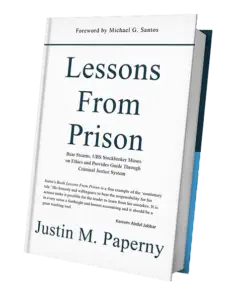
I’m Justin Paperny, founder of White Collar Advice. I help executives, physicians, and business owners facing federal scrutiny build a documented, timestamped record. Judges do not believe words. They believe records.