In my work, I get a lot of these messages, “I got a target letter from the FBI. Now what?”
Here is what I know about that moment, even though I did not get a target letter. Paul Bertrand showed up at my house on April 28, 2005 (I went to prison three years later). He knocked on my door in Los Angeles and I had no idea he was coming. I was a 33-year-old former stockbroker who had told myself I was moving on from a mistake. Then the FBI was in my living room with my dog freaking out.
A month later when we met, I lied to them. Naturally, hat made everything worse. I am going to tell you what Paul told me, and what he told thousands of people in our community, so you do not make the same mistake.
What a Target Letter Means
A target letter means the government believes you committed a federal crime and is telling you formally. You are not a witness. You are not a subject in the general sense. You are the person they are building the case around.
That is the truth. I am not going to diminish the reality of it.
What it does not mean: you are convicted. The case is not over. There is no verdict yet. What happens between now and any potential indictment, plea, or trial is shaped, in part, by what you do right now, like what you do after reading this. Start with a call.
Most people do nothing. They hire a lawyer, they wait, and they assume the lawyer is handling it. The lawyer is handling the legal case. Nobody is handling the record of the person. Those are two completely different things, and only one of them can be outsourced.
How Long the FBI Has Already Been Working
Paul Bertrand investigated investment fraud, wire fraud, bank fraud, and mortgage fraud cases in Los Angeles for 12 years. He then supervised a squad. He told our community something that most defendants do not find out until it is too late.
By the time you receive a target letter or an agent knocks on your door, the investigation is not beginning. It is near the end.
Paul said it plainly: the subject interview, meaning the moment they sit across from you, comes pretty close to the end of the investigation. Before that interview, agents have already talked to witnesses. They have subpoenaed bank records. They have built a timeline, usually in Excel, that documents every wire transfer, every phone call, every email, every document that touches the alleged conduct.
In white collar cases, Paul said a one-year investigation is fast. Many run much longer.
So while you are reading this at midnight, wondering if this is really happening, the government has been working your case for months. Possibly years.
That is not meant to scare you; is meant to reorient you. Because the question is not whether they have information. They do. The question is what record exists on your side.
What They Know When They Walk In
Paul was direct about something else. When an agent shows up at your home or you receive a target letter, they already have a version of events. They have witnesses. They have documents. They have a story.
What they do not have is your story.
Not your excuses. Not your justification. Your actual story: who you are, what led you here, what you understand now, what you have done about it, and why a judge should see you as something other than the government’s version of events.
The FBI is not investigating that. Paul said it exactly: agents are thinking about the crime, who did it, and how it happened. They are not investigating all the other aspects of your life. What a good person you are. What you built. What you have contributed. None of that is being gathered.
You have to gather it yourself, as Judge Bough said.
What Epictetus Would Say
Epictetus was a Greek philosopher who spent years as an enslaved person before earning his freedom. He built an entire system of thought around one idea: separate what is in your control from what is not. Then put every ounce of your energy into what you can actually affect.
You cannot control what the FBI has already built. You cannot undo the conduct. You cannot change what witnesses have already said.
What you can control starts today. What you write and document. What you do for the people who were harmed. What you demonstrate through your actions between now and the day you stand in front of a judge.
Most defendants spend this period waiting. They sit on it. They tell themselves the lawyer will fix it or that cooperation will save them or that maybe this will just go away. It will not go away. The case does not stop being investigated until sentencing.
Paul said that too: from the time a case opens, it does not stop until sentencing happens.
That means they are working right now. The only question is whether you are.
The Mistake I Made
When Paul showed up at my house, I lied.
I did not just omit things. I constructed an alternative version of events and I delivered it with confidence. Then Paul spent the next year proving every piece of it was false. I cost myself a year of investigation and destroyed any chance I had at cooperation credit.
My co-defendant cooperated. He was married with four children. He made a pragmatic decision and told the truth. I doubled down. He got credit. I did not.
Paul put it simply: if you are going to talk, tell the whole truth. Not part of it. Not the version where the elephant in the middle of the room is the one thing you go carefully around. If you tell part of the story and leave out the worst part, that omission is almost like it was on purpose.
If you are not going to tell the whole truth, say nothing.
What to Build Right Now
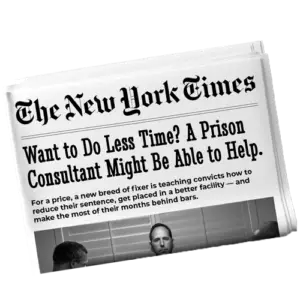
Jack Hitt wrote about this in our New York Times in 2022. He spent time watching me work with a client named Hugo Mejia, a U.S. Army veteran who found himself facing federal money laundering charges. Hugo’s first instinct, like most defendants, was to keep explaining why he was not as guilty as the indictment said. He said versions of it in almost every conversation.
That is every defendant’s first draft. Morgan Freeman says it in Shawshank: everybody’s innocent.
By the time Hugo sat down with the probation officer for his pre-sentence interview, the story he told was his real story. The stock boy job at fifteen. The Army. The MBA. The business that started legitimate and crossed a line. His own accounting of what happened and what he should have done differently.
Judge Carney spoke openly at sentencing about Hugo’s military service, his childhood, his medical condition. That information reached the judge through the record Hugo helped build.
You can read the full New York Times piece here and listen to the podcast version here.
The point is not Hugo’s outcome. The point is the timing. He started building that record early. Not the night before his PSR interview. Months before.
What you build right now, while the investigation is still open, is more credible than anything you build the week before sentencing. Because a judge and a probation officer can see dates. Timestamped assets are the only currency that matters in this system.
What to Do This Week or NOW!
Start writing your story: who are you, where are you from, where are you going, what are your plans moving forward? Lay out a vision.
One of our clients was taken into custody the day after he retained us. His judge ordered him not to contact victims. He did anyway, to apologize. He was immediately remanded. The judge said: I have heard all I need to hear.
He wrote from prison every day for a year. At sentencing, he quoted Carl Jung. The judge stopped and said: you are what you do, not what you say you’ll do. Our client got a better outcome because the record proved he meant it.
That is the model. Build the record before anyone asks you to. Not because a lawyer told you to. Because it is the only thing that will separate you from the government’s version of events.
Take the free probation report course now, even if your PSR interview is months away. The earlier you understand this process, the better position you are in to influence it: Probation Report Course
Join our free weekly webinar every Tuesday at 11am Pacific / 2pm Eastern: Register Here
If you want to talk through your specific situation, the earlier in the process the better: Schedule a Consultation
Frequently Asked Questions
Does a target letter mean I will be indicted?
Not automatically. But it means the government has substantial evidence against you and believes you are the primary subject. Most people who receive target letters are eventually indicted or negotiate a plea.
Should I talk to the FBI after getting a target letter?
Only with a lawyer present and only after you and your lawyer have decided that is the right move. If you talk, tell the complete truth. Partial truths are treated as lies. If you cannot tell the whole truth, say nothing.
How long has the FBI been investigating me before I got the letter?
Likely months. Possibly years. By the time a target letter arrives, the case is near its end, not its beginning. Bank records have been subpoenaed. Witnesses have been interviewed. A timeline of the conduct has been built.
Can I still help myself at this stage?
Yes. The record you build between now and sentencing is the only counter-narrative to the government’s case. The earlier you start, the more credible it is. A judge can see dates. A document created today carries more weight than one created the night before sentencing.
What should I not do after getting a target letter?
Do not contact witnesses or potential co-defendants. Do not destroy documents. Do not lie to investigators. Do not assume cooperation alone will keep you out of prison. And do not wait for your lawyer to tell you to start building a record. That work belongs to you.
Will cooperating with the FBI keep me out of prison?
Rarely. Paul Bertrand said in his entire FBI career he saw one case where a defendant avoided prison entirely through cooperation, and that person cooperated on multiple cases for approximately five years. Cooperation helps. It almost never eliminates prison time on its own.