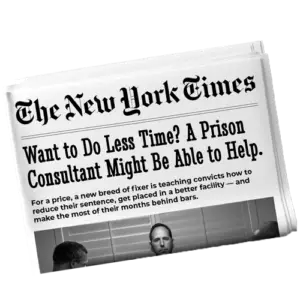
Sixty days is enough time to do this right if you are going to prison. Most people spend it in dread instead: reading horror stories online, asking their lawyer questions the lawyer cannot answer, lying awake calculating dates. Dread feels like preparation because it occupies the same hours. The difference is that preparation has a list and a sequence, and the next 60 days have room for all of it.
What the Bureau of Prisons Does With Your File
Jon Gustin spent 24 years with the Bureau of Prisons. His last seven, he ran residential reentry nationally, every halfway house in the country reported to him. He told our community how the system works from the inside.
When you are designated to a facility, the institution receives your pre-sentence investigation report. That document determines your security point score, your programming eligibility, your classification level, and your initial housing assignment.
Your case manager reads it before you arrive.
What is in that report is not a formality. It shapes your first year. If the PSR is thin, inaccurate, or missing context about who you are, those gaps follow you in.
If you have not already reviewed the final PSR and challenged anything inaccurate, do it now. Talk to your lawyer this week. The window is closing.
RDAP: The 12-Month Reduction
If substance abuse or alcohol is any part of your history, the Residential Drug Abuse Program can reduce your sentence by up to 12 months.
But the drug coordinator is skeptical. I have seen this play out many times.
A defendant discloses substance abuse in the PSR. The judge recommends RDAP. The defendant arrives at the facility expecting placement. The drug coordinator looks at the file and says: you have been home for three years without seeking treatment. You did not need it then. Why now?
The answer is to start treatment before you report. Not at the facility. Before going to prison.
Find a counselor. Get an assessment. Show up every week. Bring the attendance records with you when you self-surrender. So that when you sit across from the drug coordinator, you can say: I identified the issue. I did not wait for prison to address it. Here is the documentation.
That is a different conversation.
We give away a free RDAP course that covers what the program is, who qualifies, and how to position yourself as a candidate: RDAP Course
Take it before going to prison.
First Step Act Credits
The First Step Act created earned time credits for programming. Complete approved programs, stay out of trouble, and those credits reduce your time in custody or move you to home confinement earlier.
The credits stack. Programming hours add up. The math matters.
Most defendants do not know this before they arrive. They spend the first months orienting themselves, figuring out the culture, staying out of conflict. That is reasonable. But the defendants who arrive knowing what programs are offered, what credits they earn, and how the calculation works are ahead from day one.
Ask your lawyer to request a copy of your projected release date calculation before you report. Understand the numbers. Know what you are working toward.
The Case Manager Meeting
Jon Gustin was specific about this.
Every case management meeting is an opportunity. At most facilities they happen every 6 to 12 months. Most defendants show up and take what the case manager gives them.
The defendants who build the best records bring something to every meeting. A written reentry plan. Where they intend to live. How they intend to earn income. What their support network looks like. What programming they have completed since the last meeting.
Jon said: do your own time. Come up with your own plan. Do not let the system define your reentry.
That written plan goes into your file. The Residential Reentry Manager reads it when placement decisions are made. The reentry probation officer reads it when you come home.
Bring a written plan to every meeting. Ask for it to be incorporated into your file. Most people never do this.
The Halfway House Is Not Guaranteed
Jon ran every halfway house in the country for seven years. He described the bed situation plainly: there are approximately 7,500 to 8,000 residential reentry beds nationwide. That number has not changed meaningfully in years.
The beds go to the people who most need reentry assistance. If you are a former executive, doctor, or lawyer with a home, a network, and employment prospects, the reentry manager may conclude you do not need a halfway house bed as much as someone who has nothing.
That is not a criticism. It is how the system allocates limited resources.
What it means for you: do not assume you are entitled to maximum halfway house time. Build a case that the placement serves a purpose. And build the reentry plan that makes home confinement, which has no bed limit, a viable alternative.
Jon said home confinement makes more sense for people who already have stable housing and a pathway to work. The halfway house is for people who need the structure.
Know which category you fall into. Build toward it.
What to Bring
Documents. Your judgment and commitment. Your designation paperwork. Contact information for your lawyer. Medical records if you have ongoing treatment needs.
A Prison Professors profile, printed or saved, with your reentry plan already documented. Hand it to your case manager at your first meeting. Most people arrive with nothing. You will be different.
Letters from the people supporting you on the outside. Family. Employers. Community contacts. These go into your file.
A reading list. The defendants who use their time reading and producing something come home with more than the ones who watch television for three years. Michael Santos produced books from inside federal prison. I started writing, too. Those assets changed our lives. Follow our path.
What Not to Do
Do not discuss your case with other prisoners. They are not your lawyers and the conversations are not private.
Do not get involved in other people’s conflicts. The incident report you receive for being present when something happens follows you. It affects your security score, your programming eligibility, and your halfway house placement.
Do not assume the staff is your friend or your enemy. Treat everyone with respect. Jon Gustin described the difference between defendants who frame problems as collaborative and those who demand and threaten. The ones who say here is what happened and here is what I would like to understand get different results than the ones who escalate.
Do not stop building the record. The writing you do in prison, the programming you complete, the reentry plans you submit to your case manager, the letters you send to your judge updating the court on your progress, all of it becomes the record Judge Bough described when he talked about taking a risk on early termination of supervised release.
The First Day
Self-surrender is not arrest. You drive yourself. You show up at a specific time. You check in.
The first day is disorienting. That is normal. The people who come through it best are the ones who decided before they arrived what kind of person they were going to be inside.
Not hoping for the best. Decided.
Michael Santos decided on day one of a 26-year sentence. He documented everything. He built relationships with every stakeholder he could reach. He came home and his probation officer supported his work from the first meeting. After one year, the U.S. attorney, probation, and a federal judge signed an order for early termination of supervised release.
That started with a decision made before the first day became the second day.
Take the free RDAP course before you report: RDAP Course
Join our free weekly webinar every Tuesday at 11am Pacific / 2pm Eastern: Register Here
Schedule a call if you want our team’s help preparing before you report: Schedule a Consultation
Frequently Asked Question
What happens when I self-surrender to federal prison?
You report to the designated facility at the time and date on your paperwork. You check in at the intake area. Staff process your documentation, conduct a medical screening, and assign you to housing. You will receive an orientation that covers rules, programs, and schedules.
How is my prison facility determined?
The Bureau of Prisons designates you based on your security point score, which is calculated from the pre-sentence report. Factors include offense level, criminal history, history of violence, age, education, and detainers. Your lawyer can request a specific facility, but the BOP makes the final decision.
What is RDAP and how does it reduce my sentence?
The Residential Drug Abuse Program is a 500-hour in-custody treatment program. Completing it can reduce your sentence by up to 12 months and move you to a halfway house or home confinement earlier. Eligibility requires a documented substance abuse history. Starting treatment before you report strengthens your eligibility.
What are First Step Act earned time credits?
Credits earned by completing approved programming and maintaining a clean disciplinary record. They reduce time in custody or advance placement to home confinement. The calculation is specific to your case.
How do I get maximum halfway house time?
Jon Gustin ran national residential reentry for seven years. He said the beds go to people who most need reentry assistance. Build a written reentry plan. Bring it to every case manager meeting. Ask for it to be incorporated into your file. Do not assume entitlement. Build the case.
Can I get home confinement instead of halfway house time?
Yes, if you have stable housing, employment, and a support network. Home confinement does not have the same bed limitations as halfway houses. Jon Gustin said it makes more sense for people who do not need the halfway house structure. Build toward it.
What should I bring when I self-surrender?
Your legal documents, medical records if relevant, contact information for your lawyer, and a written reentry plan for your case manager. Leave valuables at home. Check the facility’s specific admission procedures with your lawyer before you report.