
Table of Contents
Table of Contents
- What to Expect From Medical Treatment in Federal Prison
- What if I Need Medical Treatment in Federal Prison?
Patients Requiring Regular Medical MonitoringSpecial Surgeries in Federal Prison
Medical Treatment in Federal Prison: Systemwide ConstraintsFAQ
Food Services and Prison Commissary Rules ExplainedWhat to Expect From Medical Treatment in Federal Prison This chapter documents how Medical Treatment in Federal Prison works in practice. It describes Sick Call procedures, emergency responses, chronic care challenges, and major surgeries using first hand accounts. The examples show how policy controls access, timing, and treatment decisions. Care varies by institution, staffing, and security requirements.
What if I Need Medical Treatment in Federal Prison?
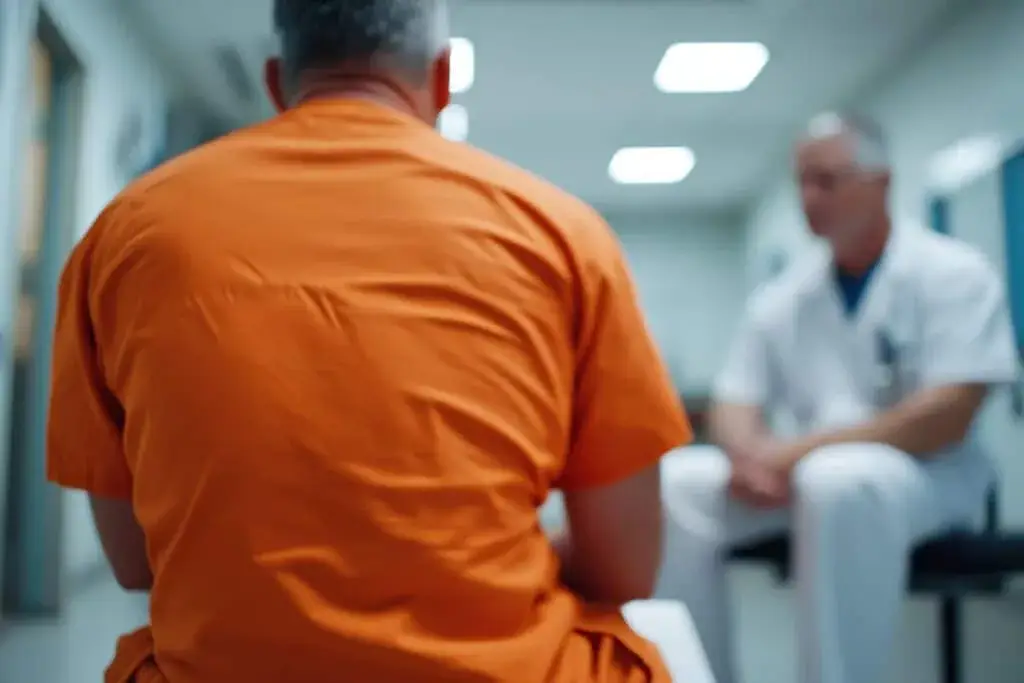
Medical Treatment in Federal Prison is handled by on site health services departments. Each institution employs medical staff that typically includes a physician, physician assistants or nurse practitioners, nurses, dentists, hygienists, and technicians. As in the community, some people require more care than others. Those with chronic or advanced medical needs may be designated to facilities that function as federal medical centers.
To limit malingering and overuse of services, policy requires a co payment for medical visits. The fee is under ten dollars per visit. Inside prison, that amount carries more weight. Some prison jobs pay less than ten dollars per month. If a person has no funds in his account, the charge may be recorded without immediate payment.
Each institution sets its own procedures for accessing medical care. What follows reflects common practices at typical facilities rather than designated federal medical centers. The descriptions also include commentary from people in prison who described their experiences.
This chapter addresses four aspects of Medical Treatment in Federal Prison:• Sick Call• Emergency medical issues• Conditions requiring ongoing monitoring• Special and major surgeries
Sick Call in Medical Treatment in Federal Prison
Sick Call is the entry point for most medical care. Staff may place a person on Sick Call for routine screening. A person in custody may also request Sick Call if he does not feel well.
Outside of emergencies, Sick Call is available only on designated days and times. For example, a facility may offer Sick Call four evenings per week between 6:15 p.m. and 6:45 p.m. Doors may open at 6:30 p.m. and close promptly at the cutoff time.
Health Services staff collect identification cards and issue forms asking for a brief description of symptoms. Anyone not present when the door opens does not receive a form. Once the door closes, no additional requests are accepted.
Facilities often house hundreds of people. Long lines are common. When a person reaches the front, he briefly explains the issue. Sick Call serves as screening only. Treatment usually occurs later.
Non emergency appointments with a physician may take one to three weeks. Emergency care is described as available at all hours. In practice, experiences vary by institution.
Tom’s Story
Tom had no prior contact with Health Services. While housed at a low security prison, he became ill on a Monday night. He developed a high fever and felt nauseated the next morning.
Tom reported his condition to the unit officer and asked to remain in the housing unit. The officer denied the request and instructed him to report to work or face discipline. Policy controlled the decision.
Tom walked roughly 200 yards to his job site and reported at 7:30 a.m. He told his supervisor he felt sick and asked to return to the unit. The supervisor told him to stay for a few hours. Ninety minutes later, Tom was allowed to leave.
Sick Call was not available again until Wednesday evening. Tom returned to his unit and lay down. A few hours later, he vomited. He asked the unit officer to contact Health Services. Health Services instructed the officer to tell Tom to take aspirin and wait until Sick Call.
Health Services treated only life threatening conditions outside Sick Call hours. Tom remained in the unit through Tuesday and Wednesday.
At 6:10 p.m. on Wednesday, Tom walked to Health Services. Over thirty people were already waiting. There were no seats, and he stood in line.
Staff collected identification cards and distributed forms. Tom wrote that he had been vomiting and felt weak for two days. When called, he handed the form to the physician assistant.
The PA read the form but asked no questions. No medication was prescribed. Tom was given an appointment for the following Monday morning.
By the time the appointment arrived, Tom felt better. He did not attend. That evening, staff summoned him to the lieutenant’s office and cited him for missing a call out.
Tom explained that he felt better and had not received treatment when he was sick. The lieutenant stated that attending the appointment was still required. Tom received sanctions that included loss of phone and visiting privileges for thirty days.
Emergency Medical Problems
Emergency medical situations follow a different process. Staff may send a person for immediate care when there is a sudden change in condition.
Austin’s Story
Austin was 59 when staff determined he needed emergency care. He was housed at a prison in the Northeast during winter.
After finishing his kitchen shift, Austin slipped on ice while walking back to the unit. He fell face first, breaking his nose, cracking teeth, cutting his face, and injuring his legs. A guard witnessed the fall.
Because the fall occurred after regular hours, the guard contacted Health Services. Two prisoners assisted Austin to the department.
A physician assistant was present. No doctor was available. The PA gave Austin Ibuprofen and told him it would help with blood pressure. Austin stated that blood pressure was not his issue.
The PA did not review Austin’s file or examine his injuries. Austin was sent back to the unit with the medication.
Austin said the pain never resolved. He later walked with a cane and relied on assistance. Swelling developed in his ankle. Health Services declined treatment, stating the condition was not life threatening.
Patients Requiring Regular Medical Monitoring
Peter was 66 and suffered from arthritis and diabetes. Walking was difficult. At a prior facility, Health Services approved orthopedic boots due to his condition.
Peter paid about $350 for the boots and wore them for a year. After transferring to a lower security prison, Health Services required him to surrender the boots. Staff cited institutional security concerns.
Health Services issued orthopedic inserts for standard shoes. The replacement made walking difficult. Peter sometimes used a cane. His medical condition required frequent walks to Health Services and the dining hall.
Peter described a change during one of his quarterly checkups. His first doctor reviewed his file, continued existing medication, and prescribed knee braces. The same doctor maintained the plan during the next visit.
At a later appointment, a different doctor saw Peter. The doctor did not review the file with him. The medication was changed without explanation. Peter was told to return the knee braces.
Before picking up the new medication, Peter reviewed the Physician’s Desk Reference in the library. The medication appeared intended for heart conditions and hypertension. It also listed cautions for diabetic patients.
Peter raised the issue at the pharmacy window. He was told that the prescription could not be changed without Sick Call or another doctor visit. Until then, the order stood.
Special Surgeries in Federal Prison
Many people in custody are older and experience declining health. Some require emergency treatment or major surgery during incarceration.
Hugh’s Story
Hugh was 73 and required open heart surgery. He entered the system with serious health problems and had difficulty walking short distances. He had been hospitalized multiple times for pneumonia.
Testing revealed severe arterial blockage. Guards transported Hugh to a community hospital for surgery. He remained hospitalized for thirteen days.
Throughout his stay, guards shackled his ankles to the bed. Veins had been removed from his legs during surgery. The restraints remained despite open wounds. Guards stated policy required the restraints.
Doctors requested extended hospitalization for recovery. Hugh was returned to prison instead. He spent his first night in a Health Services room.
The PA on duty had no knowledge of Hugh’s surgery and denied medication. Medical paperwork had not been transferred. The PA disconnected the call bell in Hugh’s room.
Cold air blew directly onto Hugh’s bed. He moved to the floor with blankets to avoid the airflow. A passing officer noticed and called a supervisor.
After reviewing Hugh’s file, the supervisor adjusted his care. The following day, Hugh returned to his housing unit.
Within hours, Hugh’s condition worsened. He collapsed, dehydrated and unable to move. His roommate notified Health Services.
Staff instructed Hugh to report in person. When told he could not move, they refused to provide a wheelchair. Prisoners carried Hugh back on a stretcher.
A doctor examined Hugh and ordered transport back to the hospital. Hugh remained hospitalized for five more days, restrained in the same bed as before.
Medical Treatment in Federal Prison: Systemwide Constraints
The Eighth Amendment requires the government to provide medical care to people in custody. That requirement does not guarantee the level of care available in the community.
Health Services quality varies by institution, staffing levels, and administration. Procedures differ between facilities.
The Bureau of Prisons operates Federal Medical Centers in Butner, Carswell, Devens, Fort Worth, Lexington, Rochester, and Springfield. Capacity limitations affect placement decisions.
Doctors and medical staff operate under heavy caseloads. Like other employees, they function as correctional officers first. Security requirements influence medical decisions.
Thank You,
Justin Paperny is an ethics and compliance speaker and founder of White Collar Advice, a national crisis management firm that prepares individuals and companies for government investigations, sentencing, and prison. He is the author ofLessons From Prison,Ethics in Motion, and the upcomingAfter the Fall.His work has been featured onDr. Phil, Netflix, CNN, CNBC, Fox News,The Washington Post,andThe New York Times.
FAQ
Can a prisoner refuse medical treatment?
In most cases, yes. Refusals are documented and may affect future care decisions.
Are outside doctors involved in treatment?
Outside hospitals are used for surgeries and emergencies, but custody remains with the BOP.
Do transfers affect medical care plans?
Yes. Treatment plans and approved equipment may change after transfer.

Food Services and Prison Commissary Rules Explained
Written by
Justin Paperny
Founder White Collar Advice