The lawyer explained the terms of your plea agreement and sentencing as you sat there and nodded. Then you drove home and could not remember half of what he said.
Too many people tell me that. The word “guidelines” came up. Numbers were mentioned. Something about counts being dismissed. By the time you pulled into your driveway your brain had stopped processing and started calculating what this means for your kids.
Here is what your lawyer probably did not explain, or maybe did and you missed it: the window between plea agreement and sentencing is not downtime. It is the most important stretch of time you have.
What the Plea Agreement Does
In sum, you admit your broke the law and a sentencing will soon follow.. What it does not do is determine your sentence.
That is the judge’s job. And federal judges have discretion. Judge Stephen Bough said it pretty clearly in our expert interview: the sentencing guidelines are generic. They have nothing to do with the human standing in front of you. The 3553 factors are where the judge looks at you like a person.
That is where most of the work happens. And you influence those factors entirely through what you do between signing the plea and walking into the courtroom.
The Window Most People Waste
Between plea and sentencing there is a window. Could be 90 days. Could be a year, maybe five years. Depends on more factors that I can cover in this blog, but one of them could certainly be cooperating; last last evening, for example, I posted a short about a doctor who was stunned to learn his friend had been cooperating against him. His friend’s sentencing will certainly be delayed.
Some defendants build or cooperate and many spend it waiting. Calling the lawyer once a week. Lying awake. Rereading the plea agreement trying to understand how this happened or why the agreement feel so wrong, made up.
While the defendant stalls, the Feds build, build, build. Paul Bertrand , who arrested yours truly, investigated financial fraud cases in Los Angeles for 12 years. He told our community the case does not stop being worked until sentencing. The government is still at it. The file is still growing every day. Most defendants do not get this. I was one of them.
Your lawyer will write a sentencing memo. Judge Bough told us he puts about one to two percent weight on what a defense attorney says about a client’s remorse. That is not a typo (I feel as a writer the “not a typo” is a useless line and want to strike it. No, I will keep it. Let me say again: one to two percent. He expects the lawyer to advocate. He discounts it accordingly.
The other 98 percent comes from what you did.
Viktor Frankl in Auschwitz
Frankl survived four concentration camps including Auschwitz. He watched people around him die and he spent that time studying one question: what determines whether a person holds together when everything outside his control has collapsed?
His answer was a space. Between what happens to you and how you respond, there is a space. In that space you still have a choice.
The plea agreement is what happened to you. What you do in the space between signing it and sentencing is still yours.
Most defendants hand that space to their anxiety. Some hand it to their lawyers. The defendants who get the best outcomes do something else with it: they build
What Judge Bough Wants to See
He told us about a defendant who, at sentencing, asked him to pass along an apology to a victim.
Bough’s response: I am not in the business of passing along apologies. You had 90 days between your plea and today. You could have written the letter yourself.
He used a simpler frame. Kid throws a baseball through a window and says sorry. Different from a kid who is already cleaning up the glass before you say a word. You can usually tell which one you are dealing with. David Moulder embraced this.
What cleaning up the glass looks like in a federal case is specific. If there are financial victims, start paying something back. Any amount. Pay it before anyone orders you to. Get a receipt. Same with treatment. If substance abuse or mental health is part of your story, find a counselor and show up every week. Bring the attendance records to sentencing. Community service works the same way. Signed logs, dates, legit organizations. Not a plan to do it. Evidence that you already did.
Judge Mark Bennett sentenced more than 4,000 people. He said a defendant who walks in with an actual rehabilitation plan, something specific and already in motion, will have a huge impact on a sentencing judge. He also said most defendants walk in with words. The ones with records are different.
The Plea Agreement and the PSR Are Two Different Things
Here is what most defendants do not understand until it is too late.
The plea agreement describes what you admitted to. The pre-sentence investigation report describes who you are. The judge reads the PSR before sentencing. Usually more than once.
The PSR is written by a probation officer who gets most of their information from the government’s documents. The indictment and plea agreement. The prosecutor’s version of the offense conduct.
If you do not create your own version, in your own words, backed by documentation, the report ends up being the government’s version with your name on it.
Judge Bennett was direct about this. Defense lawyers too often just go with the government’s offense conduct statement. Defendants who contest inaccuracies and provide their own account more often than not have the more accurate version. He said that. A sitting federal judge.
You have a window to shape that report. It starts with the probation interview. We built a free course around exactly that: Probation Report Course
A Word on Cooperation
Cooperation helps. With qualifications.
Paul Bertrand said in his entire FBI career he saw one cooperating defendant walk away with straight probation. One. Everybody else who cooperated got shorter sentences. But they still went to prison.
The other thing Paul said about cooperation: if you talk, you have to tell all of it. Not most of it. Not everything except the worst part. He described defendants who would go all the way around the room describing everything else and forget the elephant standing in the middle. That omission gets treated the same as a lie.
If you cannot tell the whole story, say nothing.
And if you do cooperate and something goes sideways later, it unravels fast. My co-defendant cooperated and then caught new charges. That destroyed much of what he had built with the government. Years of work, gone.
What Jack Hitt Saw
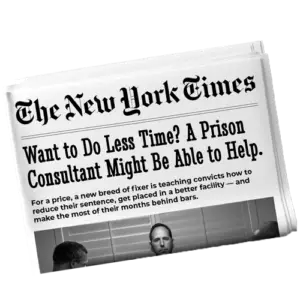
Jack Hitt spent time with me for a New York Times piece in 2022. He watched me work with a client named Hugo Mejia, a U.S. Army veteran facing federal money laundering charges who had already signed a plea agreement.
What distinguished Hugo’s sentencing was not the legal work. It was what Hugo built in the months between his plea and the day he stood in front of Judge Carney. The judge knew Hugo’s story. The Army. The childhood. The legitimate business that went wrong. The medical condition. Hugo’s own accounting of what happened.
That information reached the judge through the record Hugo helped build.
Full article here. Podcast version here.
What To Do This Week
Start writing your story. Three pages, two pages, 80 pages: whatever, just start. How you got here. Who was affected. What you understand now that you did not understand then. Date it. Keep it. It becomes something later.
If there are financial victims, start paying something back this week.
Take the free probation report course before your PSR interview: Probation Report Course
Join our free weekly webinar every Tuesday at 11am Pacific / 2pm Eastern: Register Here
Talk to us directly if you want help building the record between now and sentencing. The more time between today and your sentencing date, the more there is to work with: Schedule a Consultation
Frequently Asked Questions
Does signing a plea agreement set my sentence?
No. It settles what you admitted to and may cap the government’s recommendation. The judge determines the sentence based on the guidelines calculation and the 3553 factors, which include who you are as a person and what you have done since the conduct came to light.
What is the difference between the plea agreement and the pre-sentence report?
The plea agreement covers what you admitted to. The PSR covers who you are. The judge reads the PSR before sentencing. What goes into it depends heavily on what you provide before and during the probation interview.
How much does cooperation help?
It can reduce a sentence significantly, sometimes dramatically. Paul Bertrand said in his entire FBI career he saw one cooperator avoid prison entirely. Everyone else still went. Cooperation is not a substitute for building a record.
What should I do between my plea and sentencing?
Write your story. Start paying restitution if there are financial victims. Get into treatment if that is part of your history. Document everything with dates. Take the free probation report course. Come to the Tuesday webinar.
Can I challenge what is in the pre-sentence report?
Yes. Judge Bennett said this is critically important and that defendants who contest inaccuracies more often than not have the more accurate version. Read the PSR yourself when your lawyer sends it. Do not just skim it.
What does a judge actually want to hear at sentencing?
Judge Bough said the best advocate is the defendant himself. Genuine understanding of who was harmed. Steps already taken. A specific plan. Something real, not a speech.