Robert Reyes got 7 years. He was home in 35 months.
Tuesday at 11am Pacific, 2pm Eastern, he joins me live on the White Collar Advice YouTube channel. This is a free webinar. If you are facing federal prison, or someone in your family is, clear your schedule.
Here is what we are covering.
What Is RDAP in Federal Prison?
RDAP is the Residential Drug Abuse Program. It runs nine months inside a dedicated housing unit. You go to group therapy, individual sessions, and education classes roughly three hours a day.
Completing it can cut your federal sentence by up to 12 months. Early transfer to a halfway house is also possible.
Getting into RDAP starts before you ever walk into federal prison. It starts with your probation officer. The officer who writes your Presentence Investigation Report conducts a drug use history screening. If your substance abuse history is not documented in that report, the Bureau of Prisons will not accept verbal claims later. Most of the time you need it in the paperwork.
What Robert Will Cover
ConAir and transit. Robert went through Lompoc, Leavenworth, and Atwater Federal Prison Camps. Those three facilities are not the same. He will walk through the transfer process, what furloughs look like, and what is different about each camp.
Time in the SHU. Robert spent time in the Special Housing Unit. Segregation. He will explain how it happened, what those days looked like, and what he would tell someone to do when they see a situation developing around them.
RDAP from the inside. He almost did not get in. He will tell you why and how he fixed it. If your attorney has not told you that RDAP eligibility is determined during the PSR interview, not inside the facility, this is the conversation you need to hear before that interview happens.
Case managers. Most people go in thinking their case manager is on their side. Robert will tell you what that relationship actually is. Not to scare anyone. To prepare them.
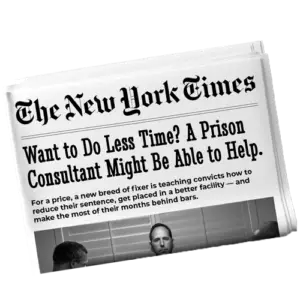
A prison consulting scam running right now. People inside federal prison are paying for something that is not real. Robert will name it and walk through how to spot it.
The Probation Interview Problem
I have said this so many times I am almost tired of saying it. Almost.
Your probation officer writes your PSR weeks before sentencing. During that process, that officer is going to ask about your substance abuse history. If you have one and it does not get documented in that report, you will spend months inside trying to get paperwork corrected. Some people never get it corrected. They miss RDAP entirely because no one told them the door opens during that interview, not after you surrender.
Robert did not know this. He went into that interview unprepared. He still got into RDAP, but he had to fight for it from inside, which is harder than doing it right the first time.
I love studying Benjamin Franklin who kept a list. Thirteen virtues he was trying to build, one at a time, starting with the most foundational. He did not work on all thirteen at once. He picked the one that, if he got it right, made everything else easier. He called it “the key stone virtue.” For Robert, getting into RDAP was the keystone. One decision, made early enough, that changed the shape of his entire sentence.
What the SHU Actually Is
The Special Housing Unit is segregation. It is where you go when you violate rules, get into a dispute, or get caught in something you did not start.
Robert will not address time in the SHU, how it disrupts your programming, your life and how it could disrupt how long you serve in federal prison.
One thing I will add: a lot of people end up in the SHU because they cannot walk away from a situation. They see something developing and they stay. The same inability to read a situation and leave it alone that created problems for many of our clients on the outside follows people inside. Robert lived this. He will tell you how he stopped.
Join Us Tuesday
This is free and live.
Tuesday, June 10. 11am Pacific / 2pm Eastern. White Collar Advice on YouTube.
Robert is not a consultant. He served federal time. He got home 28 months ahead of schedule because he figured out what he could control and went after it. He is willing to tell you exactly how he did it.
If you want to talk through your specific situation before or after Tuesday, the next step is a $500 diagnostic call with me. I listen, ask questions, and build a plan. If I cannot help you, I will refund your money.
FAQ: RDAP Federal Prison
Who qualifies for RDAP in federal prison?
You need a documented history of substance abuse, including alcohol. The documentation must appear in your Presentence Investigation Report or in prior medical or treatment records. The Bureau of Prisons does not accept verbal claims at intake. If it is not in your file, it did not happen as far as your unit team is concerned.
How much time does RDAP take off a federal sentence?
Completing RDAP can reduce a federal sentence by up to 12 months. Some offenses do not qualify for the full reduction. Early transfer to a halfway house or home confinement is also possible upon completion. The actual benefit depends on your offense of conviction and how much time remains.
When does RDAP eligibility get determined?
Before sentencing. The probation officer who writes the PSR conducts a drug use history interview. That interview is where your RDAP file starts. If your substance abuse history is not documented there, getting into the program after you report to your facility becomes significantly harder.
What happens if I missed the probation interview?
You can request a drug use history evaluation from your unit team inside the facility. You will need records: prior treatment, medical documentation, anything written down. It is possible but slower and less certain than doing it right the first time.
What is the SHU and how do I stay out of it?
The Special Housing Unit is segregation. You end up there for disciplinary violations, disputes, or being present when something goes wrong. Staying out means staying focused on your program, keeping your head down, and removing yourself from situations before they escalate. Robert will go deeper on this Tuesday.
What is ConAir and what should I expect?
ConAir is the U.S. Marshals transport system for moving federal prisoners between facilities. It involves multiple stops, staging facilities, and county jails. It is not predictable. Bring as little as possible and expect delays.
Are prison consultants worth hiring?
Most people who sell prison consulting services have not done what they are asking you to do. There is very little breadth and depth of knowledge. At White Collar Advice, everything comes from documented, lived experience: 26 consecutive years through Michael Santos and 18 months at Taft Federal Prison Camp through me. We do not sell outcomes. We help you build a record.
About Justin Paperny
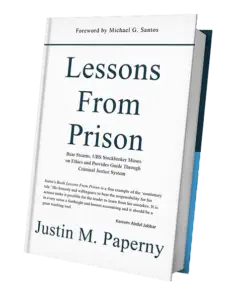
Justin Paperny (I am still writing about myself in third person!) is the founder of White Collar Advice. He is a former Merrill Lynch and Bear Stearns stockbroker convicted of securities fraud who served 18 months at Taft Federal Prison Camp beginning April 2008. He met Michael Santos at Taft. Everything he teaches flows from Santos, who served 26 consecutive years in federal prison.
Justin hosts a free public webinar every Tuesday at 11am Pacific. His team works with executives, politicians, and business leaders facing federal matters nationwide.