Table of Contents
Table of Contents
- What to Expect From Religious Services in Federal Prison
- Religious Services In Federal Prison Explained
- The Multi Faith Chapel in Federal Prison
- Byron’s Experience With Religious Services In Federal Prison
- Native American Religious Services in Federal Prison
Medical Treatment in Federal Prison What to Expect From Religious Services in Federal Prison Religious Services In Federal Prison include access to chaplains, group worship, and faith specific accommodations. While religious practice is protected, the Bureau of Prisons limits services to recognized groups and approved practices. Understanding how chapels operate, what staff roles mean, and how faith programs function helps people set realistic expectations before entering custody.
Religious Services In Federal Prison Explained
Religious Services In Federal Prison play an important role for many people trying to manage their time in federal prison. To support these programs, the Bureau of Prisons employs more than 200 chaplains nationwide. In addition, roughly 10,000 volunteers and contract workers assist with religious services across the system. Together, they provide regular opportunities for people in custody to worship and observe their faith.
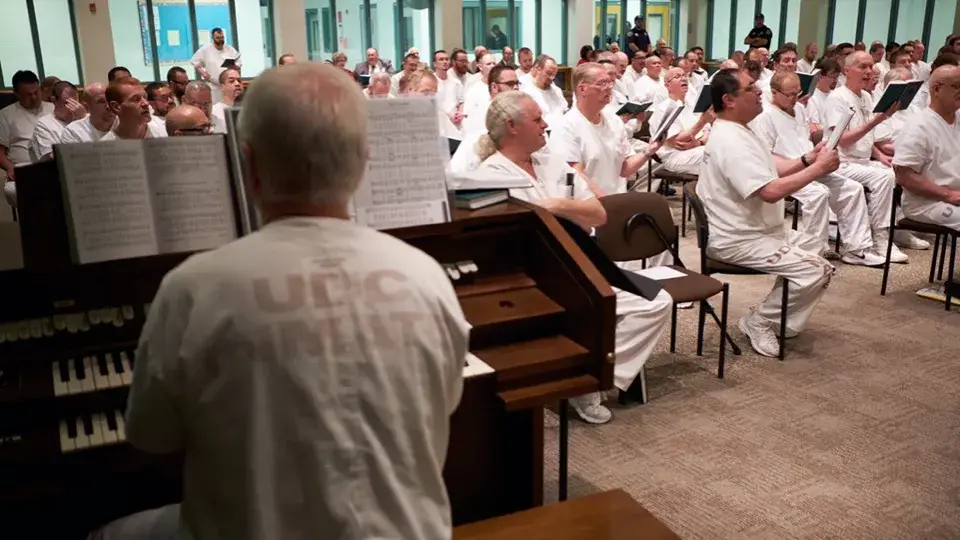
Like all Bureau of Prisons employees, a chaplain is considered a correctional officer first. That status matters. During religious programming, chaplains and other religious staff retain full authority and may write disciplinary infractions when necessary. People in custody should not expect confidentiality when speaking with chaplains or any staff member. That same caution applies to conversations with other incarcerated people.
Chaplains represent many faiths, and it is common for them to interact with people outside their own religious tradition. Christian chaplains, Jewish rabbis, and Islamic imams often lead services or facilitate access for multiple groups.
The First Amendment guarantees the right to practice religion, but that right is not unlimited in prison. The Bureau of Prisons does not permit all religious practices. Certain Native American ceremonies, for example, involve the use of peyote or a peace pipe, which the Bureau does not allow.
To maintain consistency, the Bureau formally recognizes 31 religious groups. People who want to participate in group worship must identify with one of those recognized religions. Regardless of affiliation, everyone in the institution may access the multi faith chapel.
The Multi Faith Chapel in Federal Prison
The main chapel typically functions as a large assembly space. Staff also use it for non religious programs that require seating for hundreds of people. Most chapel buildings include smaller rooms that accommodate faith groups with fewer participants.
Beyond scheduled services, many people go to the chapel simply to find quiet. Like the education department, the chapel can offer a rare break from the noise and pressure of daily prison life.
Chapels often include a small library with religious texts and reference materials from various traditions. Some books remain in the chapel and cannot be checked out. Reading inside the chapel is usually allowed, and many people find it has the most comfortable seating in the institution.
Many chapels also include a music room with instruments such as a piano or organ. Groups practice there and perform during services. Audio and video recordings with religious content are often available through the chapel as well.
Byron’s Experience With Religious Services In Federal Prison
Byron shared his experience with our team. Authorities arrested him at nineteen on charges related to cocaine distribution. He received a twenty year sentence and said religious services helped him cope.
Byron grew up in a large urban housing project and had been exposed to violence and gang life early. When he began serving his sentence, he picked up a Bible. He had not been religious before prison, but faith became central to his daily routine.
“I used to worry about my time. But once I picked up the Bible, it changed my whole outlook,” Byron explained. “Whenever I am not working or exercising, I go to the chapel. I am there every day. Sundays are for Christian services. Other days I join prayer groups, Bible study, or the choir. Because of the chapel, I do not feel like I am in federal prison. Ten years have passed since my arrest, and not one day feels wasted.”
Native American Religious Services in Federal Prison
In addition to the main chapel, each federal prison provides space for Native Americans who practice spirituality outside traditional organized religion. At institutions where members of our team were held, these services occurred entirely outdoors.
Unlike most chapel programs, Native American services rely very little on chaplains. People in custody and community volunteers largely conduct the ceremonies.
The worship area is usually located near the chapel or recreation yard and enclosed by fencing. The space is roughly five hundred square feet. On Friday evenings, participants gather for the Talking Circle. Completion of the Talking Circle allows participation in the sweat lodge on Saturday. Staff members typically do not remain present during these gatherings.
When not in use, the sweat lodge appears as a low wooden dome built from natural branches. It is about ten feet wide and under six feet tall. The floor is bare earth. At the center is a shallow pit where heated rocks are placed during the ceremony.
Early Saturday morning, participants build a large fire outside the lodge using wood provided through the chapel. As the fire heats, others cover the lodge with canvas and layers of wool blankets. Once complete, the dome has a small entrance and little light inside.
When the rocks turn red hot, one person removes them from the fire using a shovel and carries them to the lodge entrance. Inside, participants sit on blankets wearing minimal clothing. A designated individual uses animal antlers to place each rock into the pit. As each rock enters, participants say, “Welcome grandfather.”
After the correct number of rocks is placed, the entrance closes. Participants chant songs tied to the ceremony while the heat builds. Those involved describe the process as cleansing and meaningful.
Other faith groups receive accommodations tied to their traditions. Jewish participants observe Shabbat services on designated evenings. Muslim participants receive accommodations during Ramadan.
People preparing for federal custody often review daily routines in advance. Understanding how religious services work is one part of that preparation.
Thank You,
Justin Paperny is an ethics and compliance speaker and founder of White Collar Advice, a national crisis management firm that prepares individuals and companies for government investigations, sentencing, and prison. He is the author ofLessons From Prison,Ethics in Motion, and the upcomingAfter the Fall.His work has been featured onDr. Phil, Netflix, CNN, CNBC, Fox News,The Washington Post, andThe New York Times.
FAQ
Are religious services available at every federal prison?
Yes. Every federal prison has a chapel and access to religious services through chaplains and volunteers.
Are chaplains confidential in federal prison?
No. Chaplains are correctional officers and may report information or issue infractions.
Can people practice any religion they choose?
Only religions recognized by the Bureau of Prisons are approved for group worship.
Is attendance at religious services mandatory?
No. Participation is voluntary.
Can people of different faiths attend the same chapel?
Yes. The chapel is a shared space used by multiple religious groups.
Are Native American religious practices allowed?
Yes, with limitations. Outdoor ceremonies and sweat lodges are permitted under specific rules.
Do religious services affect custody or classification?
Participation alone does not change classification, but conduct during services matters.

Written by
Justin Paperny
Founder White Collar Advice