You will see how a first week at Taft gets discussed, the two lines Michael offered, and the backgrounds of the men confined nearby.
Note: The chapter below is reproduced exactly as I wrote it inside Taft Prison Camp in 2008. The summaries, FAQs, and modern context appear after the chapter for clarity.
What This Chapter Covers About Surviving Federal Prison Camp
I was in my first weeks at Taft Federal Prison Camp. My sentence was 18 months. Michael Santos walked past my cubicle one evening and sat down.
Michael was in his mid-forties, about 11 years older than me. He drew a line between surviving prison and thriving through it. He noted that the country’s prison system releases 650,000 people a year, and all of them survived.
He gave me two lines. Know thyself, from Aristotle. Know thy enemy, from Sun Tzu, who wrote The Art of War more than 2,000 years ago.
The chapter also covers Alan, who lived a few cubicles from me. He was 33, the same age as me, and had served five years. His first trouble came at 13, when he spent six months in juvenile hall for shoplifting.
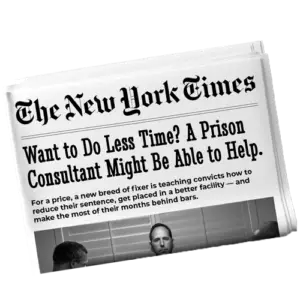
I read an article about Jim Ratley, a consultant who described the fraud triangle: opportunity, pressure, and rationalization.
Intro to Philosophy
Later that evening, Michael walked past my cubicle when I was stuck in the doldrums. For the most part, I was adjusting well to my first weeks in confinement. Sometimes, however, I looked at the calendar with trepidation. Another full year of imprisonment would have to pass, at the minimum, before accumulated good conduct time and halfway house placement would warrant my release to quasi freedom. During those moments, I slumped into my plastic chair, bent over at the waist and held my head in my hands while my knees supported my elbows. I stared at the unfinished concrete floor, as if paralyzed in thought.
“Chin up,” Michael said. “I’ve got great news for you.” He rested his hand on my shoulder.
“What’s that?”
“We’re another day closer to home.” Michael laughed as if my 18-month sentence was one big joke. He walked into my cubicle and sat on a chair beside me. He kicked his feet up to rest on the steel post of my bed frame.
“What’s troubling you, young fella?” Michael was in his mid-forties, just more than 11 years older than me. Despite the amount of time we were spending together, I could not fathom how he had made it through so many years in prison without bearing any telltale signs.
“How do you do this?”
“What’s that?”
“Prison, man. All this time.”
“Prison?” He joked. “What are you talking about? This isn’t prison. This is camp. Embrace it.”
“I know.” I leaned back in my chair and scratched my head. “I’m trying. Sometimes it just gets to me.” I told Michael about the frustration I felt with my first day on the job. He laughed as I told him about Road Runner, Beep Beep, the repeated hollering of ‘five minutes’ with no apparent logic, the two white supremacists arguing about the existence of the Holocaust. “You say I’ve got to Trojan up and I am. I’m just used to a different crowd.”
“Of course you are.” Thus began Michael’s philosophical dispensations.
“Do you want to know how to thrive through prison?”
“Desperately.”
“Notice I didn’t ask whether you want to know how to survive prison. Anyone can survive prison. In fact, every year our country’s prison system releases 650,000 people. They all survived prison. It’s a pathetically small number of people, however, who can truly thrive through prison. I thrive. Do you want to know the secret?”
“Yes.”
“The answers are the same as in life. Philosophers have written about the answers for centuries. You can find the secret in the wisdom of Aristotle and Sun Tzu. Do you remember reading anything about either of them?”
“I was a stockbroker, remember? A client would call, ask that I purchase 10,000 shares of Microsoft. I pushed a few buttons to fill the order. That was my career. Not a lot of need to think about Aristotle or, who was the other guy?”
“Sun Tzu. He was a military strategist, and he preserved his ideas through his book, The Art of War, a book he wrote that has been around for more than 2,000 years. You’d be surprised how readings in philosophy can prepare you to progress through difficult situations. The wisdom from centuries ago can help us through all of life’s challenges. I’ll bet it even could have made you a better stockbroker.”
“Okay. So what’s the profound message of Aristotle and Sun Tzu? Tell me what I should know about them. Give me the abbreviated version.”
“Two points,” Michael said. He held up his first finger. “Know thyself. That’s a lesson from Aristotle.” He held up his second finger. “Know thy enemy. A lesson from Sun Tzu.”
I looked at him for a second, as if waiting for the punch line. “You’re kidding me. That’s the wisdom of the centuries? Are you serious?”
“Totally. One of Aristotle’s famous quotes was that the unexamined life was not worth living. He suggested that for a man to reach his highest potential, he really had to understand himself, to know the values of his life. Only by knowing what was important to him, could he set a balanced strategy that would lead to his personal fulfillment.”
“And the other one? What kind of cryptic advice did he give? I feel like I’m being given the ancient version of the fortune cookie.”
“This fortune cookie quotes Sun Tzu as advising others to know thy enemy.”
“So who’s my enemy?”
“I don’t think the enemy has to be a who. Maybe it’s a what. Maybe it’s a prison term. Maybe it’s an unfulfilling career that leads you to misery, or to bad decisions that land you in prison. It’s a treat for me to meet guys like you inside these boundaries. But I know you’re not here by choice.
“Perhaps if you embrace the journey, you can learn something from it. Know yourself. Know your enemy.”
“Like I said, I sold stocks. I don’t know what you’re talking about.”
“Okay. Take today for example. You felt put off by some of your new colleagues, Road Runner and Dopey. You didn’t like their version of conversation.”
“That’s right. I have a little trouble subordinating myself to a grown man who calls himself Road Runner, Beep Beep. And I’m not too keen on sharing space with guys who question whether Hitler killed six million Jews.”
“But if you know yourself, and you know your enemy, why does it really matter what other people think or do? All that matters is you know where you’re going, that you advance toward the values and goals you cite as being important to your life, to your fulfillment.”
“That’s what I did. I kept my mouth shut and moved on.”
“Not really. You may have kept your mouth shut and moved on physically, but you’re still carrying aggravation with you. It’s bringing you down.”
“So what am I supposed to do?”
“Let it go. Forget about it.”
“Let it go? That’s what I’m doing.”
“Think back to when you were a broker,” Michael suggested. “Do you remember the office, the trappings of success?”
“Do I ever.”
“Probably wore a nice suit, kept an impressive office, receptionist, all that.”
“That’s right.” I felt a degree of comfort come over me as I reminisced about my past success.
“What would you have done if Road Runner or Dopey presented themselves in your office?”
“I would have picked up the phone and called security.”
“Exactly. The office towers of Century City were your world. That’s where you felt you belonged. You had your own customs and culture there. Isn’t that right?”
“You bet.”
“Well, my friend, you need to keep your eye focused on returning to that world. Leave here stronger than when you came in, more prepared to find happiness and fulfillment in that world. You can do that a lot more peacefully if you accept that. Just as Century City is your world, prison is the world for guys like Road Runner and Dopey. Let them have it. Don’t let their words or customs interfere with who you are or where you’re going.”
My discussion with Michael helped. He was right. Prison was only going to be a temporary blip in my life. Many of the people I met at Taft would always struggle with the criminal justice system, unemployment, and personal relationships. I met and interacted with people who lived mired in a kind of systemic poverty.
Alan, for example, lived a few cubicles away from me. His story brought home that prison was a place of concentrated hardship. The challenge for other white-collar prisoners and me was to persevere as best I could, to add to the lives of others when possible, and to avoid altercations at all costs. Michael’s advice about understanding strengths and weaknesses, about knowing my environment and myself was poignant and insightful; it was not the type of guidance I would expect from a man who had served his entire adult life in prison.
Alan lived a life that, sadly, seemed more typical of the men I came to know in prison. He was 33, like me, and he was expecting release around the same time as I was going to be released to a halfway house. Alan had served five years at the time we met, although his time inside prison boundaries and his life before arrest seemed more of a struggle than I could bear.
Alan had a look about him that told his life’s story. His nose was crooked from having been broken numerous times. Scars from jagged edges marked his cheeks. He had a few missing teeth, and prior abuse of meth had rotted the teeth he had remaining in his mouth.
Alan’s body was scrawny. Drawings of spider webs, skulls, and demons in bluish-green ink tattooed both of his arms. When I asked where he had gotten his tattoos, Alan told me that he had done most of them himself.
“We did it when we were kids in juvie.” As we waited in one of the seemingly endless commissary lines, Alan opened up.
Troubles with the criminal justice system began for Alan when he was 13. He spent six months in juvenile hall on account of his having been caught shoplifting. Since then, he had been in and out of various institutions. Ordinarily, I would have said that Alan should have learned his lesson, gotten a job, put his life in order. Yet as I listened to the life he described, I felt a sense of empathy and became less judgmental than would have been the case had we not served time together.
During the most recent stint of Alan’s imprisonment, his father had died in a car accident, his sister had been murdered, his mother had been incarcerated, and the mother of his seven-year old child had become addicted to meth. Alan was scheduled for release at the same time as I was scheduled to conclude my term. Whereas I would return to my place in Studio City, Alan had no idea where he would live or what kind of work he would pursue. He sounded lost and expressed little confidence in his ability to function in society. Prison had become the only world where he felt comfortable.
In listening to Alan, and the prisoners with whom I was confined, I realized that prison gave me an opportunity to become more tolerant of others. In one of the books I read, I came across the writings of John Dewey, who had been an influential educator from the University of Chicago. Dewey’s work suggested that the bad man was the individual who, regardless of what good works he had done in the past, had ceased trying to make the world a better place. The good man, on the other hand, was the individual who, regardless of what bad he had done in the past, was striving to improve his own life as well as the lives of others.
In prison I had to live with guys like Road Runner, Dopey, Alan and others whose life stories differed in remarkable ways from mine. These people had not been blessed with the privileges that I had taken for granted. For such people, loving families, stable, comfortable surroundings, and career opportunities were abstract fantasies that they could not imagine themselves enjoying. Their lives had been one struggle after another, and an end to the turmoil did not seem in sight. By understanding the people around me, I empowered myself to endure what were really nothing more than the temporary inconveniences of my relatively brief stint in a federal prison camp.
Equally important, my exposure to others helped me understand some of the flaws that had contaminated my own character. Michael’s brief lesson on the ancient philosophers Aristotle and Sun Tzu suggested that I must know myself and my enemies. I did not perceive that he meant enemies in the sense of other people who were out to ruin me. My battle was with a sense of entitlement that I had to conquer.
In loving and providing for me, my parents had removed the concept of struggle from my life. From my earliest memories, I believed that I had won the parent lottery as my childhood felt idyllic. Such a background eased my life, though it did not imbue me with the lasting virtues of good character, as my parents would have hoped.
Upon listening to the stories of the prisoners, I could understand how some of the men around me had made decisions that led them into troubles with the law. What excuse did I have? I was born with every advantage, and yet decisions I had made reduced me to the life of a prisoner. Aristotle’s prescription for introspection would help me understand the motivations that drove me and how to prepare for a better life ahead.
Had I embraced the concept of knowing myself and knowing my enemies as I ventured into the professional world, perhaps I would have lived more responsibly. Upon my first encounter with struggles as a stockbroker, I began taking short cuts. Rather than pursuing lasting success as my cousin, Todd Goodman, observed, I chased the temptations of quick and easy commissions. Cheating became easy to rationalize, as I felt entitled to more.
As I served my sentence in Taft Camp, I came across an article in a business newspaper that described the work of Jim Ratley, a consultant who spoke on the motivations for fraud. Mr. Ratley said that perpetrators need to be in a position where they can commit fraud, they need the money, and they must be able to rationalize their crime. It was his way of describing the fraud triangle of opportunity, pressure, and rationalization. I should have known better. The more I thought about the motivations that drove my decisions, the more catharsis I felt come over me. I felt a cleansing, as if taking the steps I needed to become whole again. I had fallen off course early in my career.
While in pursuit of the next big commission, I had allowed my values to fall askew. Only in realizing, acknowledging, and owning such flaws in my character could I let them go and find strength to heal. The alternative would have been to cling to a negativity that seemed to prohibit growth for many of the prisoners around me.
TOP MISCONCEPTIONS
Misconception: Surviving prison and thriving through it are the same thing.
Michael separated the two. He said anyone can survive prison, cited 650,000 people released each year as evidence, and described thriving through prison as rare.
Misconception: Everyone in a federal prison camp comes from a similar background.
The chapter contrasts Justin’s background with Alan’s. Alan was 33, had served five years, first entered juvenile hall at 13 for shoplifting, and during his most recent term his father died in a car accident, his sister was murdered, his mother was incarcerated, and the mother of his seven-year-old child became addicted to meth.
Misconception: Philosophy has no application inside a prison term.
Michael cited Aristotle (“know thyself”) and Sun Tzu (“know thy enemy,” from The Art of War) as applicable to a prison term.
Misconception: Keeping quiet ends a conflict.
Michael said Justin kept his mouth shut and moved on physically, but was still carrying the aggravation.
Misconception: Fraud comes down to a single cause.
The article on Jim Ratley described three elements: opportunity, pressure, and rationalization.
If You’re Facing a Federal Investigation or Prison…
- Where the line between surviving and thriving is stated, along with the figure of 650,000 people released each year.
- How the two lessons are attributed: know thyself to Aristotle, know thy enemy to Sun Tzu.
- Where Sun Tzu’s The Art of War is dated (more than 2,000 years old).
- How Alan’s background is laid out: age 33, five years served, first juvenile hall stay at 13.
- Where the family events during Alan’s most recent term are listed.
- How the fraud triangle’s three elements are named through Jim Ratley’s work.
- How the contrast between Justin’s background and other prisoners’ backgrounds is described.
Frequently Asked Questions
What is the difference between surviving and thriving in prison, per this chapter?
Michael said anyone can survive prison and cited 650,000 people released each year. He described thriving through prison as rare and tied it to knowing yourself and knowing where you are going.
What are the two philosophical lessons in the chapter?
Know thyself, attributed to Aristotle, and know thy enemy, attributed to Sun Tzu, who wrote The Art of War more than 2,000 years ago.
Who was Alan?
A prisoner who lived a few cubicles from Justin. He was 33, had served five years, and first entered juvenile hall at 13 for six months for shoplifting. During his most recent term, his father died in a car accident, his sister was murdered, his mother was incarcerated, and the mother of his seven-year-old child became addicted to meth.
What is the fraud triangle described in the chapter?
From Jim Ratley’s work: a perpetrator needs opportunity (a position to commit fraud), pressure (needing the money), and rationalization.
Who was Michael, and how long had he served?
Michael was in his mid-forties, about 11 years older than Justin. The chapter states he had served his entire adult life in prison.
What did Michael say about the different worlds inside prison?
He described Century City as Justin’s world and prison as the world for men like Road Runner and Dopey, and advised not letting their customs interfere with where Justin was going.
Whose observation about lasting success is cited?
Justin’s cousin, Todd Goodman, is named in connection with pursuing lasting success rather than quick commissions.