Your phone has not stopped. Colleagues, clients. Someone from your industry group. A reporter left a voicemail. Your kids’ school called. The DOJ announcement went out this morning and by noon your name was in every local news alert.
What happens after an indictment is not what most people expect. You are not sleeping. You are reading the press release over and over trying to find the inaccuracies, which are legit, make up, and wondering how many people really know the full story, which depends entirely on what you do next.
The Press Release Is Not the Story. It Is the Opening Argument.
The DOJ press release is written by prosecutors. Its job is to frame you as the villain before any judge, jury, employer, or neighbor has seen a single document from your side.
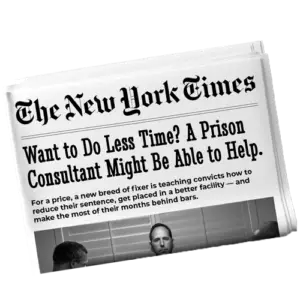
Jack Hitt described it in our New York Times as a Wikipedia biography of the worst moment of your life, with everything else about you salted away in footnotes. That is exactly right. The press release is the government’s version, written by the government, distributed by the government, for the government’s purposes.
You can read the full piece here and listen to the podcast here.
The press release does not convict you. It frames you. The question is whether anything exists to complicate that frame, or whether the government’s version is the only version anyone ever sees.
Most defendants let it be the only version. They hire a lawyer, they go quiet, they wait, and they hope the legal process produces a fair outcome. What happens after an indictment, for most people, is nothing. They do nothing. Sometimes the legal process still produces a fair outcome. More often, the person who did the most work between indictment and sentencing gets the better result.
Not the most expensive lawyer, but he person who did the most work and building.
What the Government Is Doing Right Now
Paul Bertrand investigated investment fraud and financial crimes for the FBI in Los Angeles for 12 years. He told our community something that changes how you should be thinking about the next 90 days.
The investigation does not stop at indictment.
Agents are still working. The case file is still open. Witnesses are still being interviewed. If there is conduct still occurring, it is still being documented. The case does not close until sentencing.
Paul said it directly: from the time a case is open, those cases don’t stop being investigated until sentencing happens.
So while you are reading news alerts and fielding calls, the government is building. While you are managing your family’s fear and your reputation and your business, they are adding to a timeline that started before you knew you were a target.
The only rational response is to build something yourself.
What Marcus Aurelius Understood
Marcus Aurelius ran the Roman Empire while managing plague, war, and betrayal. He wrote private notes to himself, not for publication, not for legacy. Just to stay clear about what was in his control and what was not.
He wrote: you have power over your mind, not outside events.
The press release if already released is outside your control. What the reporters write tomorrow is outside your control. What your former colleagues say at their dinner tables tonight is outside your control.
What is inside your control: what you do starting today. What you write and document. Whether you start creating a record that shows who you actually are, beyond the government’s version of who you are.
Most people in your position spend this period paralyzed. Reading their own press release. Refreshing Google. Arguing mentally with the U.S. attorney. None of that builds anything. None of it moves the needle on what a judge will eventually know about you.
Start building the record today because it is the only thing that creates a counter-narrative to what was published this morning.
What the Government Is Not Investigating
Paul said something in our webinar that I have repeated in every consultation since.
Agents are investigating the crime. Who did it. How it happened. What the timeline looks like. What money moved and where it went.
They are not investigating who you are as a person. They are not gathering evidence of your character, your family, your community, your years of contribution before any of this happened. That is not their job. It will not be in their file.
Which means it will not exist unless you create it.
Your pre-sentence investigation report, the document a probation officer writes about you before sentencing, will be built from the government’s indictment, the plea agreement, the DOJ press release, and whatever you and your lawyer contribute. If you contribute nothing, the report reflects the government’s version almost entirely.
Chris Maloney ran federal probation in two districts. He said the more information a defendant provides, the better picture the officer can give the judge. That picture influenxes the sentence. It also shapes your prison designation, your programming, and the first document your reentry probation officer reads when you come home.
The press release is the government’s opening argument. The pre-sentence report is where the judge actually learns who you are. Those are two different documents. You can influence only one of them.
The People Who Get the Best Outcomes
I have been to more than 1,500 sentencing hearings. I have sat in courtrooms watching defendants who prepared and defendants who did not.
The ones who prepared did not necessarily have the best lawyers. They had the best records.
They started a journal the week they were indicted. Dated entries with an honest accounting of what happened, what they understood about who was harmed, and what they were doing about it.
They started paying restitution before anyone ordered them to. Even small amounts.
They started treatment if substance abuse or mental health was any part of their story. They identified the people their conduct harmed. By name. Not “the victims” as an abstraction but the actual people.
By the time they walked into a sentencing hearing, they had months of timestamped documentation. A judge cannot easily dismiss a person who started doing the work before anyone told them to. That consistency is the hardest thing to fake, which is why it is the most credible thing you can show.
What Not to Do
Do not contact witnesses or co-defendants. Your lawyer will tell you this. Listen.
If you give interviews, as Matt Bowyer did, make sure you have the right message. Not to defend yourself. Not to set the record straight. The press release already exists. An interview is an opportunity, if you have the right message.
Do not assume cooperation will save you. Paul Bertrand said in his entire FBI career he saw one case where a cooperator completely avoided prison. One! Everyone else got shorter sentences, but they still went. Cooperation helps. It almost never eliminates prison time on its own.
Do not let the lawyer’s work substitute for your work. Your lawyer writes the sentencing memorandum. Judge Stephen Bough told our community he puts about one to two percent weight on what a defense attorney says about a client’s remorse. One to two percent. The other 98 percent comes from what you have actually done and documented.
What To Do This Week
Take the free probation report course. The PSR interview is coming. The earlier you understand what that officer is looking for and how to prepare, the more you can contribute to what the judge reads: Probation Report Course
Start a journal today. Date the entry. One page. What happened, what you are learning, plans moving forward.
Join our free weekly webinar on Tuesday at 11am Pacific / 2pm Eastern. I answer questions from people at exactly this stage every week: Register Here
If you want to talk through your situation directly, schedule a call. The earlier in the process, the more we can do: Schedule a Consultation
Frequently Asked Questions
What happens after a federal indictment?
The government formally charges you. You are arraigned, enter a plea, and the case moves toward trial or a plea agreement. The investigation continues during this period. Most federal cases, roughly 97 percent, resolve through a plea rather than trial.
Can I respond publicly to the DOJ press release?
Talk to your lawyer before saying anything publicly. In most cases the answer is no. An interview creates new material. The press release already exists and a public response rarely helps and often hurts.
Does the indictment mean I am convicted?
No. An indictment is a formal charge, not a verdict. It means a grand jury found probable cause to believe a crime was committed. You are presumed innocent until convicted at trial or until you plead guilty.
How long does a federal case take after indictment?
It varies significantly. Many white collar cases take one to three years from indictment to sentencing. Some take longer. The investigation continues the entire time.
What should I be doing between indictment and sentencing?
Building a documented record that shows who you are beyond the government’s version of events. That includes a personal narrative, evidence of restitution efforts, treatment records if applicable, employment documentation, and community involvement. The earlier this starts, the more credible it is.
Will the press release affect my sentence?
Not directly. But it shapes public perception, which affects your business, your family, and your community. More importantly, the PSR, which the judge reads before sentencing, is built partly from the same government documents that produced the press release. What you contribute to that report is what moderates the government’s version.
My lawyer says to stay quiet and let him handle it. Is that right?
Your lawyer is right about staying quiet legally. That does not mean you have nothing to do. The legal case and the documented record of your character are two different things. Your lawyer handles one. You handle the other.