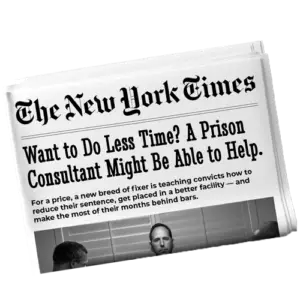
That is the honest answer. Anyone who tells you differently before seeing your case is guessing.
What I can tell you is what moves a federal judge toward leniency, what a white collar prison is, and what the people who avoided prison did that most defendants do not.
What “White Collar Prison” Means
People type this into Google and ChatGPT constantly. What is a white collar prison? Are they real?
The federal Bureau of Prisons does not have a category called white collar prison. What people are describing are federal prison camps, minimum security facilities with no fences, lower populations, and less violence than higher security prisons.
Lompoc Federal Prison Camp in California, where I served 18 months, is one of them. There are others. Pensacola. Montgomery. Duluth.
Who goes there is determined by your security point score. The Bureau of Prisons calculates it from the pre-sentence report. Factors include offense level, criminal history, history of violence, age, education, and detainers. Low points mean low security. Low security means camp.
Most white collar defendants with no prior record score low enough for a camp. But getting to a camp requires two things first. A prison sentence. And a correct designation.
The first one is not guaranteed.
What Federal Judges Do With First Time Offenders
Judge Mark Bennett sentenced more than 4,000 people over 23 years on the federal bench.
He said most of the people he sentences are good people who made bad decisions. Not a pleasantry. His assessment after more than two decades.
He also said the sentences Congress requires are too harsh, too many people go to prison for too long, and there are not enough resources inside for rehabilitation.
A sitting federal judge said that.
But he sentences people every week. First time offenders go to prison regularly, including white collar defendants with no prior record, strong community support, and good lawyers.
The question is not whether federal judges send first time offenders to prison. They do. The question is what separates the ones who go from the ones who do not.
Seneca on Time
Seneca spent years in exile. He did not waste them.
He wrote: it is not that we have a short time to live, but that we waste a great deal of it.
The time between your plea and sentencing is the most consequential period of your case. Not because the outcome is decided there. Because the record is built there. The record is what the judge uses to decide.
Most first time defendants spend that time paralyzed. Reading their own press release. Calling their lawyer. Hoping.
The ones who avoid prison spend it differently. They build something. They do it early enough that the evidence reaches the judge before sentencing day.
What Moves a Judge Toward Leniency
Judge Bennett was specific about what drives downward variances, meaning sentences below what the guidelines calculate.
Background and context. A hard upbringing. Lack of parental guidance. Circumstances that explain, without justifying, how someone ended up in front of a federal judge. He said it is never surprising when someone with a difficult background makes a bad decision. That context matters.
Genuine remorse. Not the phrase. The evidence. Restitution payments started before sentencing. Letters written to people harmed. Treatment started and documented. Actions taken before anyone ordered them.
A believable plan. Specific. In motion. Not “I want to give back to the community.” An organization. A start date. Hours logged.
Family and community support. Judge Bennett said the literature is clear: more support means greater likelihood of rehabilitation. He has been moved by employers who showed up at sentencing knowing the defendant faced a mandatory minimum and promising a job when they returned.
He said that kind of support operates on a subconscious level. It tells him something about who you are in the world.
What Does Not Work
Saying you are sorry without anything behind it.
Judge Bennett watches defendant after defendant say some version of “I’m deeply sorry and I take full responsibility.” He hears it every week. It tells him nothing about whether it is true.
What he cannot dismiss: a defendant who started paying $100 a month toward restitution eight months before sentencing. A defendant who entered treatment in January and brought the attendance records. A defendant who wrote personal letters to the people they harmed and did not ask for forgiveness.
Those are not words. They are dates. Judges can see dates.
He also described getting offended when character letters tell him what sentence to impose. The letter writer does not know the guidelines. They do not know the case. Telling a federal judge what to do with a defendant he has studied for months makes the letters look naive.
The letters that moved him: specific stories from people who know the defendant well. One letter from someone who watched you for ten years and can describe a real moment beats thirty letters using the same template.
He had 93 letters in one case. The defendant’s wife had sent a form letter with phrases everyone copied. He gave those letters no weight.
The Camp Reality
If you are sentenced to prison, where you serve matters.
Matt served at Lompoc Federal Prison Camp. No fence. Shared rooms, not cells. Work assignments. A track. Phones and email. Weekend visits.
But it is not what most people picture when they hear the word prison.
Getting to a camp requires a low security score, calculated from the pre-sentence report. The PSR matters not just for the length of your sentence but for where you serve it.
Most first time white collar defendants with no history of violence score low enough for a camp. But I have seen people who should have been at a camp end up at a low security facility because the PSR was poorly prepared, contained errors, or missed factors that would have lowered the score.
Your lawyer needs to understand the designation system. You need to understand your PSR.
The Most Important Thing You Can Do
Judge Bennett said something I have quoted in every consultation since.
He said he would be astoundingly impressed by a defendant who built a personal narrative before the pre-sentence report was written and submitted it to the probation officer.
Then he said he had never seen it.
You can be that defendant. The judge who sentences you will read the PSR before they hear your allocution. What is in that report shapes everything that follows.
Take the free probation report course before your PSR interview: Probation Report Course
What To Do This Week
Start the personal narrative. Your background, what happened, who was harmed, what you have done since.
If treatment is part of your story, start it this week.
Schedule a call to talk through your situation directly: Schedule a Consultation
Frequently Asked Questions
Do white collar prisons exist?
Not as a formal category. What people call white collar prisons are federal prison camps, minimum security facilities with no fences. Most first time white collar defendants end up at camps. The Bureau of Prisons determines designation, not the judge.
Will a federal judge send a first time offender to prison?
It depends on the case, the guidelines range, the 3553 factors, and what the defendant built between plea and sentencing. First time offenders go to prison regularly. They also avoid it when the record they built is real and specific.
What is the difference between a federal prison camp and a regular federal prison?
Camps are minimum security. No fences. Lower populations. Less violence. Shared housing rather than cells. Low security prisons have fences and higher populations. Medium and high security facilities are more restrictive.
What gets a first time offender a below-guidelines sentence?
Background context that explains the conduct. Documented remorse. Restitution payments before sentencing. Treatment records. A specific plan already in motion. Family and community support at sentencing.
How is my prison designation determined?
The Bureau of Prisons calculates a security point score from the PSR. Factors include offense level, criminal history, history of violence, age, education, and detainers. Lower scores mean lower security.
What is the most important thing I can do before sentencing?
Build a record that shows the judge who you are beyond the offense. Start before anyone tells you to. The judge can see dates.
Does having no prior record help?
Yes. It factors into the guidelines and the 3553 analysis. But it does not guarantee probation. What you build between plea and sentencing matters more than the absence of a prior record.