Your Guide to Writing a Pre-Sentencing Letter to a Judge

A pre-sentencing letter for a judge is a written statement submitted before sentencing that helps humanize the defendant, demonstrate accountability, and highlight mitigating factors that can influence the final sentence. When written correctly, it complements legal arguments by showing character, remorse, and concrete steps toward rehabilitationβ€”without re-arguing the facts of the case.

When Dr. Stanley Kaplan contacted our team, he was in a full-blown crisis. Facing the possibility of imprisonment for insider trading, he was overwhelmed with fear and uncertainty. As a physician, this was a reality he never envisioned. I understood his predicament all too well. I was equally overwhelmed and off my game when I learned I was under investigation.Β 

As professionalsβ€”whether doctors, stockbrokers, entrepreneurs, or politiciansβ€”you never expect to find yourself in this position. Yet, like Dr. Kaplan and myself, here you are, facing potential imprisonment, career devastation, and the profound impact on your family and reputation.

With our guidance, Dr. Kaplan prepared and changed his outcome. He wrote a comprehensive life story, spoke with me at the Marshall School of Business at USC, obtained letters about his character, engaged in meaningful volunteer work, and successfully reduced his sentence from the prosecutor’s recommended 24 months to just six months.

Are you ready to work as diligently as Dr. Kaplan to change the government's version of events?

At White Collar Advice, we understand your predicament because we’ve been through it ourselves. Our team, including Michael Santos, Brad Rouse, Alec Burlakoff, Scotty Carper, and others, has faced similar crises and emerged stronger by embracing proven mitigation strategies.

The Hardest Part of the Process: Pre-Sentencing

Tom Petty sang, “Waiting is the hardest part.” He was not lyingβ€”the waiting, the wondering, the anxietyβ€”it’s brutal. The pre-sentencing phase is the toughest part of the journey.

Federal Judge Richard Boulware emphasizes that effective mitigation includes sharing all collateral consequences that follow an investigation and conviction.Β 

Judge Carter highlighted at a sentencing hearing, “I know you’ve lived in the dungeon for many years waiting to get sentenced. You’ve been productive during this period. I want you to know that will heavily factor into my decision.”

Does your judge understand your efforts to make amends? Does he know the challenges you will continue to face regardless of the length of your prison sentence?

Several years ago, I spoke with my friend and defense attorney, Benson Varghese, at a legal conference in Fort Worth. Following my speech, I spoke to a cynical, retired Judge who told me, “I expected defendants to tell me exactly what I wanted to hear. I dismissed most of it. If it is not documented, it did not happen. It is really that simple.”

Invest the time to show your growth andΒ realistic plans for the future.

The pre-sentence phase comes with many challenges:

  • Fear of Prison: Accepting the thought of losing your freedom is hard. You also likely disagree with the government’s version of events.
  • Career Impact: You worry about losing your professional license and the ability to support your family.
  • Reputational Damage: The public nature of your case and the resulting press releases can be humiliating and far-reaching.
  • Financial Strain: Concerns about restitution and the financial burden of paying back victims add to stress.
  • Family and Livelihood: The impact on your family and your future ability to earn an income weighs heavily on your mind

To overcome these challenges, avoid common mistakes:

  • Thinking There is Time to Prepare: FBI Agent Paul Bertrand told me, “When we show up at a defendant’s home for a raid or send a target letter, we are in the bottom of the eighth inning. The work is done. What matters is what the defendant does next to mitigate.” Despite this urgency, many defendants embrace the status quo or convince themselves they have time-most never get around to truly preparing.
  • Hiring the Wrong Lawyer: Without due diligence, defendants often hire lawyers who do not embrace sentencing mitigation.
  • Lack of Preparation: Failure to understand stakeholders’ perspectives and prepare for key meetings, such as proffer sessions or probation interviews. These failures lead to missed opportunities, like cooperating with the government or keeping an investigation civil rather than criminal. Too often, defendants make these mistakes too late and wish for do-overs that do not exist.
  • Not Engaging with Your Lawyer: Most defendants, like 99%, have no idea how to work with or engage their lawyer.

Let's Get Philosophical!

Jacob Riis said, “Look at a stone cutter hammering away at his rock, perhaps a hundred times without as much as a crack showing in it. Yet at the hundred-and-first blow, it will split in two, and I know it was not the last blow that did it, but all that had gone before.”

To avoid these mistakes, start hammering immediately.

Here’s how:

  • Understand the Government’s Perspective: Take the time to understand how the government views your case.
  • Prepare Your Life Story: Work to create a compelling narrative–to learn more, watch this video I filmed with Dr. Phil.
  • Engage with Stakeholders: Actively engage with all stakeholders involved in your case.
  • Consistent Effort: Just as the stone cutter’s persistence eventually splits the rock, your continuous, deliberate actions will pave the way for a better outcome. To see this in action, check out this timeline with Joseph DeGregerio, a former client and lead consultant on our team.

Reverse Engineering an Effective Pre-Sentencing Letter

As I expressed on our WCA About Us page, Michael Santos introduced me to reverse engineering. It’s a game-changer!

Successful defendants envision the desired outcome and work backward to determine the necessary steps. They understand that decisions made today can influence their level of liberty on probation, job opportunities, halfway house placements, and early termination of supervision.
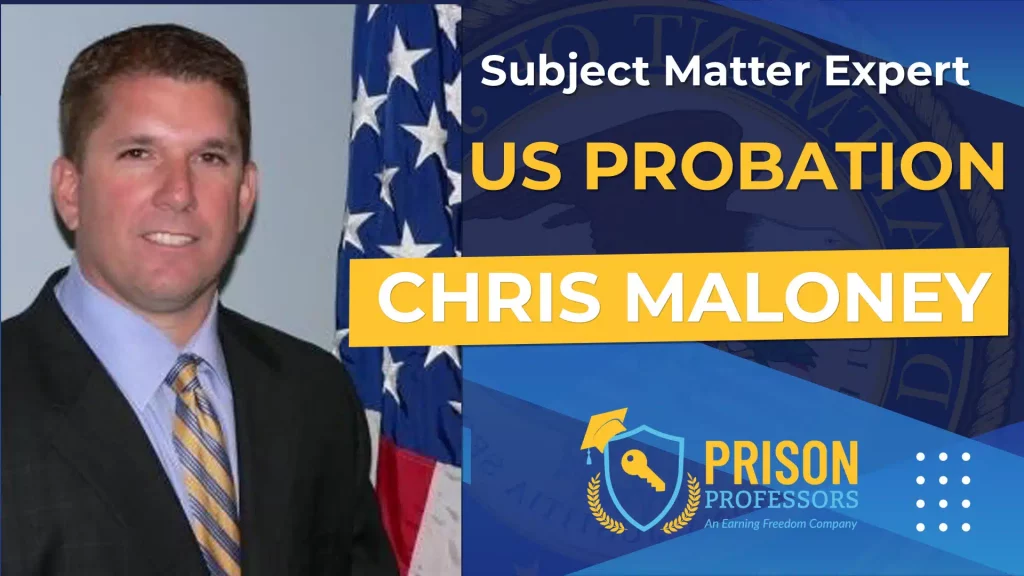
Michael interviewed Chris Maloney, the former Chief of Federal Probation. Chris explained that when you begin supervised release, one of the first tasks your probation officer will undertake is to review your probation report, which details your crimes.Β 

Β 

Given the significant gapβ€”sometimes yearsβ€”between the preparation of this report and the start of your supervised release, it raises an important question:


Would building a positive record now, which could shorten your sentence and counteract any negative impression from your probation report, be helpful?

Mario Hernandez’s story proves the impact of proactive mitigation. An actor and entrepreneur, Mario was facing a five-year sentence. By actively engaging in mitigation efforts, including substance abuse treatment and volunteer work, he reduced his sentence to 24 months, and he served only ten months at Sheridan Federal Prison Camp.

In what ways will stakeholders see you as different from the expectations of people who have gone into the system?

The History of White Collar Advice

When I met Michael Santos in prison in 2008, I was inspired by his story. He agreed to mentor me, and in time, I wanted to share the lessons he taught me with others. The lessons from Michael’s journey are the basis for our ecosystem include:
  • White Collar Advice: A boutique crisis management firm guiding individuals through government investigations. Our personalized approach ensures clients understand every step of the process, actively engage in mitigation strategies, and work towards achieving the best possible outcomes.
  • Prison Professors Charitable Corporation: Engaging with our nonprofit can help you demonstrate genuine efforts to give back and create a positive impact.
  • Prison Professors Talent: This platform lets you document your journey, showing progress and growth over time.
  • Reputation Management: We embrace authentic reputation management. We do not suppress or remove government releases; we build new records on top of them. Our reputation management services allow you to use this experience as an asset rather than a weakness.
  • TopWCA.com: A vetted network of lawyers who understand and embrace mitigation strategies.

How Judges Actually Read Pre-Sentencing Letters

We have interviewed numerous judges who have shared valuable insights that shape our approach to mitigation:

  • Judge Benita Pearson: told me, “Defendants must treat sentencing like a full-time job. It is their responsibility to share every fracture that led to that courtroom and their plans to make their victims whole and never return.”
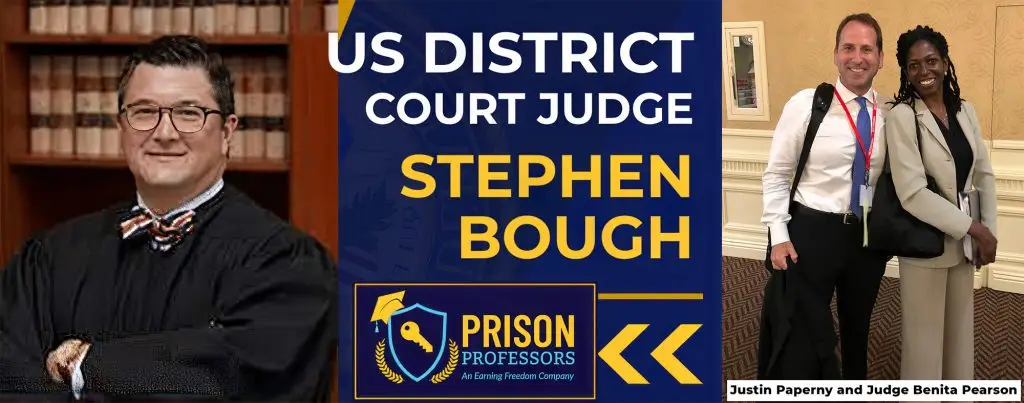
  • Lawyers’ Words Are Impactful, But Not As Impactful AsYours: In a YouTube interview with Michael Santos, Judge Bough said he discounts what lawyers say because they are paid to say it. He says he needs to hear from the defendant: “If you break my window, do not say sorry. Tell me your plans to fix the window.”

What to Focus On Before You Write

Hardly a day passes without a defendant thinking, “It’s early; I have time, right?” It wasn’t too late for the government to indict you, for banks to fire you, for the government to prepare for trial and issue press releases, or for you to hire a lawyer.Β 

As you read, some government bureaucrats are working on your case with unlimited resourcesβ€”our tax dollars.

Here's What To Do Next:

  • Schedule a Call: Schedule a call with our team to discuss your case and next steps.
  • Invest Time Reading or Listening to Our New York Times Article: In this article, journalist Jack Hitt followed our team for more than 18 months. You’ll learn more about the ecosystem of our company, Michael’s inspiring journey, and how and why Hugo Mejia and Stanley “Stat Quo” Benton earned the best possible sentencing outcomes.
  • Join Our Webinar: Participate in our weekly webinar every Monday at 1 p.m. Pacific, 4 p.m. Eastern. Come with questionsβ€”no pitches, just honest advice.
  • Download Our Free Course: Learn about government investigations, stakeholder cynicism, and how to begin mitigating and preparing effectively.

Engage with our resources, connect with our team, and build the skills to get a better outcome.

Thank you,
Justin Paperny

Testimonials

Pre-Sentencing FAQs

What is a pre-sentencing letter to a judge?

A pre-sentencing letter is a written statement submitted before sentencing that provides context beyond legal filings, documenting accountability and post-offense conduct.

What is the purpose of a pre-sentencing letter of support?

Its purpose is to add documented perspective to the record, showing how the defendant has responded since the offenseβ€”not to argue the case.

How do you write an effective pre-sentencing letter to a judge?

Effective letters focus on ownership, evidence of change, and forward-looking responsibilityβ€”not promises or explanations.

What topics should be covered in a pre-sentencing letter?

Judges expect accountability, recognition of harm, documented corrective action, and realistic plans to prevent recurrence.

What should NOT be included in a pre-sentencing letter?

Re-arguing facts, minimizing responsibility, blaming others, or relying on vague remorse often weakens credibility.

Can a defendant write their own pre-sentencing letter?

Yes. Judges generally expect to hear directly from the defendant, and silence is often interpreted negatively.

What are common mistakes defendants make in pre-sentencing letters?

Common mistakes include waiting too long to act, focusing on intentions instead of actions, and submitting last-minute efforts.

Who should write character or support letters for sentencing?

Family members, employers, and community leaders can help when they document observed changeβ€”not praise alone.

How should a family member write an effective pre-sentencing letter?

Family members are most effective when they focus on concrete behavioral changes rather than fear or hardship.

What is the difference between a pre-sentencing letter and a character reference letter?

A pre-sentencing letter comes from the defendant and focuses on accountability; character letters corroborate change from others.

How are pre-sentencing letters submitted in federal court?

Most letters are submitted through defense counsel and reviewed as part of the pre-sentence investigation process.

When should pre-sentencing letters be submitted?

Earlier is betterβ€”letters submitted before the PSR is finalized are more likely to influence the official record.

Do pre-sentencing letters actually influence judges?

They canβ€”when they document meaningful action taken before sentencing. Judges rely on records, not promises.

This is a staging environment