Table of Contents
“Time brings with it all things and may produce indifferently either good or evil.” Machiavelli wrote that more than 500 years ago. He was saying time could make your situation worse.
The Call: Four Children, Four Years, and the Weights
I thought about that after speaking with a man here in Southern California. He has three young children, another on the way, and he's going to federal prison for four years. He has lost his career, his reputation, and everything else that accompanies a government investigation. Yet the primary focus of our call was the food, how much exercise he'd get, whether there were weights, and if not, whether he would have access to bands. I answered as much as I could. When you go to prison you have questions. It makes sense to ask about food, the commissary, jobs, and exercise.
After I gave him what he wanted, I did my best to move the conversation into the next two, five, ten years. He is going to come home to four children who will be older, a family that in many ways has been forced to move on without him, and a conviction that cost him his license and the work he has been doing. So I asked what he intended to do for a living. What can you begin to do to prepare for that before your surrender? What can you do now to help you while you serve your sentence? What can you create that will show what you did with this time, so the time serves you rather than just turning calendar pages?
All he did was appease me. “Kind of, yeah, that makes sense.”
He Returned to the Weights
“Totally good idea. I've seen your videos. Create assets that don't exist. I get that. You do such great work.”
I've done this long enough to know when I'm getting placated and when someone doesn't want to do the work. That's the skill you develop through 17 years in this space. I know pretty quickly if someone wants a better outcome. And what did he do? He returned to the weights.
I can't stress enough that this experience is harder on those who love and support you. This prison term is ending.
How to Prepare for Federal Prison Beyond the Bunk and the Food
Failed planning has consequences. Our team gets these calls every single week. To be clear, I'm not diminishing your goal to learn about the bunk, the food, the job, and whatever else interests you about life on the inside. I want you to focus on the conversation he did not want to have with me. What will your life look like after prison? What choices can you make today that get you closer to what you want through an uncertain time?
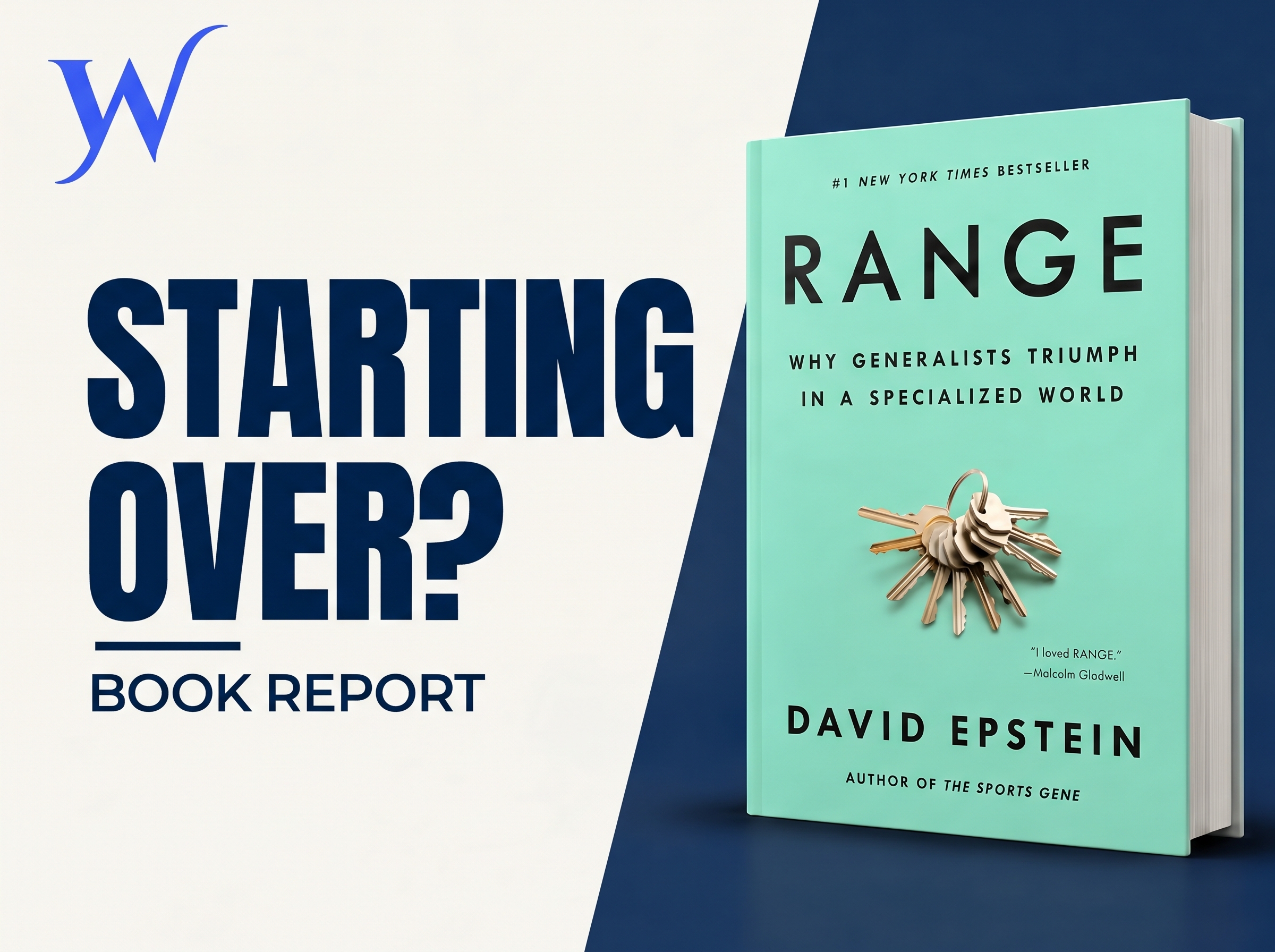
As I get older, reading literature has helped me convey this message differently. Our message has not changed: we're never going to ask you to do what we haven't done and documented. When I read a book, I write a book report. Why did I read it? What did I learn from it? How will it help you?
What Ghost Town Living Taught Me About Going All In
I'm almost done with Ghost Town Living by Brent Underwood. It's a terrific book about faith, hope, trying, failure, and getting back up. Brent describes buying an old mining town in Death Valley called Cerro Gordo. He talks about the money he earned in his prior life and said something like, I earned a lot of money because it was a miserable job. The only thing is it paid well.
He didn't want that life anymore. So he bought the ghost town, put in every dollar he had, and raised money from friends and lenders. He did it without knowing how it would work out. He knew he would have to develop skills along the way. He knew there would be setbacks, friends who ran from him, relationships that ended, people calling him crazy. He was all in. And I think that's what it takes to be successful as a convicted criminal.
Unless you're rich and don't need to work. That's awesome. God knows we've had plenty of those people in our community, whose businesses will keep making millions of dollars no matter how long they're in prison. I do not speak in absolutes; this advice does not apply to everyone. I'm not naive. But if you're like me and need to rebuild, make money, build a career, pay restitution, and prove you're worthy of the love and support of your family, it's going to require you to do what this father wouldn't do: begin to work and develop new skills.
There Is No Plan B
What helped me was saying there is no plan B. And there wasn't one; I lost my real estate and securities licenses. Some people go in half in, half out. They try something for two or three weeks. It doesn't go well. They stop and pivot to something else. I told myself: This is all I have. As a convicted criminal, I'm unhireable. I've got to create something.
That's what Underwood did. As he describes in Ghost Town Living, he was all in. He developed skills fixing things, building things, and learning to live in very tough, rigid conditions. From that work and lived experience, he produced this phenomenal book. His Instagram is incredible: photos of the old ghost town, the mining facilities, who comes, why he did it, what he's learned, what he would do differently.
Someone may say to you, “dude, I'm not buying a freaking ghost town. He chose to do it. I didn't choose prison.” I get it. The point is he went all in, took the risk, and developed new skills when he had other options, like his investment banking career. Like you, I didn't sit down and say someday I would love to go to federal prison because I was bored at work. I know many of you are furious that you're going to prison. I'm not asking you to like it. I'm asking you to embrace the reality that life is harder if you don't have new skills and a plan.
Don't Wait Until Six Months to the Halfway House
That's what I'm begging all of you to do. Build a plan that shows what you intend to do next, then follow through on it. If it's a business, a book, or a job, you can't just talk about it. You have to write about it and about the skills you're developing to get there.
There's a common phrase in federal prison: I'll start when I have six months to the house, meaning six months to the halfway house. By then, they have never started. Later is going to get here. If you're not prepared with a new record, a new skill, a way to sustain your family, and a way to deal with a probation officer, you're going to have the pain of regret. Everyone comes home behind because they've been away in prison, no matter how well they prepare. Without a plan, you'll come home farther behind.
I learned a lot of this the hard way, through trial and error.
What Michael Santos Asked Me in Federal Prison
I wasted my first few months exercising all day. I saw men getting scared to go home. Michael Santos mentored me. He'd been inside for 22 years. He asked me to assess my decision making on a scale of one to 10. How hard was I building? What was I reading and why? I couldn't answer. He said, you read books passively. It's like watching a movie. I was wasting the experience, wasting the 18 months. And it doesn't make sense to complain to a guy who had already served decades in federal prison. That's the last thing he wanted to hear. No one should join your pity party in prison.
If they do, you're associating with the wrong people. I think it was Jim Rohn who said you are the average of the five people you associate with. Who will you associate with in prison? What will you do all day?
Michael asked me what I was reading and what I was going to write. Not what I intended to do; what I was doing. So I began to write. I began to create. Some pieces were better than others. He helped me, just like he helped me write Lessons from Prison. I'm proud to acknowledge I could not do this on my own. I needed help, and I wanted to learn from someone who had been in prison for a long time and had mastered and documented the experience: education, books, relationships, teaching prisoners, teaching university courses from prison, contributing to textbooks on penology and mass incarceration. He was the perfect mentor for me.
It was his idea to begin building White Collar Advice. He suggested I could relate to people in trouble because I'd lived through it: a doctor, a lawyer, a business guy looking to recalibrate or pick himself up after the fall. But how? Not by focusing on weights and bands. By understanding how this experience will impact the rest of your life.
Same Unit, Same Sentence, Different Outcomes
Two people in prison can be in the same unit, the same dorm, the same job, with the same sentence length and the same kind of case, and serve their time very differently. It comes back to the people you associate with. One may blame his lawyer or his judge. He associates with people who let him blame and excuse, and then he has to listen to them blame and excuse, because eventually it's their turn. Three, six, nine, 20 months later, it's the same conversation. By then he's convinced he should have gone to trial. I saw it in prison.
The other guy, who may live seven feet away, may choose to go to classes, read deliberately, write deliberately, prove worthy of the love and support of his family, build a new skill, and become extraordinary.
Do you understand what that means? Do you understand how many people say I'm going to be compliant and avoid the contraband iPhone, and think that makes them exceptional? Is that exceptional to you? If you were a case manager, would you say, my goodness, you go to programming and you don't have any disciplinary infractions, you are absolutely exceptional? Of course not.
My work is for those who work. If that alienates some, fine. If you believe otherwise, you may be believing someone who's telling you what you want to hear, for whatever reason they have. I would encourage you to assess what you have done, or intend to do, to become exceptional. Forget about the case manager and the warden for a moment. Do it for your family.
I was hoping this father, through my questions, would get to the conclusion on his own: Yes, I need to do better. I need to prepare for what's coming. My spouse is going to have bills and make decisions without me for years. My conviction precludes me from doing a number of things. How can I prepare right now? I know what he wants. He wants what everyone wants: to get home earlier. But it does not happen by fixating on the weight pile in prison. You get there by, oh yes, here we go, “creating something that does not exist.”
The Government Is Still Building Its Record
The government didn't just build a file on you. It is still building it. That should compel you to take action. There's an indictment, a plea agreement, a press release, a probation report, a government sentencing memorandum, a judgment and commitment order, text messages, emails, accounts of what you have said and done, and the perception people have of you because of your conviction. The record keeps growing.
A lot of people say, it's not true, it's not fair, they don't have all of the facts. I know that. A better question: what are you doing today to build your own record so this offense doesn't define the rest of your life? The government's version will be there forever. Building your own record is what we help people do. We give away the information about showers, toilets, and bunks at PrisonProfessors.org. You do not have to pay a prison consultant for that. We believe in engineering, creating, and building a consistent plan.
Some people do that through our team at White Collar Advice for a fee, because they want to use what we've built over a very long period of time. Others do it on their own at Prison Professors to document what they're doing. Either way, a good plan considers all stakeholders: not just a case manager and a warden, but your family. It addresses everything you are going to face. Do you know what that is? Reputation, career, mental health, housing, employment. Prison Professors, a platform I proudly support and donate to personally and through White Collar Advice, gives you the opportunity to build that plan. If you do it well, stakeholders will see what you have learned, what you have done, the sequence of events that got you here, and why you're a candidate for whatever it is you want. You may not get it, but look at the building and creating you've done along the way.
One Must Imagine Sisyphus Happy
I'm not going to pretend you'll always find value in the work. That happens at times with people who go to prison. They write, they create, they stop. No one reads it. It's boring. They don't think it's helping, and they give up. Embrace the reality that this will require work on days you would rather do just about anything else.
That's what prison is like a lot of the time. It's Groundhog Day. You wake up, you've got programming, you have a job, you call home, you send an email. I understand the monotony. But if you commit to incremental, daily building and creating, you'll have a body of work you can rely on, one that will make you proud.
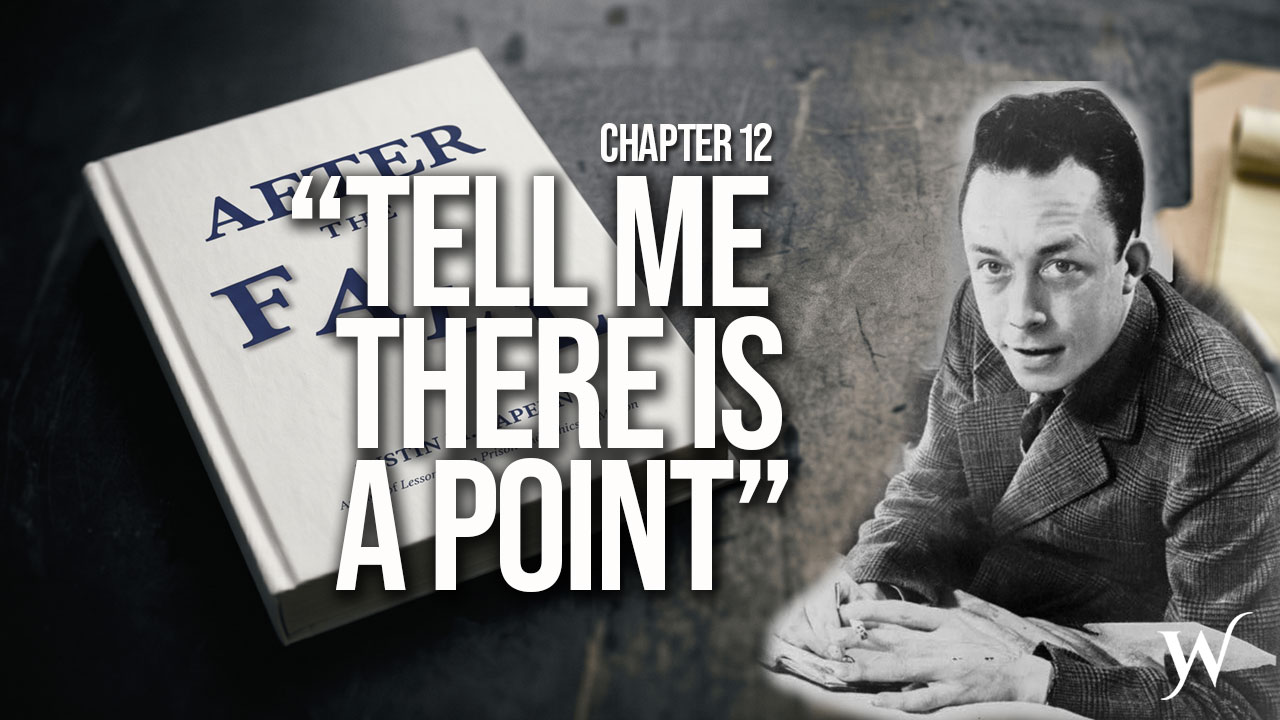
In prison, I read Camus' The Myth of Sisyphus. If you've read Lessons from Prison, Michael and I referenced it. The gods condemned Sisyphus to Hades for something he did wrong. His sentence: roll a boulder up a hill. When it reaches the top, it rolls back to the bottom. He does it every single day. It never stops. At the end, Camus writes, “One must imagine Sisyphus happy.” I think Camus says we can imagine him happy because he has his thoughts. He can think and dream while walking back down, even knowing the rock will roll down again. Prison in some ways is the same day over and over. It can feel like pushing a boulder up a hill and starting over the next day. At least, in our case, prison ends. Sisyphus was condemned for eternity.
What Will You Do While You Walk the Boulder Up the Hill?
But like Sisyphus, you choose what you do while you're walking that boulder up the hill, or walking to the chow hall, or going to the library, or programming. You choose what you say when you call home and what you write when you email home. You can choose to be happy. You can choose to make the absolute most of this experience.
You can't do that if you say, I'll figure it out later. I'll have that difficult conversation with my family when I get closer to home, when I have six months to the halfway house, when I get closer to my surrender, when I have that first team meeting. It never happens. If you have an idea, act on it. You may or may not get an immediate result. Act on it anyway. Create something. Write something. Make that phone call. I'm begging you to use your time productively. Put it somewhere.
Those who do get more out of their prison experience. They don't feel the time away was a waste. As I said at the beginning, time can bring good or evil. The calendar is moving. This is going to end whether you plan or not. You can fixate on whether there are weights or bands, or you can answer the most important question. What can I create today and add to tomorrow so my family, who will suffer without me, suffers less? What can I do to prove I have a plan, that I'm developing skills and following through? I wish that young father would do that.
Justin Paperny
Written by
Justin Paperny
Founder White Collar Advice