Table of Contents
I was driving home from Santa Barbara when I stopped near Ojai to meet Laura. She had reached out through a friend who hired our company eleven or twelve years ago.
Admittedly, she knew very little about what we did. Unlike many people who consume hours of our content before calling, she simply said, "Hey, I heard you can help me. Can we meet?"
It just so happened I was in that part of town, and I said I would be happy to.
When we met, I learned that her husband had been sentenced to ten years in federal prison and immediately taken into custody at a sentencing hearing in New York. There were a number of reasons he did not want Laura at the hearing, and it was not just the location. He did not want her or the children to witness it, so she remained in California with their two kids.
She knew he was going to prison. Based on what he told her, she had been given the impression it would be two or three years at most.
"Nobody expected ten," she said. "Then again, with him, you never know. I should have been more skeptical."
Her husband had stolen from people. He lied to her. His career, the one that supported their family while she raised the children, had largely been a ruse.
"What did you tell the kids?" I asked.
"They came home from school. I took them to Chick-fil-A."
Her children were eleven and fourteen.
"I told them directly, quickly, perhaps with too little emotion, 'Your father was just sentenced to ten years in federal prison. I don't know how often you'll be able to see him, but I'm guessing he may be home in five to eight years. I wish I had better news for you. I don't. Nobody expected him to get ten years in prison. Again, I don't know what happens next, other than your father's not going to be home for a while.'"
The news was not completely surprising to the children. Mean kids at school had talked about their father's Department of Justice press release and shown it to other kids on their phones.
Eleven and fourteen, I have learned, are difficult ages to have a father going to prison. The kids were not naive. They had an idea.
"I just met you, Laura, but I have a feeling you're handling this differently than most people," I said. "You're direct. You don't mince words. You believe less is more. How would you describe how you're feeling?"
"More ashamed than anything. I didn't stop it. Ashamed I did not ask more questions. I truly feel terrible for our children."
"Tell me more about your husband."
"Did you ever see the movie Liar Liar with Jim Carrey?"
"I did. In fact, I frequently quote a line where someone asks him if he has any advice for a person who keeps getting arrested, and Jim Carrey says, 'Stop breaking the law, asshole.' Funny movie."
"Well, my husband in many ways is like Jim Carrey in that movie before he was forced to tell the truth. He would lie and exaggerate, and everyone fell for it. They loved it. Or maybe they didn't fall for it. Maybe they knew and loved it anyway. He always made our children laugh. He was incredibly likable and gifted, but lazy. He would say one thing and do another. Frankly, he's a liar. I always knew it, and it caught up with him."
"In a way, you were swindled too."
"Maybe," she said. "I guess. But the truth is, he swept me off my feet. He did a good job of making me feel important. For some reason, I wanted to marry him as soon as I met him. But I can't be naive. I always knew he was a liar, just not to this degree. The shame I feel is because I didn't address it sooner. I think it's pretty clear to say I'm complicit in some way. Anything else would be a lie."
"It's interesting you talk about shame. I have an eleven-year-old daughter named Alyssa. We were talking about shame recently while reading the opening of a book called The Glass Castle, a book I read in prison. My mom sent it to me."
"I know the book," Laura said. "I love that book. What part did you discuss with her?"
"We just made it through the opening, and that's kind of where we're focused right now."
In the opening, Jeannette Walls is sitting in a taxi in New York, dressed for a party, when she looks out the window and sees her mother, Rose Mary, searching through a dumpster. Jeannette slides down in the seat. Later, she asks her mother what she should tell people about her parents.
"Tell the truth," Rose Mary says.
That was what Alyssa and I discussed. Her children had already seen the Department of Justice press release because kids at school had passed it around on their phones. Her sister had disowned her. People suggested she leave Ojai. She never considered it. Ojai was her home.
"When he calls, it is always the same," Laura said. "How are you? How are the kids? When are you going to visit? Can you send me money?"
Then her husband would remind her that he was in prison.
"I'm in prison. I'm sorry. There's absolutely nothing I can do."
"What do you say when he tells you that?" I asked.
"Usually nothing. What am I supposed to say?"
Laura had earned a degree in communications, but she had been out of the workforce while raising their children. Her husband had supported the family. He managed the money. Now she was applying for jobs while trying to understand what they had, what they owed and how long she could keep paying the bills.
"He gets to say there is nothing he can do," she said. "Then the call ends."
She had finally called her father and asked for money.
"That was not an easy call for me."
Her father said yes. He would give her the money. It would not be a loan, and he did not expect her to pay him back.
"That's generous," I said.
"There are two conditions."
The first was that she divorce her husband immediately. The second was that she change her last name and return to her maiden name.
"What are you going to do?" I asked.
Admittedly, I expected our conversation to move into how we could help her husband build a plan to get home. I guess I'm conditioned to it. The sentence, the children, visits, money, books. When are you going to visit? What is he going to do in there?
Instead, she said, "Can I ask you something?"
"Of course."
"Is it bad that I'm not that concerned about what his life will be like in prison? Is that what other spouses want to know about? Is that the question I should be asking you?"
"There's no playbook here, Laura. I want you to know the highest value inside these prisons is boredom, not violence. Presuming he doesn't gamble, engage in the hustle or associate with guards, everything should be fine. The days repeat. I don't want you to be concerned about him, and I don't want you to think your question is normal or abnormal. You should address this in the way you think is best. I'm not going to tell you what's right or wrong."
"It's cathartic for me to talk to someone about it," Laura said.
"I can certainly understand that. It's important for me to be direct and honest with you. I can't change the past or predict the future. I've never met your husband. I don't know what his prison experience will be like. I just want you to know we'll be here to help and support you in any way we can. And frankly, I'd like to somehow use our time together to get your husband on track because, at some point, he's coming home. Life will be harder if he's not prepared for the inevitable consequences that follow a felony conviction."
"Maybe," Laura said. "But I don't want to talk about that today. What I'd like to talk about is parenting."
"My parenting?"
"Yes."
"You should know, Laura, I went to prison without children. I didn't surrender with children at home or mean kids at school showing them Department of Justice press releases. Certainly, I saw a lot of that in prison. Children hanging off their father's ankles and legs at the end of a visit, crying, begging for it not to end. The mother reluctantly walking through one door while the prisoner goes through the other."
"I don't want to talk about that," Laura said. "I don't have any interest in that today. I simply want to know more about you. Your parenting, knowing that you went to prison and learned, and it's clear you improved yourself. That interests me. That's what I'm paying you for. Can we talk about that? And can you stop talking about how my husband can get home from prison earlier? I don't care about that today."
"Okay."
"Tell me more about your life, what you do, how you parent."
"Well, keep in mind, I wasn't a parent before I went to prison. I say that a lot. But I know my prison experience influenced how I parent."
My children, like me, are being raised with a lot of opportunity, or in this climate, privilege. In retrospect, I know I had never faced real adversity before going through this experience. Yes, my parents divorced, but it was an amicable divorce, and many children's parents divorce.
"I just didn't know how to respond to this crisis," I said. "I made matters worse, and it appears as if your husband did some of that as well."
"How so?"
"He told you he was going to get two or three years, and he got ten. So either he lied to you, he was delusional or he somehow magically figured things would go his way. They didn't. He's not alone."
I can only do what I think is best, and for me, that means trying to instill moral lessons in my children.
The idea is that I must find meaning from this experience. Going to prison was frankly the easiest part, but if it is going to cost me something, there needs to be a benefit. The benefit, I hope, is raising my children to be resilient, capable, kind and never a victim, to a fault. I struggle to remember at times that they are children, but I am always trying to find a moral lesson.
Sometimes they engage me. Generally, they are interested. Sometimes they give me the absolute, "Oh, here we go again."
"Any other examples besides The Glass Castle?"
"Oh, sure. My daughter and I have both read and listened to every Roald Dahl book."
It took some time to get over his antisemitic views and recognize there was still value in his work. He has played a large role in my daughter's life as we have gone through every book together: Danny, the Champion of the World, Matilda, The BFG and, of course, Charlie and the Chocolate Factory.
In Danny, a nine-year-old boy lives with his father in an old caravan behind the filling station they operate. His mother died when he was a baby. To Danny, his father is the greatest storyteller, mechanic and kite maker in the world. Then one night his father disappears. Danny learns he has been sneaking onto a wealthy man's property to poach pheasants. Danny helps him.
"And Danny still adores him?" Laura asked.
"Completely."
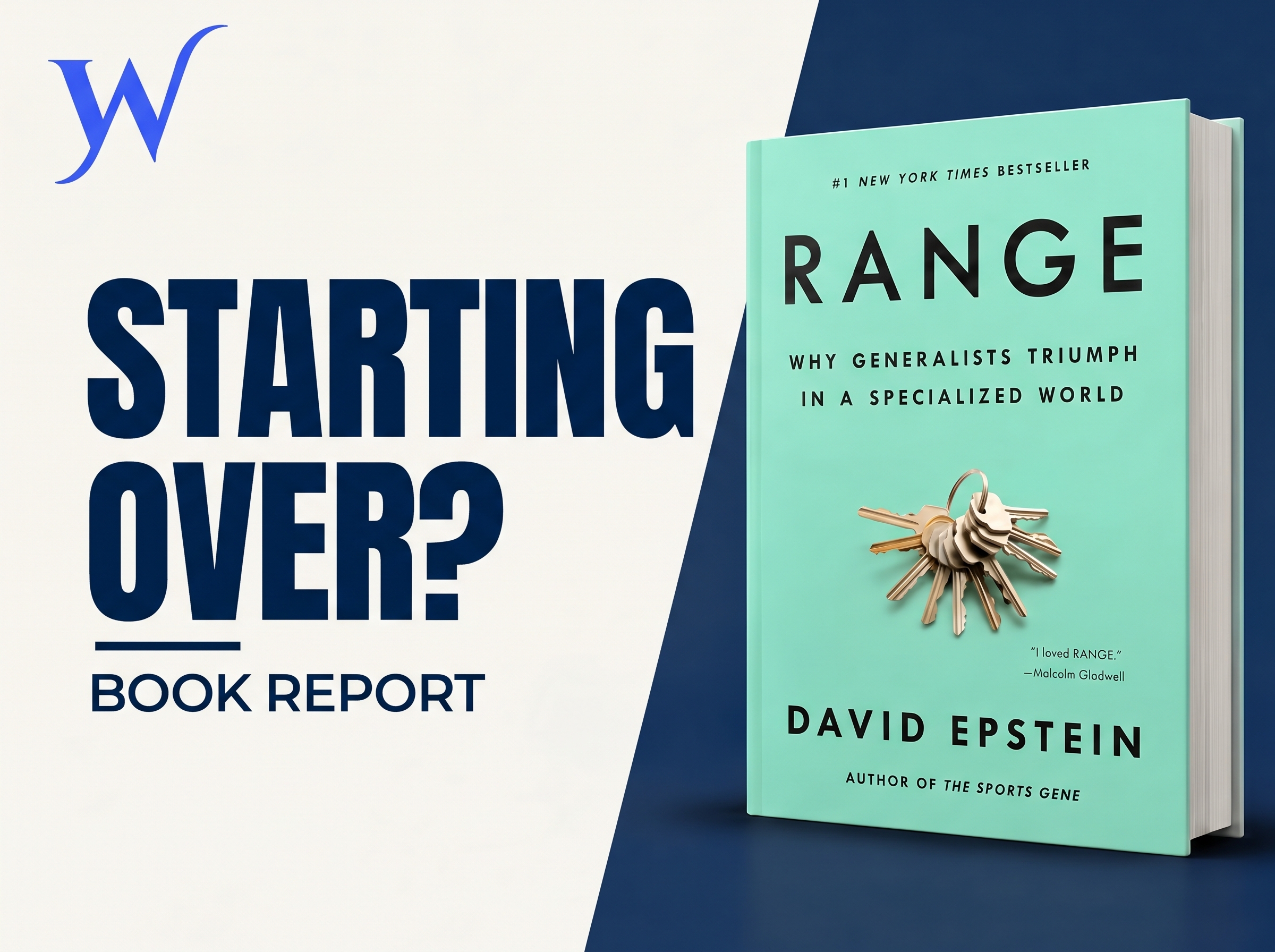
Charlie and the Chocolate Factory became a book report Alyssa and I went through together.
"What exactly did you do together?" Laura asked.
"Well, we encourage people in our community, and I would encourage your husband, sorry, I know you don't want to talk about him, but I can't help it, to document what he is doing in prison. For example, if he reads a book, why did he read it? What did he learn from the book, and how will it help him moving forward? I do that with my daughter.
It started by me asking her, 'What are some of your thoughts on this book?'"
"What do you mean?" she asked.
"Tell me about Charlie."
"He's poor."
"What else? Do better."
"He loves his parents and grandparents."
"He sure does. What else?"
"He appears thoughtful."
"How so?"
I was proud of her when she said, "When he got a chocolate bar for his birthday, he immediately thought of his grandparents and parents and insisted they take a piece."
"Listen, I'm so proud of you. That's the right takeaway. What did you learn from the book?"
"That kindness goes a long way, and thinking of other people goes a long way."
Then she said something I will never forget, something I knew she had heard from me.
"Charlie is truly the hero of the story."
"Well, let's talk about the other characters in the book."
She loves to talk about Veruca Salt, her favorite. Even now, for fun, she will say, "Daddy, Daddy, I want an Oompa Loompa. I want it now."
It always makes me laugh.
"Tell me about Veruca Salt. What is her problem?" I ask her.
"She's never happy. Enough is never enough. She doesn't appreciate what she has."
"Listen, I'm so proud of you. That's the perfect book report."
Then I will tie it into some lesson about how I did not appreciate what I had in my twenties. I graduated from USC, worked as a broker at Bear Stearns and earned significant income. It was not enough because I wanted to get in three years what it takes ten years to earn.
Then I begin to bring in some Stoics and other thinkers who have influenced me. The clichéd Marcus Aurelius: "If you can endure it, endure it," I tell her. "Stop complaining."
For example, she may not want to do her homework, or I am forcing her, or suggesting, that she read before watching television.
Sometimes I can lack sympathy. She went for a run and had shin splints and was not feeling well. I said, "If you can endure it, endure it. Stop complaining," without recognizing she was an eleven-year-old girl at the time.
But she is very aware, and she understands me. She gets me. She knows how much I love her, but I am also trying to teach her. About half the time, she truly engages.
In fact, I am writing a book based on The 48 Laws of Power that I am using to educate her about children in school, how mean they can be, how they reel you in and then take advantage of you.
"I know all about that," Laura said. "My two kids have been made fun of at school. Their dad's press release has been shown to them and every other student and teacher more than you can possibly imagine."
"Yes. I have no doubt people may do that with Alyssa as well. They may tell her I'm a criminal, that I've been to prison. I want her to learn how to respond. In some instances, she doesn't have to respond. If anything, she can take pity on them, that they take pleasure in the pain of other people. It can remind her of who she doesn't want to become. The last thing she should care about is people who have different values than she does."
"Do you think you would be sharing these lessons if you hadn't gone to prison?"
"Good God, no, Laura. I'd be a lazy, fat, bloated, entitled slob making millions a year and providing very little value to the world."
"This has been helpful," Laura said.
"Well, if hearing me talk about book reports is helpful, then..." Laura cut me off. "Helpful because you understand me. You don't judge me."
"I relate to people in crisis," I said.
Her phone rang.
"He's calling me," Laura said. "Can I take this?"
"Of course."
Chapter 14 Reflection Journal
Rose Mary told Jeannette to tell the truth. What truth are your children already learning from people outside your home?
Danny adored his father after learning what his father did at night. Can your children love you without being asked to excuse what you did?
Laura wanted to talk about parenting while I kept returning to her husband's prison term. What is your family asking from you that you keep turning into a discussion about yourself?
Written by
Justin Paperny
Founder White Collar Advice